Food
Cast Iron Seasoning: What the Black Layer Is Made Of

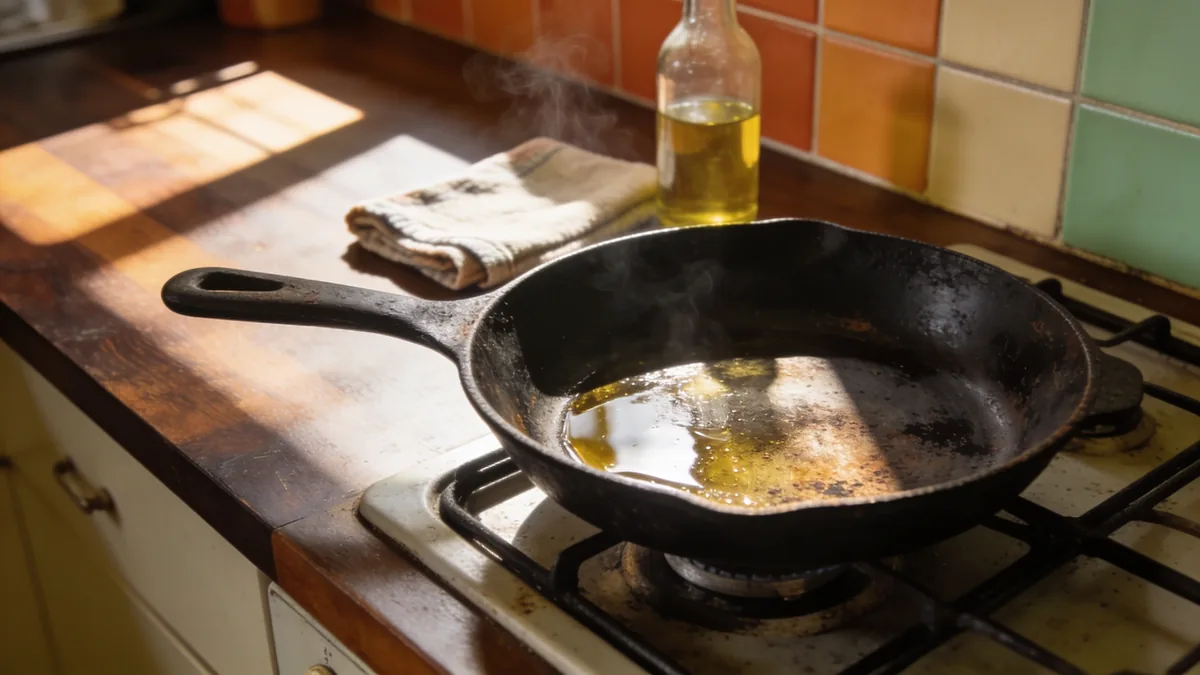
The pan sat at the back of the cupboard through most of a childhood, and it never went in the sink with the rest of the dishes. It was heavy enough that lifting it one-handed was a two-handed job, black as a kettle bottom, and it was not to be scrubbed. Cornbread came out of it without sticking, every time, and to a child watching from a stool the pan looked like it had always been there, the way floorboards have always been there.
Decades later the pan arrives in another kitchen, or one much like it does, second-hand or inherited or rescued from a hard rubbish pile for the price of nothing. And the internet is waiting with its rules. Season it weekly. Never with soap. Only with an expensive oil. Never tomatoes. Never the dishwasher. A ritual for every use, and a forum argument for every ritual.
Nobody in that childhood kitchen had heard any of it, and the cornbread did not stick for a single decade. That gap between the folklore and the chemistry is the subject here. The pan is simpler than its reputation, the black layer is more ordinary than the mythology built over it, and most of the advice economy around cast iron can be safely set down. What cannot be set down is the small amount of physics that decides whether a pan works.
What the black layer is
Seasoning is polymerised oil. That is the full answer, and it is worth sitting with for a moment, because almost every myth in circulation is a corruption of it.
When a thin film of cooking oil is heated past its smoke point, the fatty acid chains inside it cross-link into long, tangled molecules, and the result is a hard, slick, near-plastic film bonded to the iron. It is not a coating a factory sprayed on, and it does not sit on the surface the way paint sits on a wall. It is fixed to the metal, in layers, each one thinner than a coat of varnish.
The black is also not dirt, which is the misreading that ruins the most pans and the most dinners. A blackened pan is not a grimy pan. The colour is the seasoning itself, built up over years of cooking, and a cook who scrubs it back to silver in the name of cleanliness is scrubbing away the very property that made the pan worth keeping.
Two consequences follow immediately. The first is that seasoning is not permanent. It is a layer that wears and replenishes, so the pan’s surface will drift through bronze, black, dull and patchy as cooking and washing take their turns, and none of those stages is a fault. The second is that it builds in layers rather than all at once, which is why every method further down is repetitive and unhurried, and why that is the design rather than a failure of technique. The site’s piece on how culinary technique shapes what a dish becomes is the same idea one level up: the pan is not the background of the cooking, it is one of the instruments, and seasoning is what the instrument does when it is used.
Why the ugly pan wins
Here is the finding that ends the aesthetic argument, and it comes from America’s Test Kitchen’s testing rather than from folklore. An older pan carrying years of built-up polymerised oil heats faster and more evenly than a shiny new one. The dark, layered surface is doing real work in the pan, and it is work that a factory finish cannot replicate on the day of purchase.
Which is the quiet consolation of cast iron: this is the one piece of cookware that time improves. The mismatched, hand-me-down, slightly battered pan that a household is embarrassed by is the good one. The new pan with the satin factory finish is the one with the work still ahead of it.
The same fact runs the second-hand market in a way worth noticing. When the older pan outperforms the newer one, the ugliest object on the table at the op shop or the garage sale is frequently the best of the lot, and the price rarely reflects it. The buyer who knows what the black layer is gets the better pan for less money, and no marketing anywhere is going to tell them so.
Building it, slowly, on purpose
The method fits in a sentence: cook with the pan. That is the primary tool of seasoning, and everything else is maintenance arranged around it. Fats from ordinary cooking polymerise on the surface a little at a time, and the pan improves as a side effect of being used, which is the least demanding instruction in cookery.
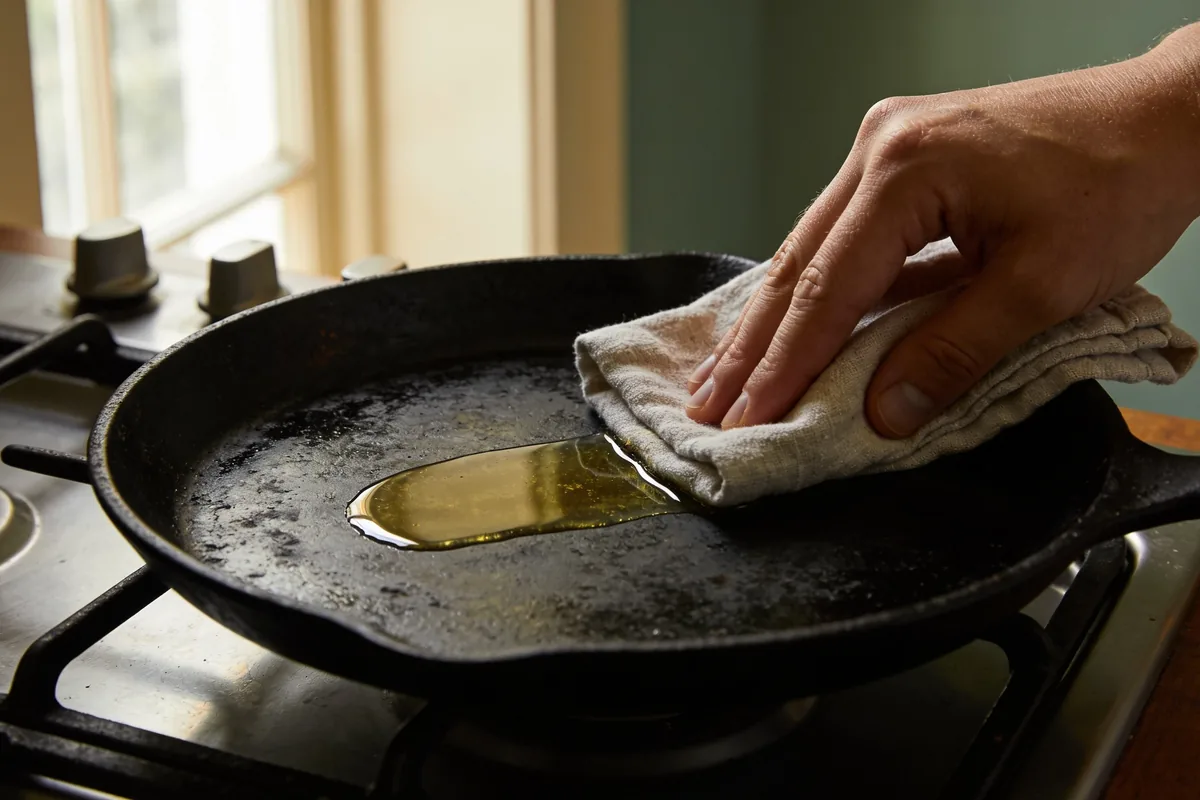
Around that habit sits a small routine. After washing and drying the pan, set it on a low flame for a moment until any remaining moisture has gone, wipe a few drops of oil across the inside with a cloth, and leave it there. The film should be almost invisible. If the surface is slick to the touch, there is too much, and too much oil is what produces the sticky, gummy texture that people mistake for a broken pan.
For a fresh pan, or one stripped back to grey, there is the oven method: a very thin coat of oil over the whole thing, handle included when it is bare iron, into a hot oven, out to cool, repeated a few times. Two or three rounds is enough to start. The first attempts will look patchy, and patchiness on a young pan is not a fault. It is what the beginning of anything looks like.
No oil is required and no oil is banned, whatever a forum says. What matters is a thin film and enough heat, and a household’s ordinary cooking fat does both jobs several times a week without anyone thinking about it. The pan is also built for the cheap, sturdy end of the repertoire rather than the delicate one, and the site’s collection of budget meals under $10 is where it earns its keep: chops, potatoes, eggs, cornbread, the dinners that ask for heat and a heavy base.
Four pieces of advice that are wrong
Four instructions do most of the damage, and each one is worth correcting plainly, because each one gets repeated by people acting in good faith on what they were told.
Soap does not strip a seasoned pan. The fear dates from a chemistry that predates the cook using it; the lye soaps of a century ago could eat into organic layers, and modern dishwashing liquid is not that. A properly polymerised surface shrugs it off. Wash the pan, dry it, oil it lightly, and move on with the evening.
The flaxseed advice is the one to hold at arm’s length, on evidence grounds rather than taste. The recommendation to season with flaxseed oil travels widely, and so do the reports that the finish it produces flakes. The pattern is observed experience rather than a tested result, and it is enough to make the oil a strange first choice for a pan somebody wants to stop thinking about. Ordinary cooking oil does not carry the same reputation.
Acid does not instantly ruin a pan. A tomato sauce simmered in a young, patchily seasoned pan will taste faintly of iron and will lighten the surface; the same sauce in a pan with years of layers barely notices. The tomato panic belongs to new pans, and even there the remedy is not a funeral, just another coat or two of oil and a few more dinners.
The self-cleaning oven is the instruction to ignore outright, because it works exactly as advertised, and that is the problem. The cycle runs hot enough to burn every trace of seasoning off the iron, reducing years of layers to grey metal in a single afternoon. Stripping a pan that way is a method for starting over, not for cleaning it, and it should be a decision somebody makes rather than a surprise somebody finds.
Rescuing a rusty or sticky pan
Almost no pan is dead. The two conditions that look fatal are the two easiest to reverse, and both end the same way: back to grey iron, followed by the thin coats again.
Rust comes from moisture left sitting on bare iron, and it scrubs away. Steel wool or a stiff brush with a little oil, working down to clean grey metal, then a thorough drying and a full re-season from the start. A pitted pan, one where rust has eaten proper craters into the surface, will keep its scars forever and will still cook beautifully.
The sticky pan is the other common patient, and its cause is almost always too much oil applied over too little heat. The gummy layer has to come off before the pan can improve, which means scrubbing back to smooth, drying hard, and beginning the thin coats again. There is no polish that fixes sticky; it is a reset, and it takes an evening rather than a season.
A crack through the iron, or a base that has warped into a wobble, is the genuine ending, and it is worth saying so because everything else in this article says the opposite. Rust and stickiness are weather. A cracked pan is a death, and it retires with thanks for its decades of service.
Cook it twice
What there is to unlearn is the ceremony. The pan does not want rituals, and it does not want a personality. It wants to be used, wiped, dried, and left with the thinnest possible film of oil. It tolerates soap and acid and guests who do not know its rules. It improves with every dinner and asks for nothing that costs money.
The pan from the back of the cupboard, or from the op shop for the price of a coffee, is a better instrument than anything a shelf can sell. The work of keeping it that way is mostly the work of not overthinking it. Cook in it twice. It will do the rest, the way it always did, for whoever it belongs to next.
Sources: America’s Test Kitchen – cast iron and bakeware seasoning testing; manufacturer care guidance for seasoned cast iron; polymer chemistry explainers for oil polymerisation at cooking temperatures.



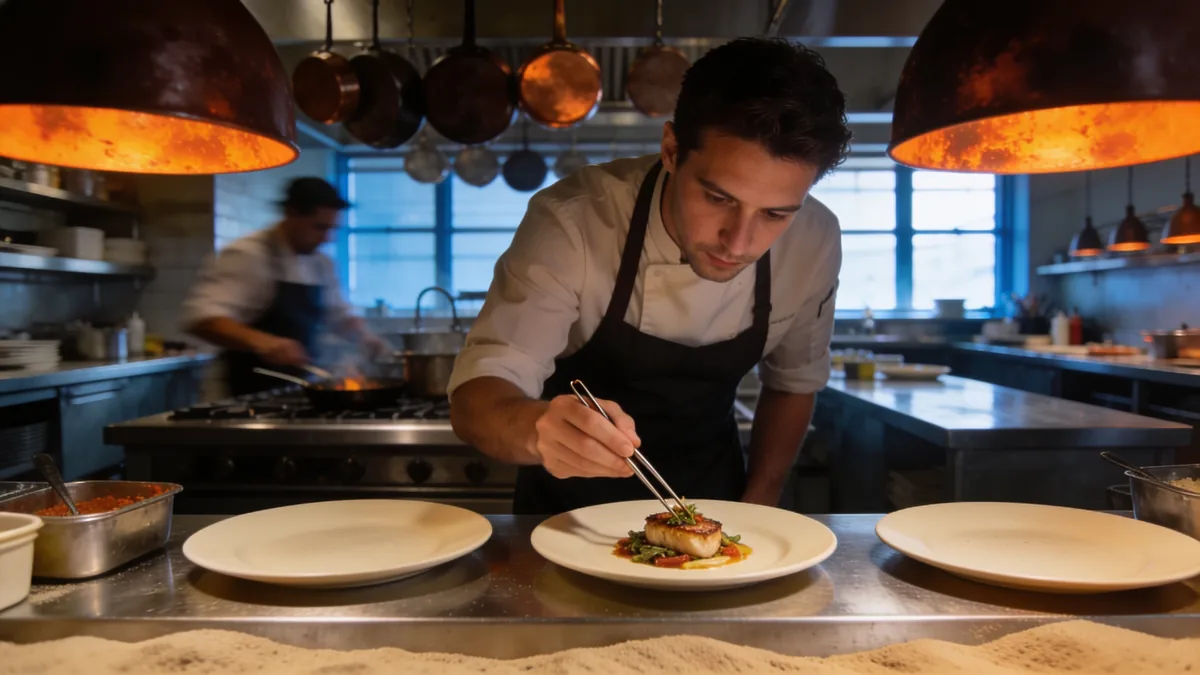
The last meal that genuinely surprised you was probably not made from secret ingredients. It was made from the same things you buy, handled differently. That is the whole of what technique is: the gap between ingredients and the dish, and the reason two cooks can follow one recipe and produce two different dinners.
Heat is a decision
Most of the flavour people describe as restaurant cooking starts with a reaction, not an ingredient. When food browns at high heat, amino acids and sugars combine into a broad range of new flavour and aroma compounds, and the crust they form is the part your tongue notices first. The conditions are fussy: the surface has to be dry, the pan has to be properly hot, and the food needs room. Steam is the enemy of browning, which is why crowding a pan produces a grey, weary result.
Searing is the technique that chases that reaction. It is also the most commonly mishandled: oiled after, salted late, turned too early. Pat the surface dry, let the pan come to temperature, and then leave the food alone long enough to release on its own.
Gentle heat does its own work
The other half of the kitchen works in the opposite direction. Poaching, steaming and slow braising use lower temperatures for longer, and their goal is what the ingredient keeps: moisture, tenderness, and flavours that high heat would have driven off. Sous-vide takes the idea to its logical end, holding food at an exact temperature for a long stretch so that the inside cooks evenly, then finishing the surface separately for the crust the gentle method never produces.
Neither approach is better in the abstract. The technique decides what the ingredient keeps rather than what it gains, and matching the method to the ingredient is most of the judgement.
Aroma runs on timing
What people call taste is mostly aroma, and aroma compounds are fragile. That is why spices bloomed in oil before the liquid goes in taste fuller than spices added at the end, why a squeeze of citrus or a scatter of herbs finishes a slow-cooked dish, and why a pot left uncovered loses the parts that made the kitchen smell good. That is also why the last thirty seconds of cooking carry more weight than they should: the addition at the end is the part your nose has been waiting for since the pot first smelled good.
Presentation is part of the cooking
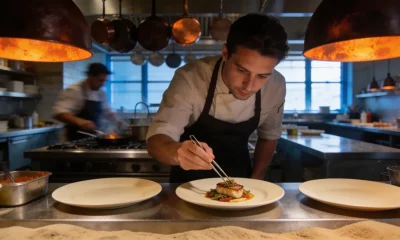
You eat with your eyes before your fork moves, which makes plating a technique rather than a vanity. Contrast in colour, a little empty space on the plate, and height or layering change how the same food is received. None of it requires a piping bag. Scattering rather than stacking, wiping the rim, and serving something at the temperature it should be served at will do most of the work.
Techniques travel
Most of the great techniques were not invented once. Low, slow heat under fat shows up as confit in France and as adobo in the Philippines. Steam is a treasure in Chinese cooking and a Sunday ritual in a British pudding. Every food culture on earth has arrived at versions of the same few insights: control the heat, manage the moisture, and layer the aromatics. Cooking across cultures is less about novelty than about watching the same principles in different hands.
What to practise first
Pick one technique and give it a month. Browning is the highest return: learn to dry the surface, preheat properly, and wait. The second is heat control, which is mostly learning to move the pan off and on rather than up and down. The third is tasting as you go, because the recipe cannot taste for you.
Technique is also the cheapest upgrade in the kitchen. The same skills stretch the humbler ingredients further, and smarter cooking wastes less as a side effect: better heat means fewer failures, and fewer failures mean less food in the bin. Skill compounds in both directions at once.
Technique is the invisible ingredient
Recipes are written as though ingredients were the story, and they are only half of it. The hand that dries the steak, waits for the pan and tastes before serving is doing the part no shopping list describes. Start with one dish you already cook and change one thing about how you handle it. That is where cooking stops being following and starts being yours.
Sources: the chemistry behind browning, heat transfer and aroma release is described in standard food science references, including Harold McGee’s On Food and Cooking; Australian food science research is published by the CSIRO (csiro.au).

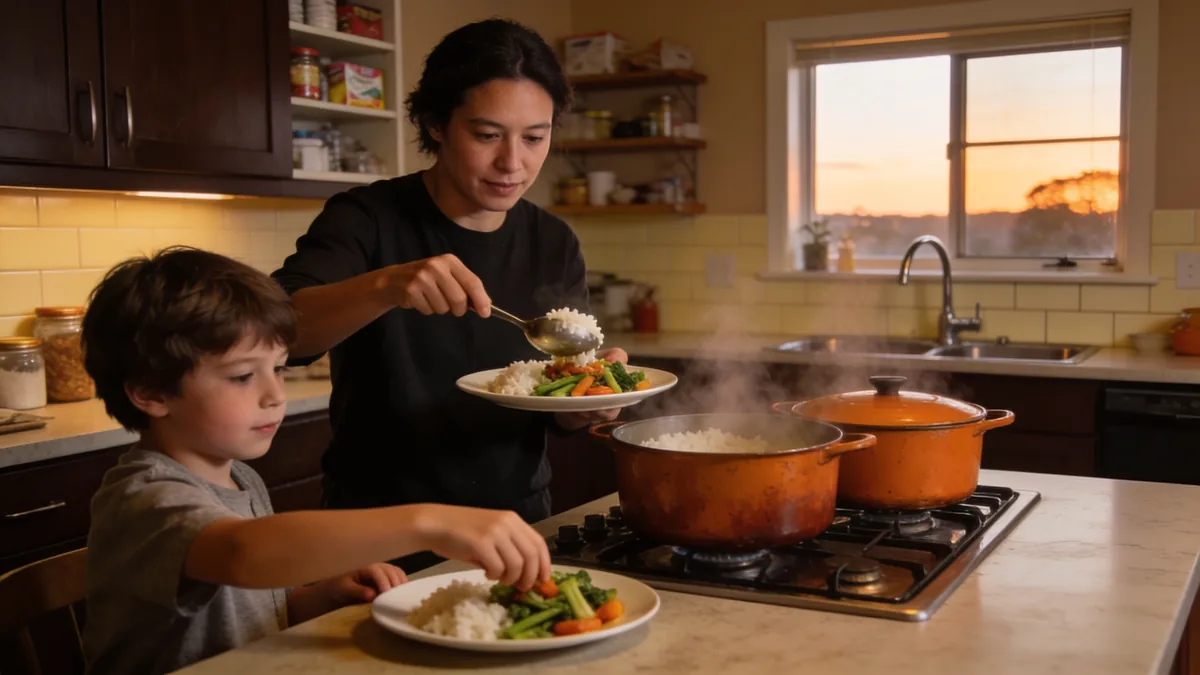
Five dinners for four people, each one costed to the last onion. The point is a handful of meals known well enough that the shopping decides itself and the bill stops surprising you, without the heroic cheap week that ends in takeaway by Friday.
Every price below is an estimate based on supermarket shelf prices in mid-2026, and prices move with the season and the specials board. Treat each total as a working figure, not a promise, and check the maths is sound: each meal feeds four, the per-serve cost is in brackets, and none of them crosses ten dollars.
1. One-pot veggie pasta
Zucchini $1.00, carrot $0.40, an onion $0.40, two cloves of garlic $0.20, a jar of passata $1.30, 500 g of pasta $1.20, and about $0.40 of oil, herbs and chilli flakes. Total $4.90, or about $1.25 a serve. Everything goes in the one pot, which means one element of washing up and no talent required. Grate the vegetables if the table turns its nose up at visible zucchini.
2. Chickpea curry with rice
Two tins of chickpeas $2.40, a tin of tomatoes $1.00, a tin of coconut milk $1.40, an onion $0.40, garlic and ginger $0.50, curry powder and cumin $0.40, a bag of baby spinach $1.50, and 300 g of rice $0.60. Total $8.20, or about $2.05 a serve. The spices are what the meal rests on, so buy them from the bulk section if your supermarket has one. It freezes well, which is worth knowing before you halve the recipe.
3. Loaded jacket potatoes
1.2 kg of potatoes $2.80, a tin of beans $1.20, cheddar $2.00, sour cream or yoghurt $1.00, spring onions $0.90, and salad leaves $1.50. Total $9.40, or about $2.35 a serve. This is the one that sits closest to the ten dollar line, so it is the one where a special on potatoes does the most good. It is also the most forgiving: whatever is in the fridge can usually be piled on top.
4. Fried rice, built on leftovers
500 g of cooked rice (from about 200 g raw) $0.50, three eggs $1.50, frozen peas and corn $1.40, a carrot $0.40, soy sauce $0.30, sesame oil $0.20, spring onions $0.90, and bacon or leftover roast if you have it $2.00. Total $5.20 without the meat, $7.20 with it, so about $1.30 to $1.80 a serve. Cold rice is the trick, and the wok answers to nobody’s recipe. Use what is left from a roast and this meal costs close to nothing at all.
5. Flatbread margherita
500 g of flour $0.90, yeast, salt and a pinch of sugar $0.25, passata $1.30, mozzarella $3.00, fresh basil $1.50, and olive oil $0.30. Total $7.25, or about $1.80 a serve, and the dough makes four generous flatbreads or eight small ones. The cheese is the expensive line, so use less of it than the takeaway does and let the tomatoes and basil carry the flavour. The dough is also the part to mix in the morning, if the day allows.
What keeps the bill down
Cook the plan, not the recipe. These five meals share a short shopping list: rice, pasta, tins, spices and whatever vegetables are in season that week. When the staples live in the cupboard, the weekly shop is mostly the fresh half of the list, and the fresh half is where the savings are visible.
Then the boring three: shop the season before the recipe, use the freezer for bread and leftovers, and eat the leftovers in the order they will not keep. Cooking this way wastes less as a side effect, and the habits of a zero waste kitchen start with exactly this discipline. A full fridge you will not cook is the most expensive way to eat there is.
Five dinners, one shopping list
Start with whichever meal uses what you already have in the cupboard, and let the list build itself from there. You do not need all five in one week. You need two you can cook without thinking, and the patience to add a third. The goal was never to eat for less because you have to. It is to eat well, for less, because you made a plan, and to have money left over for the things that matter more than dinner.
Sources: price estimates are based on supermarket shelf prices in mid-2026 and move with the season; general dietary guidance is published in the Australian Dietary Guidelines (eatforhealth.gov.au).


 Healthcare1 year ago
SIL Providers: What to Compare Before You Commit
- Healthcare1 year ago
What Is Physiotherapy?
- Healthcare1 year ago
What a Dental Implant Replacement Costs in Melbourne
- Food1 year ago
Budget Bites: Delicious Meals You Can Cook for Under $10
- Healthcare1 year ago
What Changes When You Start SIL
- Tech1 year ago
Mental Health Apps and Wearables: What to Trust
- Home & Garden1 year ago
Gutter Upgrades Worth Doing Before You Sell
- Healthcare1 year ago
How to Put NDIS Community Participation Funding to Work