
General
Are You Fully Prepared Before Starting Your Australian Visa Application?


Applying for an Australian visa is an important step for people planning to study, work, or settle in the country. While the process may seem straightforward at first, it often involves detailed documentation, eligibility checks, and strict timelines. Many applicants begin the process without fully understanding the requirements, which can lead to delays or rejections. For this reason, individuals often seek guidance from an Immigration Lawyer Melbourne to better understand the legal procedures and prepare their applications correctly.
Preparation plays a major role in the success of any visa application. Gathering documents, understanding eligibility rules, and knowing which visa category suits the situation are all essential steps. Taking time to prepare properly can help applicants avoid common mistakes and improve the chances of approval.
Understanding Visa Requirements Before Applying
One of the most important steps before submitting an application is understanding the requirements of the specific visa category. Many people contact an Immigration Lawyer Melbourne to clarify eligibility criteria, documentation standards, and application procedures before beginning the process.
Australia offers several visa options, including student visas, work visas, skilled migration visas, and family visas. Each category has different conditions related to age, work experience, financial capacity, education, and language skills.
Key aspects applicants should review include:
- Eligibility criteria for the chosen visa category
- Required documentation, such as passports and certificates
- Financial proof to demonstrate the ability to support oneself
- Health and character requirements set by immigration authorities
- English language proficiency tests, where applicable
Understanding these requirements early helps applicants avoid applying for visas that may not match their qualifications.
Preparing the Required Documentation
Documentation is one of the most critical parts of any visa application. Immigration authorities rely heavily on submitted documents to verify the information provided in the application form.
Missing or incorrect documents can delay the process or cause the application to be rejected. Preparing documents carefully before applying can save significant time.
Common documents required for Australian visa applications include:
- Valid passport and identification documents
- Educational certificates and transcripts
- Employment history and reference letters
- Financial statements or proof of funds
- Health examination results
- Police clearance certificates
Ensuring all documents are accurate, current, and properly translated (if required) can help the application proceed smoothly.
Choosing the Right Visa Pathway
Selecting the correct visa category is another essential step. Many applicants mistakenly apply for visas that do not fully match their circumstances, which often leads to unnecessary complications.
Several factors influence the choice of visa, including career goals, study plans, family connections, and long-term settlement intentions.
Important considerations when choosing a visa pathway include:
- Long-term migration goals
- Professional qualifications and skills
- Job opportunities in Australia
- Family sponsorship eligibility
- Education or study plans
Carefully reviewing available visa options allows applicants to select a pathway that aligns with their future plans.
Avoiding Common Application Mistakes
Many visa applications face delays due to simple mistakes that could have been prevented with proper preparation. Even small errors in forms or documents can create complications.
In the middle stages of preparing their visa applications, many applicants consult an Immigration Lawyer Melbourne to review their paperwork and identify possible issues before submission.
Some common mistakes include:
- Submitting incomplete application forms
- Providing inconsistent information across documents
- Missing deadlines for document submission
- Uploading incorrect or outdated files
- Misunderstanding visa conditions or requirements
Taking time to review the entire application before submission can significantly reduce these risks.
Understanding Processing Times and Deadlines
Visa processing times can vary depending on the visa category, the volume of applications, and the completeness of the submitted documentation. Many applicants underestimate how long the process can take.
Planning ahead is important, especially for people who need visas for work start dates, university enrolments, or travel plans.
To avoid unnecessary stress, applicants should:
- Apply well before intended travel dates
- Respond quickly to requests from immigration authorities
- Keep track of application updates
- Ensure all requested documents are submitted promptly
Good planning ensures the process runs smoothly and reduces the chances of unexpected delays.
The Importance of Professional Legal Guidance
While some visa applications are relatively simple, others involve complex legal procedures. Professional immigration advice can help applicants better understand the process and avoid common mistakes.
Legal professionals often assist with:
- Assessing visa eligibility
- Reviewing documentation before submission
- Advising on the best visa pathway
- Handling complex immigration cases
- Responding to requests from immigration authorities
Seeking reliable guidance can provide clarity and confidence during the application process.
Conclusion
Starting an Australian visa application without proper preparation can lead to delays, confusion, and unnecessary stress. Understanding visa requirements, gathering the correct documents, choosing the right visa category, and avoiding common mistakes are all essential steps in building a strong application.
Careful preparation not only saves time but also improves the chances of a successful outcome. By approaching the process with the right information and proper planning, applicants can move forward with greater confidence.
FAQs
1. What documents are usually required for an Australian visa application?
Typical documents include a valid passport, educational certificates, employment records, financial proof, health examinations, and police clearance certificates.
2. Why do visa applications get rejected?
Applications may be rejected due to incomplete documentation, incorrect information, failure to meet eligibility criteria, or missing deadlines.
3. How long does it take to process an Australian visa?
Processing times vary depending on the visa type and the completeness of the application. Some visas may take several weeks or months.
4. Can mistakes in an application affect approval chances?
Yes. Even small errors or inconsistent information can delay the process or lead to refusal.
5. Is professional immigration advice helpful during the visa process?
Professional guidance can help applicants understand requirements, prepare documents properly, and avoid common application mistakes.


Let’s be honest – food shopping isn’t as cheap as it used to be.
Between rising grocery prices and busy schedules, eating well can feel like a luxury.
But what if we told you that tasty, filling meals don’t need to cost more than a tenner?
With the right ingredients and a bit of creativity, you can whip up mouth-watering dishes that go easy on your wallet.
This blog is your go-to guide for budget-friendly cooking. Whether you’re a student, a parent, or just someone watching their spending, you’ll find recipes here that are both satisfying and affordable.
We’ve kept things simple – each meal costs less than $10 to make, and most serve three to four people. So you’re not just saving money – you’re feeding the whole family for less!
Plus, we’ve included easy cost breakdowns, helpful tips, and a handy chart to make planning even easier. Let’s cook smart – and eat even better!
1. One-Pot Veggie Pasta
If you’re after comfort food that’s quick, tasty, and kind on your pocket, this one’s a winner.
One-pot veggie pasta is a no-fuss dish that brings together simple ingredients in the most satisfying way.
All you need is a packet of pasta, a tin of chopped tomatoes, garlic, onion, spinach, and a pinch of dried herbs.
Throw everything into one pot with a splash of olive oil and a bit of water.
Let it simmer, stir now and then – and within 20 minutes, dinner is served!
This dish is perfect for using up leftover veg too.
Carrots, peas, capsicum – they all fit right in.
Add cheese on top if you’ve got some spare change left in your budget!
Ingredients & Cost
| Ingredient | Quantity | Est. Cost (AUD) |
|---|---|---|
| Pasta | 500g | $1.50 |
| Chopped Tomatoes | 400g tin | $1.20 |
| Onion & Garlic | 1 each | $1.00 |
| Spinach (frozen) | 150g | $1.50 |
| Mixed Herbs/Oil | Pantry items | – |
| Total | $5.20 |
Serves 3–4 – Cost per serve: $1.30–$1.73
2. Chickpea Curry & Rice
Warm, hearty, and full of flavour – chickpea curry is a budget superstar.
It’s packed with protein, rich in spices, and surprisingly easy to make.
Grab a tin of chickpeas, some coconut milk, onion, curry powder, and a cup of rice.
Sauté the onion, stir in the spices, add chickpeas and coconut milk, and simmer until creamy.
Serve it over fluffy rice, and enjoy a rich, comforting meal that tastes like a hug in a bowl.
It’s perfect for meal prepping too.
Store leftovers for the next day – the flavour gets even better!
Ingredients & Cost
| Ingredient | Quantity | Est. Cost (AUD) |
|---|---|---|
| Chickpeas (tinned) | 400g | $1.00 |
| Coconut Milk | 400ml | $1.60 |
| Onion & Garlic | 1 each | $1.00 |
| Curry Powder | 1 tbsp | $0.30 |
| Rice | 1 cup (dry) | $1.00 |
| Total | $4.90 |
Serves 4 – Cost per serve: $1.23
3. Loaded Jacket Potatoes
Crispy on the outside, fluffy on the inside – jacket potatoes are a timeless classic.
They’re not only cheap but incredibly filling and versatile.
Start with large brushed potatoes, bake them until golden and soft.
Then, slice them open and load them with your favourite toppings.
Try baked beans, grated cheese, and a dollop of sour cream.
You can also mix in chopped spring onions or leftover veggies for extra flavour.
This is the perfect comfort meal for cold nights.
It’s simple, wholesome, and feels indulgent without costing a fortune.
Ingredients & Cost
| Ingredient | Quantity | Est. Cost (AUD) |
|---|---|---|
| Brushed Potatoes | 4 large | $2.50 |
| Baked Beans | 400g tin | $1.20 |
| Cheese (grated) | 150g | $2.00 |
| Sour Cream | 100g | $1.50 |
| Total | $7.20 |
Serves 2–3 – Cost per serve: $2.40–$3.60
4. Fried Rice with Veggies & Egg
Leftover rice is a goldmine for quick, budget-friendly meals.
With just a few ingredients, fried rice becomes a tasty and colourful plate.
Start by frying onion, garlic, and mixed frozen veg in a pan.
Add the rice, a splash of soy sauce, and scramble in a couple of eggs.
It’s fast, filling, and flexible – use whatever veg you’ve got on hand.
For under $6, this meal is ideal when you’re low on time and money.
Plus, it’s great for lunchboxes or next-day leftovers.
Ingredients & Cost
| Ingredient | Quantity | Est. Cost (AUD) |
|---|---|---|
| Rice (cooked) | 2 cups | $0.80 |
| Frozen Veg Mix | 1 cup | $1.20 |
| Eggs | 2 | $1.00 |
| Onion & Garlic | 1 each | $1.00 |
| Soy Sauce | Pantry item | – |
| Total | $4.00 |
Serves 3 – Cost per serve: $1.33
5. Flatbread Margherita Pizza
Craving pizza on a budget? This one’s a game-changer.
All you need is a piece of flatbread, tomato paste, shredded cheese, and a few fresh herbs.
Spread the tomato paste on the flatbread, top with cheese, and bake until golden.
Add a sprinkle of basil or oregano before serving – delicious!
It’s perfect as a light dinner or weekend lunch.
And because it’s so simple, even kids can help make it.
Ingredients & Cost
| Ingredient | Quantity | Est. Cost (AUD) |
|---|---|---|
| Flatbread (large) | 2 pieces | $2.50 |
| Tomato Paste | 100g | $0.80 |
| Mozzarella Cheese | 150g | $2.20 |
| Basil or Herbs | Fresh or dry | $0.50 |
| Total | $6.00 |
Serves 2 – Cost per serve: $3.00
Quick Comparison Chart
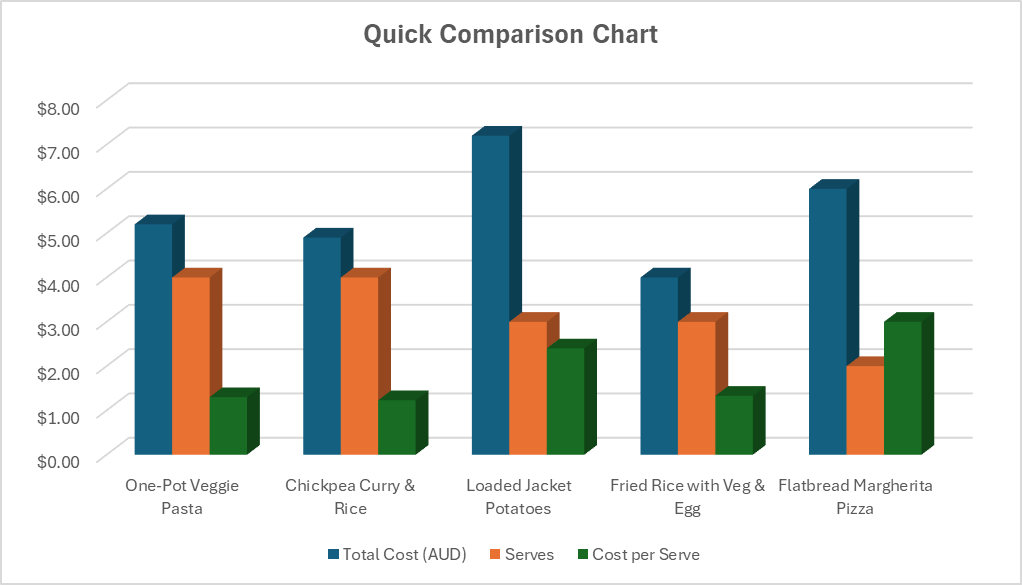
| Meal | Total Cost (AUD) | Serves | Cost per Serve |
|---|---|---|---|
| One-Pot Veggie Pasta | $5.20 | 4 | $1.30 |
| Chickpea Curry & Rice | $4.90 | 4 | $1.23 |
| Loaded Jacket Potatoes | $7.20 | 3 | $2.40 |
| Fried Rice with Veg & Egg | $4.00 | 3 | $1.33 |
| Flatbread Margherita Pizza | $6.00 | 2 | $3.00 |
Final Thoughts
Cooking on a budget doesn’t mean boring meals or plain plates.
With a little planning and a few clever swaps, you can enjoy delicious, satisfying dishes without overspending.
These meals prove that $10 can go a long way in your kitchen. They’re simple, family-friendly, and packed with flavour.
Try one this week and see just how rewarding budget cooking can be. You might even find a new favourite recipe!
Hungry for more? Keep an eye out – we’ll be sharing more wallet-friendly meal ideas soon.
Bon appétit, the budget way!

Mental health is finally getting the attention it deserves. With busy lives and growing stress, people are turning to tech for a helping hand. From smartwatches that track stress levels to apps that guide you through breathing exercises – technology is playing a powerful role in daily wellbeing.
This shift isn’t about replacing therapists or traditional support. It’s about adding tools we can access anytime, anywhere. Wearables and wellness apps help us stay aware of our moods, manage anxiety, and even sleep better.
As mental health becomes more mainstream, the blend of digital innovation and emotional care opens exciting new doors. Let’s explore how mindful tech is quietly transforming how we look after our minds.
1. The Rise of Mental Health Tech
Tech has become more personal, and that includes how we care for our minds. The rise in mental health apps and smart devices began picking up after the pandemic, when many people started seeking support from home.
From guided meditations to mood diaries, digital tools have become accessible to almost anyone with a phone. They’re easy to use, discreet, and often free or low-cost.
This growth reflects changing attitudes. People are more open to managing mental wellness every day, not just when in crisis. And tech fits into this approach perfectly – offering gentle, ongoing support.
What once seemed futuristic is now part of daily life.
2. Top Wearables Supporting Mental Health
Wearables do more than count your steps now. Devices like Fitbit, Apple Watch, and Garmin smartwatches include features for stress tracking, heart rate monitoring, sleep analysis, and guided breathing exercises.
These small tools offer big insights. You can spot patterns in how you feel, track the impact of your lifestyle, and get reminders to take mindful breaks.
Here’s a simple comparison of some popular wearables:
| Device | Mental Health Features | Battery Life | Price Range (AUD) |
|---|---|---|---|
| Apple Watch | Mindfulness app, HRV, sleep tracking | 18 hours | $600–$1,200 |
| Fitbit Sense | Stress management, SpO2, skin temp tracking | 6+ days | $400–$500 |
| Garmin Venu 2 | Body battery, breathing exercises | 11 days | $500–$800 |
Wearables give you feedback in real-time, helping you stay connected to how you feel throughout the day.
3. Wellness Apps Making a Difference
Wellness apps offer support in your pocket. Whether it’s a five-minute meditation or a chatbot to talk through anxious thoughts, these tools have become part of many people’s self-care routines.
Apps like Calm and Headspace focus on mindfulness, sleep, and stress relief. Others, like Moodpath or Woebot, offer mood tracking and therapy-style chats.
Here’s a look at estimated global users of popular wellness apps:
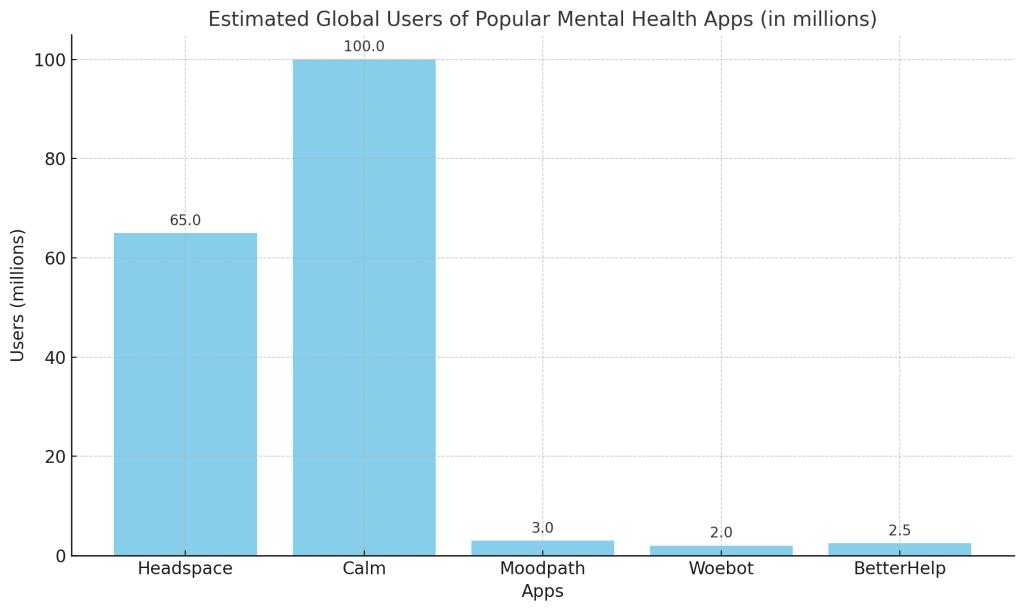
These numbers show how people around the world are embracing tech for their mental health. These apps are not only easy to use but also promote healthy habits one small step at a time.
4. The Science Behind the Tech
Behind every buzz or alert from a wearable is science. These devices track data like your heart rate, oxygen levels, or sleep quality – all of which relate closely to how you feel emotionally.
For instance, a spike in heart rate can signal stress. Poor sleep? You’re likely to feel low or anxious. These tools help spot early warning signs, encouraging users to take action before things get worse.
It’s not just about data, though. Guided breathing and mindfulness exercises have been shown to activate calming parts of the brain. These features are based on well-researched techniques like Cognitive Behavioural Therapy (CBT) and biofeedback.
Tech is not a cure, but it can guide us toward healthier habits and support us between therapy or check-ins.
5. Digital Boundaries: When Tech Becomes Too Much
While tech supports wellbeing, too much screen time can backfire. Constant notifications, comparison on social media, and ‘self-help overload’ may actually increase anxiety.
It’s important to use wellness tech mindfully. Choose tools that add calm, not clutter. Avoid using too many apps at once, and set screen time limits where needed.
Make space for digital detox moments – such as keeping phones out of the bedroom or switching off notifications during breaks. A balance between tech and real-life experiences helps keep wellbeing at the centre.
Mental health tech works best when it’s a gentle companion, not a demanding one.
6. Future of Mental Health Tech
The future of wellbeing tech is exciting. AI-powered chatbots, like Woebot or Wysa, are becoming more advanced and supportive. Smart rings and patches are being developed to measure mood, breathing, and stress without you even noticing.
Machine learning is starting to predict mood shifts by analysing daily patterns. This opens the door for early intervention and better personal care plans.
Soon, we may see virtual therapists that adapt in real time or augmented reality tools for relaxation.
What matters most is that tech remains human-centred. The goal is not to replace care, but to make it more accessible and personalised.
Conclusion
Wearables and wellness apps are transforming how we care for our minds. With real-time data, guided support, and accessible tools, mindful tech empowers people to take charge of their emotional wellbeing.
These small steps – a breathing break, a reminder to rest, a moment of calm – all add up to a healthier life. Tech isn’t the full answer, but it’s a valuable partner. Start with one tool that fits your lifestyle and use it with care. Your mental health deserves it.

A multigenerational workforce means having employees from different age groups working side by side. Nowadays, offices often include Baby Boomers, Gen X, Millennials, and Gen Z. This rising age diversity is a growing trend worldwide.
While it might seem tricky to manage such variety, it actually offers a fantastic chance to turn differences into strengths. By understanding and valuing each generation’s unique qualities, leaders can build teams that are creative, dynamic, and inclusive. The key is to bridge the gap and embrace diversity rather than let it divide. This blog will explore how to make that happen smoothly and successfully.
1. Know Your Generations
At work today, you’ll commonly find four generations: Baby Boomers (1946–1964), Gen X (1965–1980), Millennials (1981–1996), and Gen Z (1997 onwards). Each group has its own values, communication styles, and ways of working.
Baby Boomers often value loyalty and prefer personal interaction. Gen X tends to be independent and practical, favouring work-life balance. Millennials seek feedback and embrace technology, while Gen Z are digital natives, used to fast communication.
Understanding these differences is the first step to effective leadership. It helps you tailor your management style, avoid misunderstandings, and ensure everyone feels respected and included.
2. Embrace Diverse Perspectives
A multigenerational team brings fresh ideas and innovation. When generations collaborate, they combine decades of experience with new, creative thinking.
For example, a project team with Baby Boomers and Gen Z might merge traditional industry knowledge with cutting-edge tech skills, producing better results. Embracing these diverse perspectives encourages innovation and problem-solving.
Instead of comparing or competing, promote collaboration where each generation learns from the other. This inclusive approach helps build trust and unlocks the full potential of your team.
3. Tailor Communication Styles
Communication preferences vary widely across generations. Baby Boomers may favour phone calls or face-to-face meetings, while Millennials and Gen Z often prefer instant messages or emails.
To lead effectively, tailor your approach. Use technology to reach younger workers, but don’t neglect personal contact for those who value it more. Make sure messages are clear and respectful.
Encourage an open dialogue where everyone feels comfortable sharing ideas, questions, and concerns. This helps bridge gaps and builds a culture of understanding.
4. Offer Flexible Learning and Development
Everyone learns differently. Some prefer classroom-style training, others thrive with online courses or hands-on experience.
By offering a mix of learning options, you can support all generations. Mentorship schemes work well – experienced workers share knowledge, while younger staff can offer fresh skills in return through reverse mentoring.
Digital tools can also help bridge comfort levels with technology, making training accessible and inclusive. Investing in flexible development benefits both employees and the organisation.
5. Balance Work Expectations
Generations have different ideas about work-life balance, feedback, and career progression. Younger employees may seek flexible hours and frequent check-ins, while older workers often prefer structure and clear career paths.
As a manager, support flexibility fairly across the team without favouring any group. Focus on shared goals and encourage respect for different needs.
When people feel their expectations are understood and honoured, motivation and productivity increase for everyone.
6. Foster Mutual Respect
Respect is the cornerstone of a successful multigenerational workplace. Leaders should promote appreciation for every individual’s experience and skills.
Challenge stereotypes and age-related bias openly. Older employees aren’t outdated, and younger workers aren’t inexperienced.
Creating an environment where all voices are heard fosters a positive culture. When respect flows freely, collaboration and trust flourish naturally.
7. Lead with Empathy and Adaptability
Emotional intelligence is crucial in managing diverse teams. Good leaders listen carefully, show empathy, and adapt their style when needed.
Encourage activities that bring different generations together, building understanding and friendships.
By modelling empathy and flexibility, leaders create a workplace where everyone feels valued and supported, no matter their age.
Generations at a Glance: Key Traits and Preferences
| Generation | Birth Years | Key Values | Communication Style | Work Preferences |
|---|---|---|---|---|
| Baby Boomers | 1946 – 1964 | Loyalty, experience | Face-to-face, phone | Structure, stability |
| Gen X | 1965 – 1980 | Independence, balance | Email, phone | Flexibility, work-life balance |
| Millennials | 1981 – 1996 | Feedback, purpose | Digital, instant message | Growth, frequent feedback |
| Gen Z | 1997 onwards | Technology, diversity | Text, social media | Flexibility, fast communication |
Conclusion
Age diversity in the workplace is a powerful asset. By understanding generations, embracing their unique strengths, and leading with respect and empathy, you can build a thriving, innovative team.
Start today by bridging gaps, not creating barriers. Celebrate what each generation brings to the table and watch your workplace flourish.

Are You Fully Prepared Before Starting Your Australian Visa Application?

What to Consider Before Investing in a New or Used Commercial Truck

Think You’re Paying Too Much Tax? Here’s What Most People Miss

Not Sure Where to Start with SIL Providers in Melbourne? Here’s How the Right Provider Makes a Difference

How Much Does It Cost to Replace a Dental Implant in Melbourne Without Losing Your Smile or Wallet?

What is Physiotherapy? A Complete Guide to Understanding Its Role in Health
-
 Healthcare9 months ago
Not Sure Where to Start with SIL Providers in Melbourne? Here’s How the Right Provider Makes a Difference
-
 Healthcare9 months ago
How Much Does It Cost to Replace a Dental Implant in Melbourne Without Losing Your Smile or Wallet?
-
 Healthcare9 months ago
What is Physiotherapy? A Complete Guide to Understanding Its Role in Health
-

 Healthcare9 months ago
What Happens After You Start SIL? A Closer Look at the Journey
-

 Healthcare9 months ago
Regular Community Participation That Builds Belonging—and a Life You Control
-

 Healthcare9 months ago
5 Signs You Need to See a Psychologist – And Why It’s Totally Okay!
-

 General9 months ago
7 Guttering Upgrades That Instantly Make Your Home More Attractive to Buyers
-

 General9 months ago
Mindful Tech: How Wearables and Wellness Apps Are Transforming Mental Health
You must be logged in to post a comment Login