
Home & Garden
Colorbond Roofing: Profiles, Colours and What Drives the Price

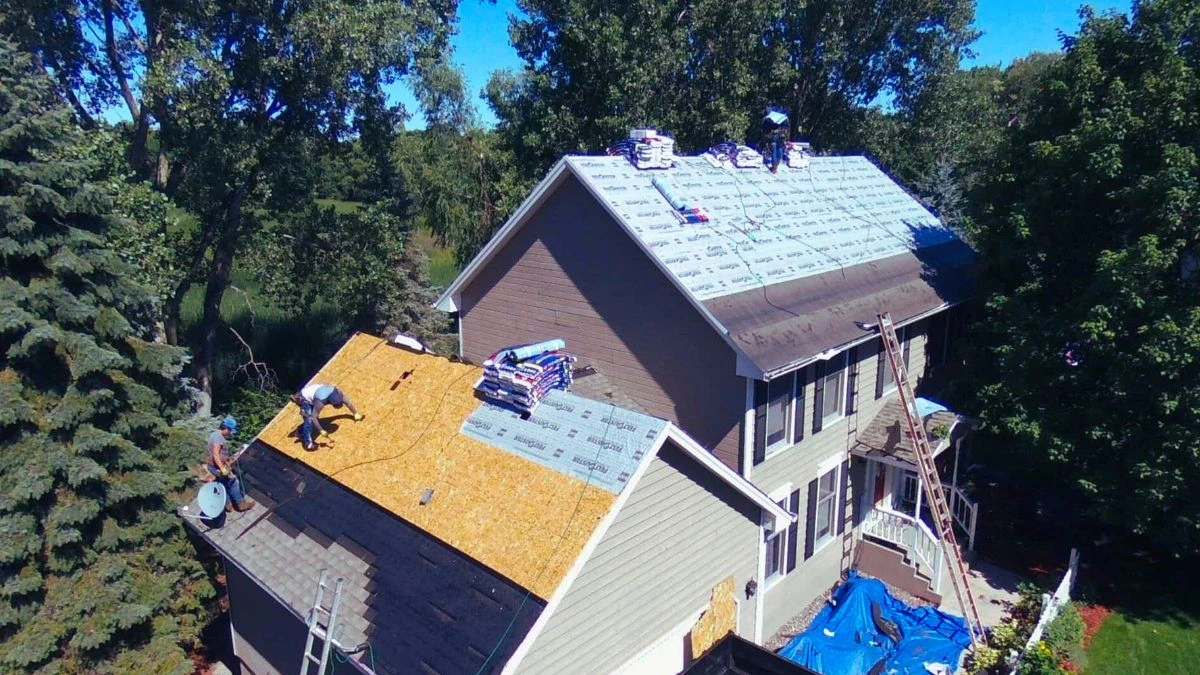
Drive through any street of newer houses and count the roofs. Corrugated steel, in grey and deep blue and a pale green that never quite looks the same twice, covers most of them. Forty years ago the same streets were terracotta and concrete tile. The change happened quietly, one roof at a time, and the reason is worth understanding before you spend money on the same decision.
Colorbond is a pre-painted steel roofing material, and the name belongs to the steelmaker rather than to a profile or a brand of installer. What most people mean when they say Colorbond is the combination of a light, strong sheet, a factory-applied paint system and the fact that it arrives already finished. This article covers what the material is, the profiles it comes in, how colour and coast change the choice, and where the money goes.
What the material is
Colorbond steel is a steel base with a metallic coating and a paint system applied in a factory, before the sheet is cut or bent. Because the paint is baked on under controlled conditions rather than applied on site, the finish is harder and more even than a brush or spray job can achieve, and it does not depend on the weather on the day.
That matters in Australia. The combination of sun, salt air, heat and sudden rain is hard on any surface, and the failure of a cheaper roof almost never starts with the steel itself. It starts with the coating: chalking, fading, or corrosion beginning at a cut edge or a fixing. A factory-applied finish is the reason a steel roof here can still look like a roof after twenty years rather than twenty months.
Why it suits the climate, and where it does not
Steel roofing is light, which reduces the load on the frame, and it is fixed in a way that lets the whole roof be engineered for the wind at the site. In high-wind areas that is the point: fixings and spacing are specified for the local wind rating, and a properly installed steel roof is a continuous sheet rather than a set of separate tiles that can lift.
Steel is also noisy in the rain if it is not insulated, and hot under a summer sun for the same reason. Both are solved in the ceiling rather than the roof, with sarking, insulation and ventilation, and both are worth costing at the same time as the roof itself. A new steel roof over a bare ceiling will be a better-looking disappointment than the tiles it replaced.
The three profiles you will be offered
Almost every domestic Colorbond roof is one of three shapes.
- Corrugated is the original: rounded ribs in a tight, even pattern. It is the cheapest of the three, drains well, and still reads as “old shed” to some buyers and “classic” to others.
- Trimdek has a trapezoidal rib with a wide flat pan between ribs. It looks more modern and slightly flatter than corrugated, and it is the most common choice on new houses.
- Klip-Lok is a concealed-fixed profile. The fixings are hidden under the next sheet, so the roof reads as a set of long, clean lines with no visible screws. It costs more and it is generally used on lower-pitch roofs and on designs where the roof line is meant to be seen.
The choice is partly aesthetic and partly technical, and the technical part comes first. Each profile has a minimum pitch set by the manufacturer, and a shallow roof may rule out one option or force a longer sheet so that water is not running into a join. Ask what the minimum is for the profile being quoted against your roof’s actual pitch, not against the pitch of a typical house.
Flashings, gutters and the parts nobody admires
The sheets are the easy part. The details are where roofs leak and where cheap quotes are cheap.
Ridge capping covers the top joins, barges finish the edges, valleys carry water between two roof planes, and flashings seal the roof to the walls, the chimney and the penetrations. Each is folded from the same pre-painted steel, and the quality of the folds and the number of them is a large part of the labour on any quote.
Gutters are the same story in a longer form. A Colorbond gutter is often chosen to match the roof exactly, and the standard profiles, quad and hi-front among them, are available in the same colour range. Because the gutter and the fascia are the parts you see from the ground, mismatched colour between a new roof and an existing gutter is the most common way a good roof still looks unfinished.
If the roof is sound and it is the gutters that are past their best, replacing them is a smaller job with a similar effect on how the house reads from the street, and the sequencing questions are covered in this guide to guttering upgrades worth doing before a sale.
Choosing a colour, and what the coast does to it
Colour is where the decision stops being technical and starts being permanent. Two rules are worth knowing before the sample chips come out.
The first is heat. Light colours reflect more of the sun’s energy and darker ones absorb it, which shows up in the temperature of the ceiling below. If the house has no roof insulation worth the name, colour is doing work that insulation should be doing.
The second is location. The coating warranty a manufacturer offers is not the same for every colour, and it is shorter in severe marine environments, where salt and sun are harshest. The conditions matter as much as the period, so ask what applies to the specific colour on the specific block rather than reading the headline number off a brochure. A colour that suits the street and fails its warranty in eight years is not a saving.
The practical shortcut is to stay within the standard range, because custom colours are harder to match across gutters, fascia and downpipes, and harder to replace if a sheet is damaged later.
What changes the price
Roofing quotes for the same house can differ by thousands, and the gap is rarely the material. It is usually one of the following.
- The complexity of the shape. Hips, valleys, dormers and changes of pitch mean more cuts and more flashing.
- Sheet length and joins. Long sheets that run the full slope cost more to transport and handle, and they remove joins, which is where leaks start.
- Removal and disposal. Taking off the old roof, and paying to dispose of tiles, is a real line item and should never be missing from a quote.
- Access. A tight block, a steep site or a roof that cannot be reached by truck changes the labour, and sometimes the equipment.
- Season and demand. Roofers are busier after a storm or before winter, and the quote reflects it.
Two warranties, and they are not the same one
There are two warranties on any Colorbond roof, and confusing them is how homeowners end up with nowhere to go when something goes wrong.
The first covers the steel and its coating. It comes from the manufacturer, it depends on the product, the colour and the environment, and it covers the material rather than the work. The second covers the installation. It comes from the roofing company, and it is the one that applies if a flashing leaks or a fixing is missed.
Ask for both in writing, and read the conditions attached to the first. A coating warranty usually requires the roof to be installed and maintained to the manufacturer’s specification, which means a poor installation can void the part you thought was guaranteed.
Choosing the people who install it
A roof is only as good as the crew that fixes it, and the differences between installers are visible before you sign anything. Ask how long they have worked with the product, whether the fixings and flashings come from the same manufacturer as the sheet, and whether they will put the specification in the quote rather than describing it verbally.
Then ask the two questions that separate the professionals from the optimistic. What is the wind rating for the site, and what spacing does it require? And who is responsible if the manufacturer disputes a coating claim in ten years? Someone who can answer both without ringing anyone is worth the extra quote.
Before you order
Work out the pitch and the profile first, because those are the parts you cannot change later. Choose the colour second and stay within the standard range. Get the flashings, the gutters and the removal included, in writing, and get both warranties in the same envelope. Do that, and the roof you buy is the roof you will still have in twenty years, which is the only test that matters.
Sources: Colorbond is a registered trade mark of BlueScope Steel Limited, which publishes the technical manuals and coating warranty documents for the product range; minimum roof standards, including minimum pitch and wind fixing, are set by the National Construction Code and the relevant Australian Standards applied by the installer.

The first clue is usually a sound. A drip that was not there last week has become a stain on the ceiling, or the hot water has gone cold halfway through a shower, and the decision is suddenly made for you. Someone has to come out. You have to choose who.
Most of that choice is settled before anyone picks up a tool. The jobs that go badly are rarely the ones where the plumber could not do the work. They are the ones where nobody asked what the visit would cost, who was turning up, or what would happen if the problem turned out to be bigger than it looked from the doorway.
Nine questions close most of that gap. Ask them before you book, not after the invoice arrives.
1. Are you licensed, and what is the licence number?
Plumbing is licensed by state and territory, not nationally, so the answer will differ depending on where you live. Ask for the licence number and the name it is held in. Then check it against your state regulator’s public register, which is free and takes about a minute. A number that does not match the business name on the quote is worth a second question.
Some work sits outside a plumbing licence altogether. Gas fitting, electrical work and work on some water and drainage assets are separately licensed, and a general plumber may not be able to sign off every part of the job. If the job includes gas, ask who holds that licence.
2. What does the call-out fee cover?
Call-out fees, hourly rates and minimum charges are three different things, and a low headline number often means a high minimum. Ask for the fee that applies from the moment the van arrives, and what happens if the job takes twenty minutes.
3. Is the price fixed or estimated?
A fixed price for a described job is a commitment. An estimate is a guess with a friendly face. Both are legitimate, but you should know which one you have been given before work starts, and you should know what happens if the price moves.
4. What happens if you find something else?
Older homes hide surprises. The question is not whether extra work is sometimes needed, because it is. The question is whether anyone stops to tell you before doing it, and whether you get to decide. Ask for the process in advance: a phone call, a revised price, and your agreement before anything else comes apart.
5. Who is coming to the house?
Larger businesses send subcontractors, which is normal and not a warning sign on its own. It matters for two reasons: the person doing the work should still be licensed, and the business you booked should still be the one standing behind it. Ask who will attend, and ask whether they are covered by the same insurance and warranty.
6. Are you insured for damage?
Ask about public liability cover and whether the business holds it, not whether it “should be fine”. A plumber working inside a wall or under a floor can cause damage that costs more than the repair itself, and a business without cover is a problem you inherit.
7. Will I get the work in writing?
Ask for a written quote, a written description of what was done, and any compliance certificate the work requires. Some plumbing and gas work must be certified, and that paperwork matters when you sell the house or make an insurance claim. A business that treats a request for it as an insult is telling you something.
8. What does after-hours work cost?
Emergency rates are real and they are higher. Ask what the after-hours call-out looks like now, while the house is dry and the sun is up. Knowing the number in advance stops a stressful night becoming an expensive argument.
9. How will the site be left?
Old pipes, packaging, wet towels and a hole in the plaster. Ask who removes what, and whether making good the surface afterwards is part of the job or a separate trade you will need to book.
The jobs that should not wait for a quote
Some faults are not a shopping decision. If water is coming through a ceiling, a toilet is backing up into the house, or the main supply has failed, the right move is the first available licensed plumber, not a week of comparisons. The situations that count as urgent are set out in this list of common emergency plumbing problems, and they are worth knowing before you need them.
There is one exception that outranks all of them. If you can smell gas, or hear it escaping, do not wait for anyone. Leave, keep others out, and call your gas distributor or emergency services from outside. Before that moment arrives, it is worth knowing how a gas leak announces itself at all.
What a fair quote looks like
Get at least two, and read them next to each other rather than one after the other. A quote that is half the price of the others is usually describing less work, a cheaper part, or a price that will move once the job is open. A quote that is double is not automatically better either, though it may include making good, waste removal or a longer labour warranty. Price the scope, not the hour.
Smaller jobs are harder to compare this way, and that is where a call-out fee and a minimum charge matter more than a fixed price. Ask both plumbers the same four questions and the difference between them usually becomes obvious.
Watch the early signs, not the emergency
The other half of choosing well is not waiting for a burst pipe to make the decision for you. Slow drains, a hot water service that takes longer than it used to, damp patches that keep coming back and a water bill that has crept up are all cheaper to deal with early. The warning signs worth acting on are the ones that repeat, not the ones that happen once and stop.
One last check before you book
Before you confirm the booking, run the list once more. Licence number checked against the regulator. Written quote with the fee explained. Someone named, insured and answerable for the work. A plan for what happens if the job grows. If a business is happy to answer all of it in writing, you have probably found someone worth keeping.
Sources: state and territory consumer affairs and plumbing regulators publish free licence registers; the Australian Competition and Consumer Commission (accc.gov.au) covers your rights on quotes, contracts and workmanship.


A dripping tap is not an emergency. Water coming through a ceiling is. Most expensive after-hours calls start somewhere in the confusion between those two, so here is the line drawn properly, and the first moves that matter once you are on the wrong side of it.
The genuine emergencies
- Water escaping that you cannot stop. A burst pipe, a failed connection, water coming through a ceiling or a wall. Every minute it runs adds to the repair.
- Sewage backing up into the house. A health matter rather than a maintenance one. Stop using water and keep people clear of it.
- No water at all. A failed main or supply line. If the neighbours are dry too, it may be the network, so call the utility as well as a plumber.
- A fixture flooding and refusing to stop. An overflowing toilet with a failed valve, a washing machine hose that has given up. Isolate it if you can, and the mains if you cannot.
- Water anywhere near electrical fittings. Treat it as electrical as well as plumbing. Keep clear, do not touch wet switches, and say so when you call.
If it is gas, this is a different problem
If you can smell gas or hear it escaping, nothing above applies. Get everyone out, touch nothing electrical on the way, and call from outside. How a gas leak announces itself is worth knowing before you ever need it, and a smell of gas is never a job to book for tomorrow.
The first moves
- Shut the water off. The main tap is usually at the meter on the front boundary, and every fixture has its own isolation valve. If the problem is one fixture, use its valve and leave the rest of the house running.
- If it is sewage, stop adding water. No washing machines, no showers, no dishwashers until someone has seen it.
- Contain what you can. Towels, a bucket under the drip, furniture moved off wet carpet. Slowing the damage while you wait is free.
- Call, and say what is off. The plumber will ask what you have already isolated, and the answer changes what they bring and when they can come.
What can wait until morning
A dripping tap, a slow drain when every other fixture still works, a running toilet that still flushes, weak pressure on a single tap. And hot water: a cold shower is a miserable morning rather than an emergency, with one exception. For renters, tenancy law in most states treats a failure of hot water or the water supply as an urgent repair with its own timeframes, so check your state’s list before deciding to wait.
The overnight wait does have one rule. If something changes for the worse while you wait, the plan changes with it: a drip that becomes a stream, a ceiling that starts to sag, water that reaches a power point. Call back and say what changed, rather than holding on for the morning you had pencilled in.
What to have ready before you need it
A torch that works, and a spare. A meter cabinet key, if yours has one, because some do and the night you need it is the wrong night to learn about it. Old towels and a bucket in the laundry. The utility’s emergency number and a plumber’s after-hours number saved into a phone, not a drawer of paperwork. None of it costs much, and all of it buys minutes at the exact moment minutes matter.
What to say on the phone
Your address, what is happening, when it started, what you have turned off, and how to reach the problem. If the house has a gate code, a dog, or a meter that is not where visitors expect it, say so as well; the trip goes better when someone can walk straight to the problem. Ask for the call-out fee before they roll, and ask whether the after-hours rate applies tonight. The questions worth asking before you book are the same ones a good plumber expects, and none of them will offend one.
Catch the next one early
Most emergencies are old warnings that finally lost patience: the drain that kept coming back, the water bill that moved, the damp patch that returned after every storm. The warning signs worth acting on are worth a look, because this is one article you should only need to read after the fact.
Know your shut-off tonight
The whole list takes five minutes to prepare: find the main tap, turn it and turn it back, show the household where it is, and save a plumber’s number somewhere you will find it at midnight. The night you need it, those five minutes are the difference between a mop and a new ceiling.
Sources: water utilities and state consumer affairs agencies publish household guidance on locating the water meter and shutting off supply; state and territory tenancy authorities set the urgent repair rules that apply to renters.
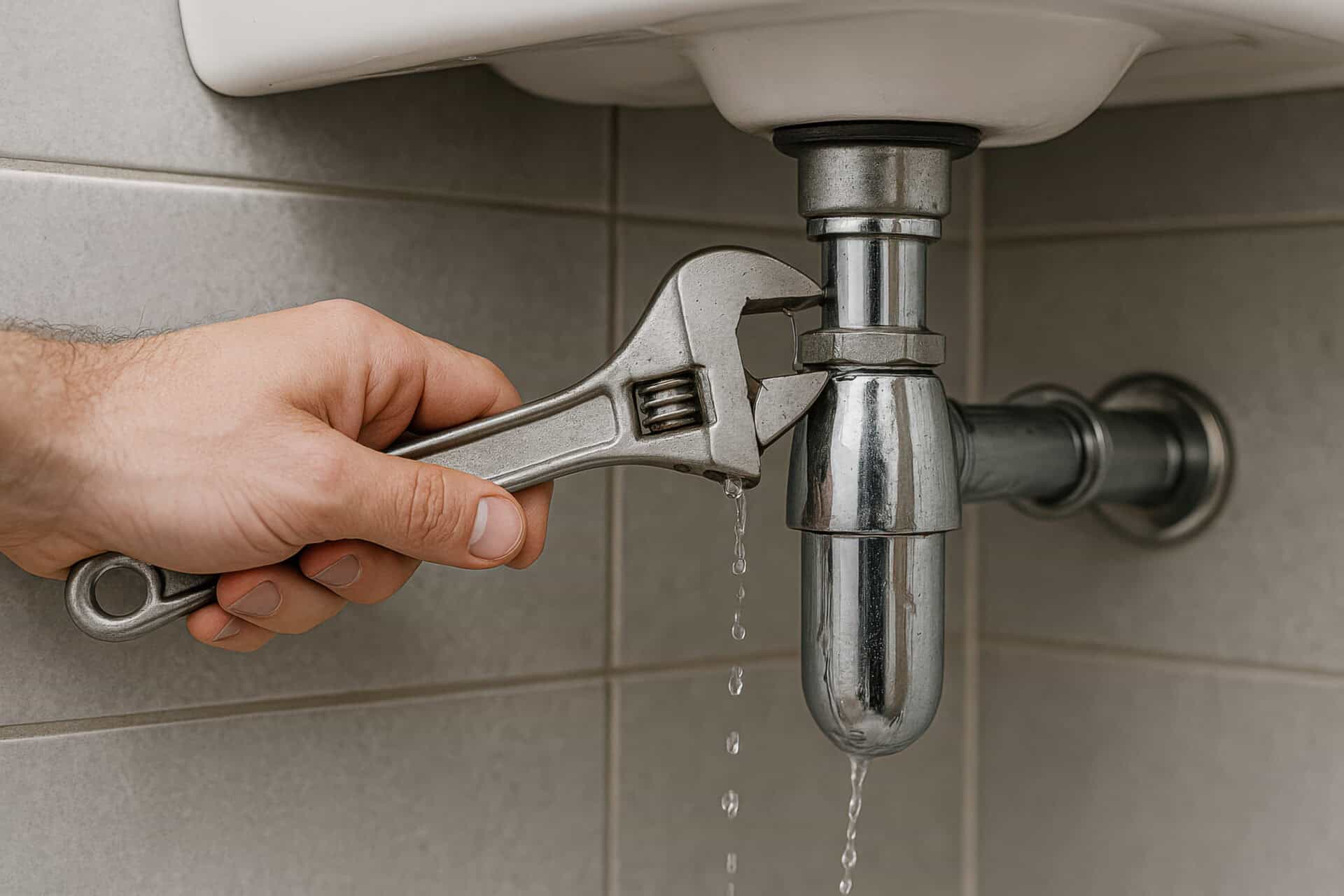
Every plumbing warning sign list online has the same problem. It gives you eight things to watch for and no idea which one matters on a Tuesday night. A dripping tap and a smell of gas are not the same kind of problem.
Sort them by urgency instead. Three categories, and the category decides whether you are making a phone call now, this week, or the next time someone is under the sink anyway.
Category one: act now
These are not warning signs. They are the event.
- Water where it should not be. A ceiling stain that is spreading, water pooling under a cabinet, or a wall that feels damp to the touch. Water is already somewhere it is not supposed to be, and every hour adds to the repair bill.
- Sewage backing up. Anything other than clean water coming up through a drain is a health matter, not a maintenance one.
- No water at all. A failed main or a broken supply line. Turn the water off at the meter if you can find it, then call someone.
- Gas. If you can smell gas or hear it escaping, do not troubleshoot. Do not flick a switch. Get everyone out, leave the door open behind you, and call your gas distributor or emergency services from outside. Here is how a gas leak announces itself, and it is worth reading before you ever need it.
The full list of what counts as an emergency, and what to do while you wait, is worth having in your head rather than your bookmarks.
Category two: book someone this week
- The same drain blocking again. Once is an accident. Twice in a few months means something is collecting in the pipe, and a rodding will not fix the cause.
- A water bill that has moved for no reason. Nobody in the house changed how they use water, and the bill is up. That is the single most useful signal a household gets, and it usually means a leak you cannot see.
- Damp, mould or a musty smell that keeps returning. Cleaning it does not treat it. Mould comes back because the moisture is still coming from somewhere.
- Hot water that has become unreliable. Longer waits, less of it, or a temperature that swings. The unit is telling you something before it stops altogether.
- Low pressure in one tap only. A whole-house problem is usually the supply. One tap is usually the fixture or the line feeding it, and it is cheaper to sort out now.
- Water pooling in the yard or the garden beds after rain has stopped. That is a stormwater or drainage problem, and it is doing slow damage to the foundations and the garden.
Category three: watch it, and be honest about watching it
A tap that drips. A toilet that runs quietly for a few seconds after it fills. A gully trap that smells in summer. None of these need a same-day call. All of them get worse, and they get more expensive at the point where they stop being small.
The honest version of “I will deal with it later” is that later costs more. Not dramatically. Just more.
The two things to stop doing
The first is chemical drain cleaner. It is caustic, it can damage older pipework and joints, and it is genuinely unpleasant to work with if it splashes. It also treats the symptom. A recurring blockage has a cause, and the cause is a camera job, not a bottle.
The second is plunging something you have already plunged three times. If the water is not moving, stop. You are more likely to break a joint than clear the line, and a broken joint inside a wall is a different category of problem entirely.
How often to have the system looked at
Nothing in a house requires an annual plumbing inspection by law, which is why most people only see a plumber when something has failed. For an older house, or one with mature trees near the lines, a check every couple of years is cheap insurance. Ask for the drainage lines to be looked at, not just the visible fixtures, and ask what condition the pipes are in rather than whether they are working today.
If that produces a recommendation, get it in writing with a price, and get a second one before you agree. The questions worth asking before anyone starts are covered here, and none of them are rude.
What to do with a warning sign
Put it in a category, then do the thing the category asks for. Nothing on this list is a reason to panic, and nothing on it improves with another month of hoping. The difference between a repair and a renovation is usually just the date you picked up the phone.
Sources: the health and safety advice on gas leaks, including the instruction to avoid switches and to call from outside the property, follows the guidance published by Australian energy distributors and state safety regulators; the caution on chemical drain cleaners reflects the warnings carried on those products and by plumbing industry bodies.


 Healthcare1 year ago
SIL Providers: What to Compare Before You Commit
- Healthcare1 year ago
What is Physiotherapy? A Complete Guide to Understanding Its Role in Health
- Healthcare1 year ago
How Much Does It Cost to Replace a Dental Implant in Melbourne Without Losing Your Smile or Wallet?
- Healthcare1 year ago
What Changes When You Start SIL
- Food1 year ago
Budget Bites: Delicious Meals You Can Cook for Under $10
- Tech1 year ago
Mental Health Apps and Wearables: What to Trust
- Home & Garden1 year ago
Gutter Upgrades Worth Doing Before You Sell
- Healthcare1 year ago
How to Put NDIS Community Participation Funding to Work