Pets & Animals
Rope Toys That Last Through Tug-of-War Fun

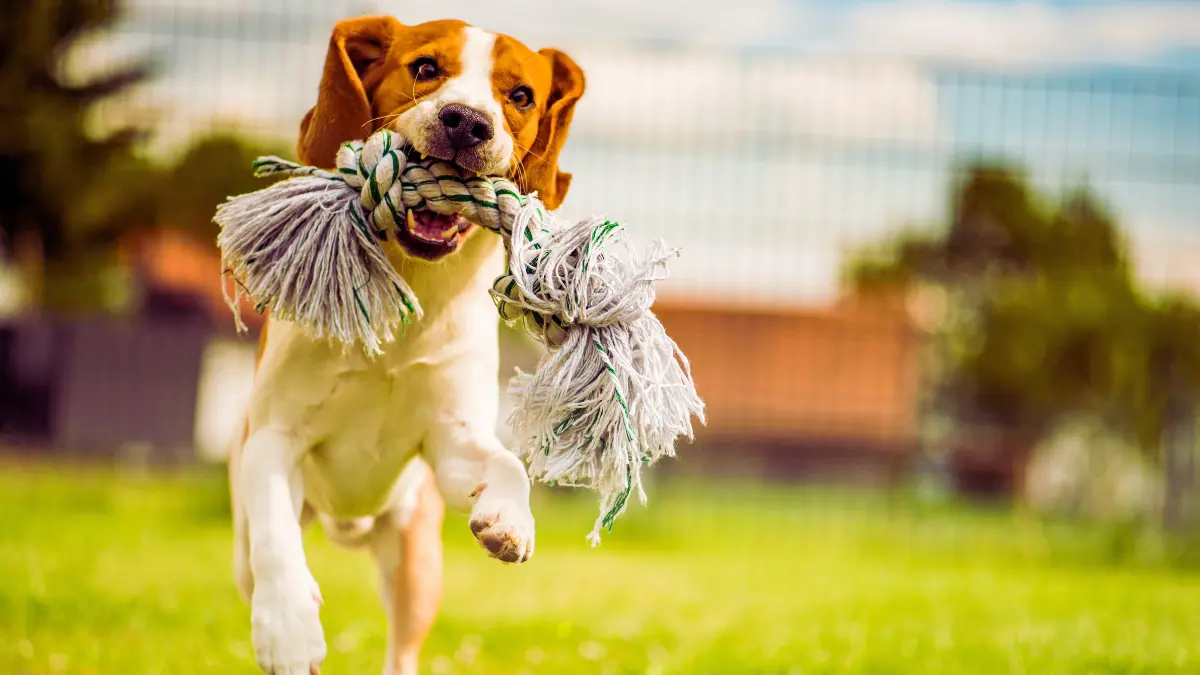
The rope comes out of the basket and the dog is already braced, front paws wide, tail going like a metronome. Tug-of-war is the game most toys were not built for, and a rope toy that survives it is a small piece of engineering: the right fibre, pulled tight, knotted properly, and retired on time.
The ropes that fail, fail in ways you can see coming. A shopping list of what makes one last is below, along with the point where a good toy turns into a hazard, because both matter in the same game.
What the rope is made of
Natural fibre is the safer base. Cotton and hemp ropes tend to fray into softer strands than synthetic rope does, and a strand that comes away is the beginning of the problem either way. What matters more than the fibre is the twist: a tight, dense braid holds its shape under a hard pull, while a loose weave opens up in a week and starts shedding.
Look at the ends before you look at the label. Finished, tightly knotted ends stay finished; a rope whose ends are already fraying in the shop will be worse by the weekend. Check also for a plastic core or a squeaker buried inside, because those are the parts that end up in pieces once the outer braid gives way.
The weave and the knots
Dogs grip near the knots, so the knots are where the toy either holds or fails. A properly made rope toy has knots that are tight enough to feel like a single lump, and ends that have been finished rather than merely cut. If the knots start to loosen, you can usually retie them and get more life out of the toy; if the braid itself is separating, the toy is done.
Matching the toy to the dog
Size is a safety feature, not a style choice. A rope meant for a small breed disappears into a large dog’s mouth with the ends at the back of the throat, which is how strands get swallowed. Buy for the dog on the end of it: thick rope for large jaws, and nothing so small that more of it lives in the mouth than in the hands. For a dog that tugs off the floor, a rope that is long enough to keep a grip away from the teeth is the one that lasts.
Play style decides the rest. Tuggers need dense, unsoftening rope. Fetchers will find that a wet rope hits the ground like a sandbag, so rope is not the best second pick for a beach dog. And the committed chewer needs a different toy entirely, because a rope is built to be pulled, not dismantled, and the dogs that treat it as a demolition project are the ones most at risk of swallowing fibre.
The dental claim, handled honestly
Rope toy packaging often suggests a flossing effect, and there is something to it: the gentle abrasion of cotton against the teeth can slow the buildup of plaque. It is a small help and not a substitute for brushing, dental chews or the vet’s scale and polish. Treat it as a pleasant side effect of play rather than a dental plan, and keep the actual dental plan.
The safety rules
Supervise the game. That is the whole of the safety instruction, and everything below is detail attached to it.
- No rope toys left in the bed or the crate. A bored dog and a frayed rope are a swallowing risk when no one is watching.
- Watch for strands leaving the knot. A rope is finished the moment its braid starts unravelling, not when it looks tired.
- Know the signs of trouble. Vomiting, drooling, refusing food or a change in toilet habits after a heavy chew session are reasons to call a vet the same day.
- Wash the rope like a kitchen sponge, because it collects what the kitchen sponge collects. Hot water, no fabric softener, and dry it properly before it goes back in the basket.
- Rotate the toys. A rope that disappears for a fortnight comes back interesting, and the basket lasts longer.
When to retire a rope toy
The test is simple. Pick the rope up and look at the ends and the knots: if the strands are separating, if the core is showing, or if a knot has gone slack more than once, the toy has moved from equipment to hazard and belongs in the bin. Retiring a rope a week early costs a few dollars. A swallowed strand costs a vet visit and a very bad night, and the dogs most likely to swallow one are the ones enjoying the game the most.
A rope that is washed, re-knotted and kept in play until it is genuinely spent is the same habit as keeping anything else in the house in good use until it is done. The kitchen version of that habit is the busiest example of it on the site.
Where it fits among the other toys
No single toy covers a dog’s week. Rope does tug and comfort chewing. Durable rubber does the heavy chewing. Puzzle feeders work a different muscle entirely, the kind that gets bored, and a bored dog invents its own games, usually with your furniture. A small basket with one or two from each column beats a pile from one.
Choose the toy, then supervise the game
Buy for the fibre and the weave, size it against the dog rather than the shelf, and stay in the room while it is being destroyed for fun. Do those three things and tug-of-war stays what it should be: the ten minutes of the day the dog has been waiting for, and one of the few games where the two of you are genuinely on the same team.
Sources: the RSPCA (rspca.org.au) and veterinary associations publish guidance on safe chew and play practices for dogs; toy manufacturers list materials, care instructions and any safety warnings on their labels.



 Healthcare1 year ago
SIL Providers: What to Compare Before You Commit
- Healthcare1 year ago
What is Physiotherapy? A Complete Guide to Understanding Its Role in Health
- Healthcare1 year ago
How Much Does It Cost to Replace a Dental Implant in Melbourne Without Losing Your Smile or Wallet?
- Healthcare1 year ago
What Changes When You Start SIL
- Food1 year ago
Budget Bites: Delicious Meals You Can Cook for Under $10
- Tech1 year ago
Mental Health Apps and Wearables: What to Trust
- Home & Garden1 year ago
Gutter Upgrades Worth Doing Before You Sell
- Healthcare1 year ago
How to Put NDIS Community Participation Funding to Work