
Science & Nature
Fire Danger Ratings: What Moderate, High, Extreme and Catastrophic Ask You to Do

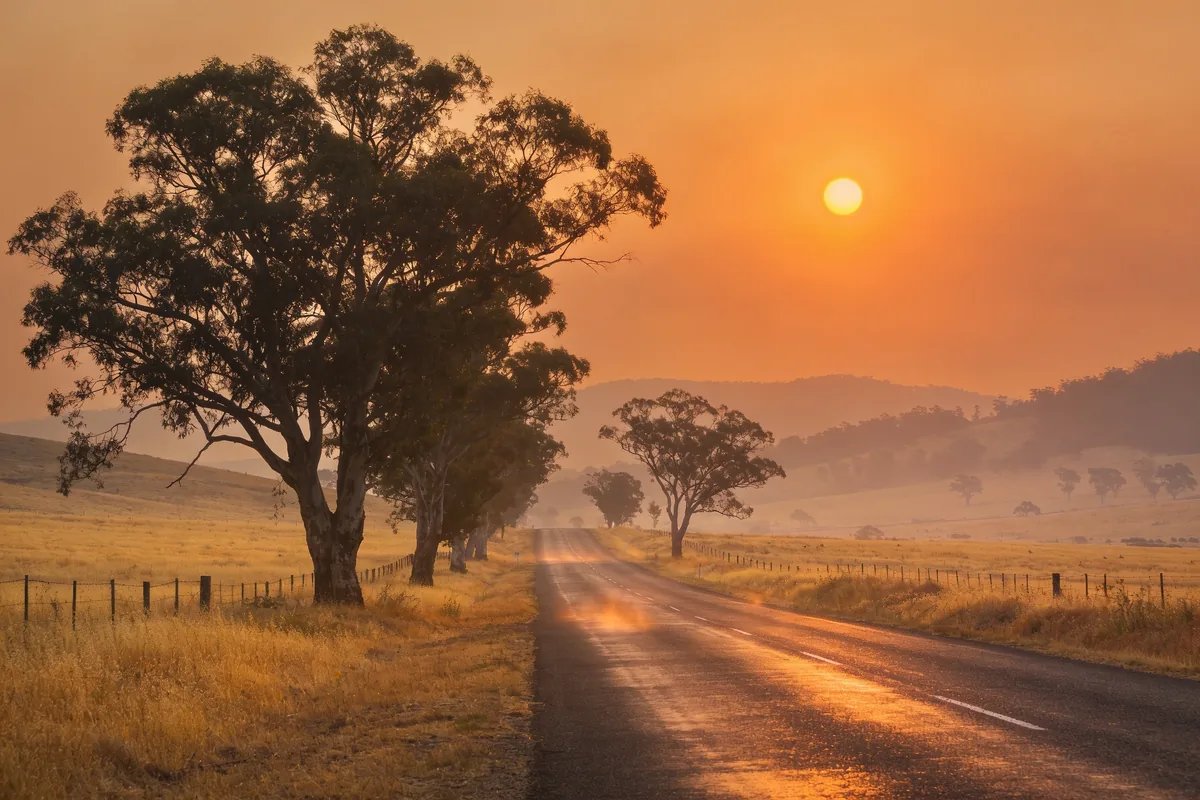
A fire danger rating is frequently read as a forecast that a fire will occur. It is not. Under the Australian Fire Danger Rating System, a rating describes how dangerous a fire would be if one were to start, and each of its four levels carries a specific instruction to the public. This article sets out those levels in the words the fire agencies use, explains what the rating is built from and where it is published, and distinguishes it from the warnings issued once a fire is burning. The decision helper below applies the same instructions to the rating for the day and the place in which a reader expects to be.
What today's fire danger rating asks you to do
Choose today's rating for your area and where you will be. The answer uses the fire agencies' own instructions.
If the questions do not load, the four levels and their instructions are set out in the article below.
Answer the questions and your instruction will appear here.
Your answers stay on this page and are not stored or sent anywhere.
The four levels, in the agencies’ words
The Tasmania Fire Service describes the system as national and consistent: the same levels, carrying the same meaning, apply across Australia. There are four levels, and a fifth state in which no rating is issued. Each is set out below as the Tasmania Fire Service words it, with the instruction first and the description of conditions second.
1. No rating. On days of minimal risk, no rating is issued. The Queensland Fire Department notes that a white “no rating” bar is shown on those days. Fires may still start, but they are unlikely to spread in a fast or threatening way. The absence of a rating is not a declaration that fire is impossible, and it is the most suitable day on which to make or review a bushfire plan.
2. Moderate: plan and prepare. Most fires can be controlled under these conditions. The instruction is to plan and prepare, to stay up to date, and to be ready to act if a fire occurs.
3. High: be ready to act. Fires can be dangerous. The instruction is to be ready to act, which in practice requires a household to have decided in advance what it will do if a fire starts, rather than deciding on the day.
4. Extreme: take action now to protect your life and property. Fires will spread quickly and be extremely dangerous, and homes may not withstand them. The instruction is immediate. A person who has not prepared to the highest level should go to a safer location well before a fire has any impact.
5. Catastrophic: for your survival, leave bushfire risk areas. At this level, lives are likely to be lost, and homes cannot withstand fires in these conditions. The instruction is to leave bushfire risk areas, and the Tasmania Fire Service is specific about timing: leave early in the morning or the night before.
Two observations follow from the wording. First, the instructions escalate from preparation to action to departure, and only the highest level instructs the public to leave regardless of how well a home has been prepared. Second, the instructions apply before any fire exists. A Catastrophic rating on a day without a single fire still means that the advice is to be out of bushfire risk areas.
What the rating is built from
A rating is not an observation of fire activity. According to the Tasmania Fire Service, it is calculated from forecast weather, vegetation and fuel. The result describes the potential danger should a fire start in those conditions.
Three consequences follow for the reader:
- A rating can be high on a day on which no fire is burning anywhere nearby, because it measures conditions and not events.
- A rating can change from one day to the next as the forecast changes, which is why it is issued daily.
- A rating is issued for an area, and it does not replace a household’s own attention to its immediate surroundings.
The national consistency of the system matters here as well. A rating of Extreme carries the same instruction whether a reader is at home in one state or travelling through another, and a person familiar with the system in one jurisdiction may rely on the same meanings elsewhere.
Where to find today’s rating
The Queensland Fire Department states that ratings were originally published by the Bureau of Meteorology and are updated daily. State and territory fire agencies carry them for their own areas.
The practical requirement is straightforward. During the high-risk period, the rating should be checked every day, and on a day of travel it should be checked for each area through which the journey passes, not only for the point of departure. A rating that was Moderate at home in the morning says nothing about the rating in a district two hours away.
Roadside fire danger signs are a familiar reminder that the system exists. They are not a substitute for the published daily rating for the area concerned.
Three habits make the daily check reliable:
- Check at the same time each day. A fixed time, such as the evening before or first thing in the morning, prevents the check from being forgotten on a busy day.
- Check for tomorrow as well as today. A Catastrophic rating calls for departure the night before or early in the morning, and that instruction can only be followed if the rating has been seen in time.
- Check every area on the route. A journey through several districts may pass through more than one rating on the same day.
Ratings and warnings are different
The rating and the warning answer different questions, and confusing them is one of the more consequential errors a reader can make.
- A fire danger rating concerns potential. It describes how dangerous a fire would be if one started, and it is issued in advance, whether or not any fire exists.
- A warning concerns an actual fire. The Tasmania Fire Service advises that when a fire is burning, the public should follow the advice issued under the Australian Warning System.
The rating therefore sets the conditions under which a household’s plan should operate, and the warning tells the household what a specific fire requires of it. Once a fire is burning, the Tasmania Fire Service’s advice is to follow the warning issued for that fire. In an emergency, call 000.
Total fire bans
Total fire bans are a separate instrument. They are declared by state and territory fire agencies, and the restrictions that apply during a ban are a matter for the agency concerned.
This article does not state when a ban is declared or what it prohibits. Those matters differ between jurisdictions, and the sources consulted for this article do not set out how bans relate to the ratings. A reader should check the relevant state or territory fire agency on any day of elevated danger for whether a ban is in force, in the same way that the rating itself is checked.
A plan that uses the ratings as triggers
The Tasmania Fire Service recommends that ratings be used as triggers within a bushfire plan. The principle is that decisions are made in advance and tied to a level, so that on a difficult day a household is following a decision rather than making one under pressure.
A plan built on that principle would set out, at a minimum, the following:
- At Moderate. The checks the household will carry out, including the review of the plan itself and the preparation of the property.
- At High. What the household will do if a fire starts, where it will go, and who will make the decision.
- At Extreme. Whether the home has been prepared to the highest level. If it has not, the plan should state that the household will go to a safer location well before a fire has any impact, and where that location is.
- At Catastrophic. The arrangements for leaving bushfire risk areas the night before or early in the morning, including where the household will stay.
Preparation of the property is part of the plan at every level, and a good deal of it is ordinary maintenance carried out before summer. Gutters are a common example, since they collect leaf litter and other material over the year. A reader considering work on them may find the thinker guide to gutter upgrades worth doing a useful starting point, while noting that the guide concerns the house generally rather than bushfire preparation specifically.
The Tasmania Fire Service also asks that the plan extend beyond the principal residence. Places where a household stays over summer, such as a shack or a campsite, require the same triggers. A family that has a clear plan at home and none for a holiday property has, in effect, a plan for part of the summer only.
Finally, a plan of this kind is most useful when it is written down and discussed with everyone in the household. A rating gives notice. It does not give time to agree on decisions that should already have been made.
Decide before the day
The system is designed so that its instructions can be acted on in advance. The four levels, in summary, are as follows:
- Moderate: plan and prepare.
- High: be ready to act.
- Extreme: take action now to protect your life and property.
- Catastrophic: for your survival, leave bushfire risk areas.
Each of those instructions is easier to follow when the decision it requires has been made beforehand. The rating for the day should be checked daily during the high-risk period, for each area in which a person will be, and if a fire is burning, the warnings issued for that fire are the advice to follow.
This article provides general information about the national rating system. It is not emergency advice, and it does not replace the advice of the relevant state or territory fire agency.
Sources: Australian Fire Danger Rating System Explained, Tasmania Fire Service (https://www.fire.tas.gov.au/fire-danger-rating/explained/); Monitor Fire Danger Ratings, Queensland Fire Department (https://www.fire.qld.gov.au/prepare/bushfire/fire-danger-ratings)


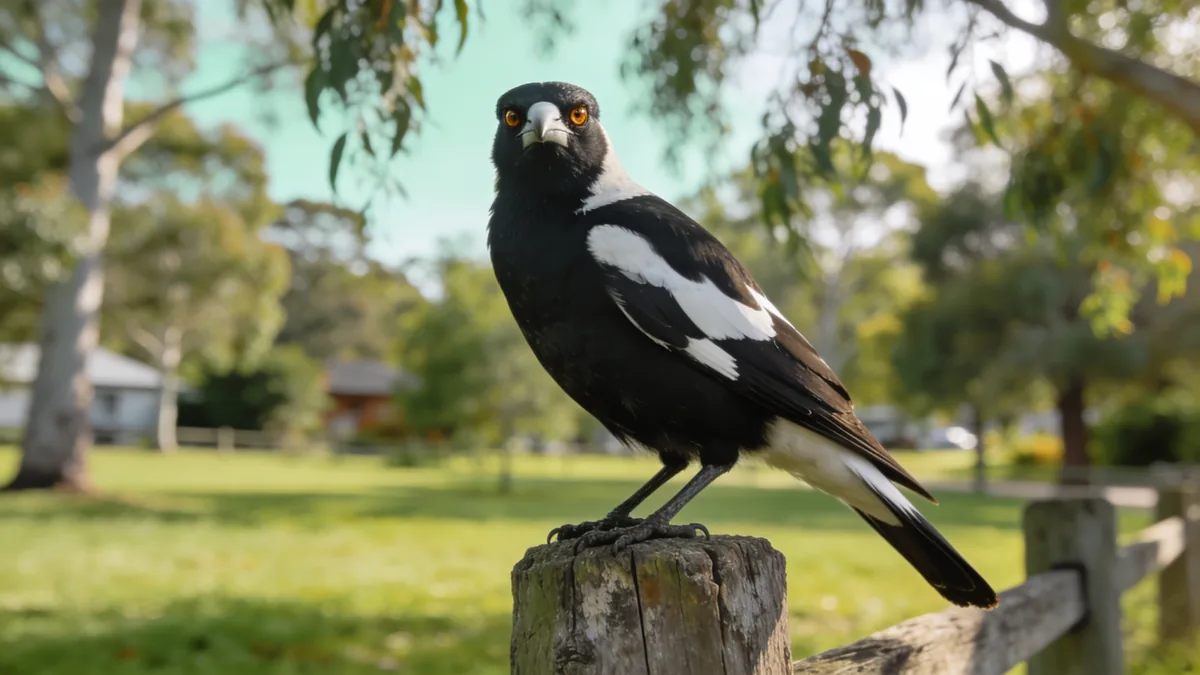
You have already made one good decision this swooping season, and you may not have noticed making it. At some point you started taking the other path, or crossing the road before the big gum, or keeping the dog a little closer on the corner. That is not avoidance. It is the beginning of the fix, and the rest of this article is making it deliberate.
Two facts make the whole season smaller before we go further. Fewer than 10 per cent of male magpies swoop people at all, so the great majority of the birds you pass are not a threat to anyone. And a bird that does swoop is defending chicks for about a fortnight, not running a campaign all spring.
So nothing here asks you to be brave around a bird, and nothing asks you to rearrange your spring for one. The ask is smaller than that: understand what the bird is doing, take the three or four small steps that work, and let the calendar finish the job.
The walk you have started avoiding
You changed your route because of a feeling, and the feeling was right. The bird that swoops is doing it from a patch of ground, and the patch is small: roughly 100 metres around the nest. Walk around the patch, or along the far side of the street from it, and your season is effectively over. The trouble is that half a spring of detours is a nuisance, and it is better to know which hundred metres you are avoiding and why.
It also helps to know that the bird you are avoiding is not the neighbourhood itself. It is one male, near one nest, for one fortnight. The rest of the walk is the same walk it always was.
Why it happens at all
Magpies breed through spring, and the season runs roughly from August to November. Within that window, each pair works to its own schedule, which is why the mother of all swooping stories is the one about the magpie that attacked in August, before anyone was ready. The birds do not check the calendar, and the season’s edges are soft.
What the male is doing is defence, full stop. He has chicks in a nest he cannot move, a territory he can patrol, and one method of discouraging anything that comes close. He will use it on cats, on other birds, and sometimes on people. None of it is personal in the way it feels. It is a small, temporary piece of bird engineering, and it ends when the chicks leave. For the rest of the year the same birds are garden birds, working the lawn and the compost for grubs, and the site’s guide to making compost at home describes the pantry that keeps them in business.
It also helps to know what the bird is not doing. Most passes are warnings rather than strikes; the swoop over your head is the message, and the birds that do make contact usually aim at the highest point of a walker, which is the head. Reading the pass as the whole product, rather than as a prelude to something worse, is what keeps the response calm, and calm is the tactic every section below depends on.
Why you, specifically
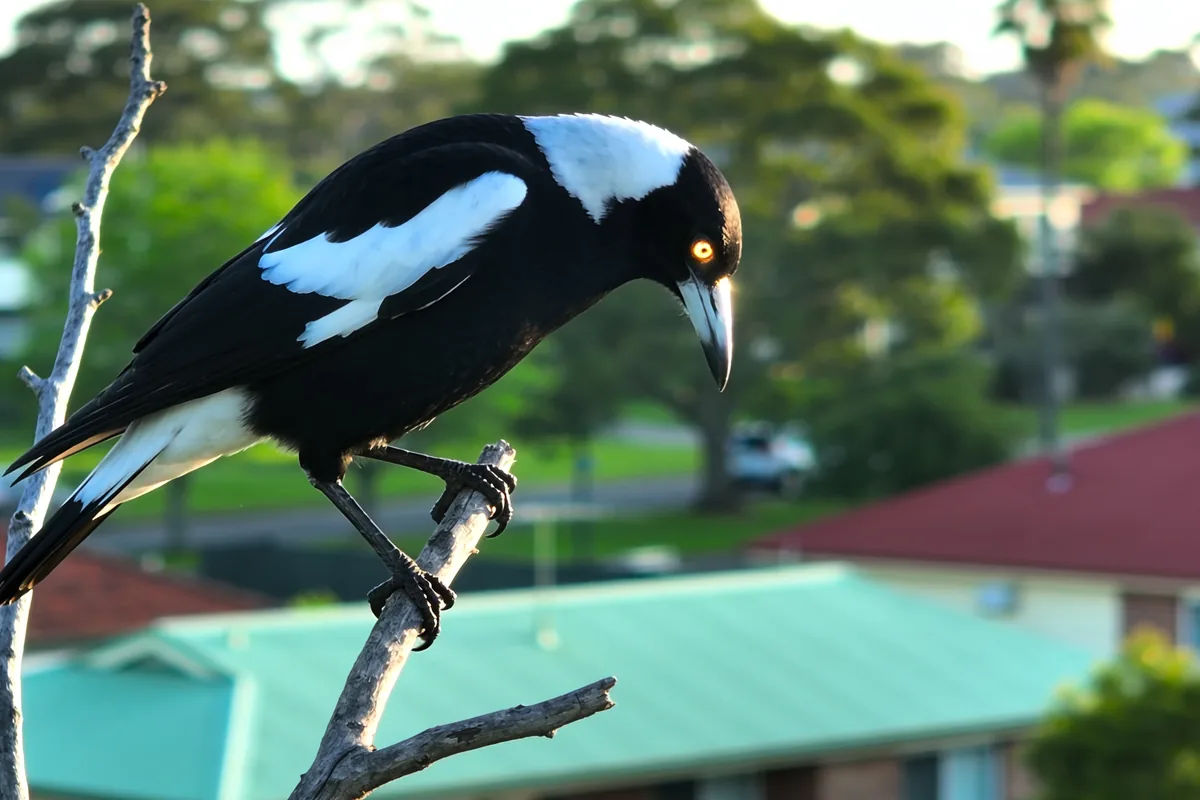
Here is the part most people have never been told, and it answers the question every swooped walker asks: magpies recognise individual human faces. They know the people who pass every day, treat them differently from strangers, and remember behaviour. It is one of the more remarkable pieces of Australian bird research, and it turns a random-feeling problem into a predictable one.
The pattern that follows is worth picturing. A regular passer-by is ignored, because the bird has seen them a hundred times and they have done nothing worth reacting to. A stranger near the nest is watched, because they are new. And someone who once waved a bag, swung at the bird or chased it off can be remembered and targeted the next time, by the same bird, sometimes for years.
There is one more twist in it: because the bird is responding to faces, two people walking the same path can have opposite seasons. One is left alone because the bird knows them; the other is watched because the bird does not, or because they are remembered from a spring when they did something the bird filed away. It is rarely random, and it is also not permanent. If you were swooped this year, you were likely near one nest in one fortnight. Next spring, the maths starts again.
The rules that work
The tactics that work are small, and they all come down to the same idea: not giving the bird anything to remember. The guidance below follows the advice state environment authorities give for the season, and every step in it is one you control.
Walk, do not run. Running is the response that reads as prey, and it keeps you inside the territory for longer. Walk through at your ordinary pace. It takes about a minute, and a minute is the whole exposure.
Keep your eyes on the bird when it is tracking you. Magpies dislike being watched, and a bird that knows it has been seen usually keeps its distance. This is also why the back of the head is the part they favour, and why a hat helps your nerves more than your safety.
If it does come, hold something between your head and the bird, and nothing more dramatic than that. Protect your head and eyes, keep moving, and leave it there. Do not wave the object and do not swing it. The dramatic moves are the ones that get remembered, and being remembered is the part of this problem that lasts.
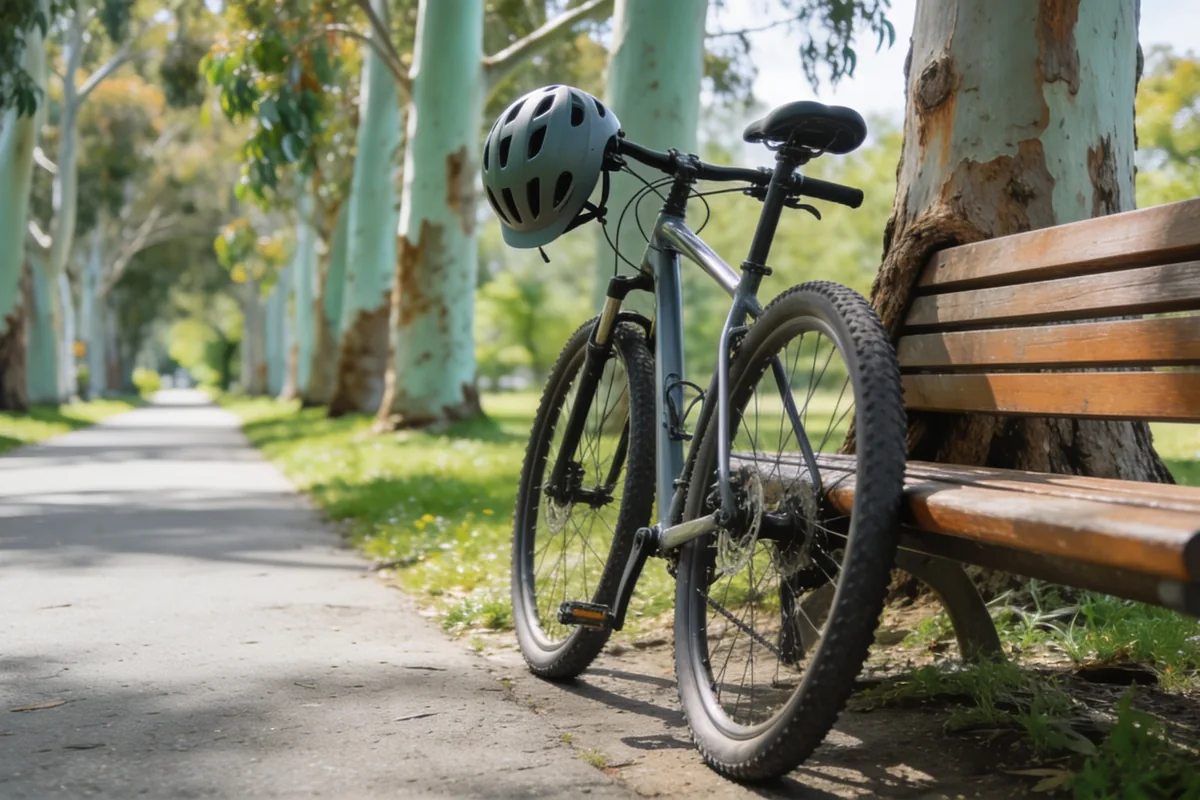
Cyclists should dismount and walk through the territory. A rider is faster than a walker and lower than one at the same time, and the bird responds to both facts. Walking the bike through the hundred metres or so is a minute of inconvenience against a helmet strike, and the trade is not close.
Dogs stay close, and on their lead through the patch. The bird is defending against ground threats, and a dog that is lunging or being chased changes the moment for everyone on the path, including the next walker through.
The same tactics scale down for children, with one adjustment: walk with them through the patch rather than sending them through it. A child’s first instinct is to run, and the speed is what turns a warning pass into a closer one. A school route with a known nest is worth a detour until the chicks fledge, and the detour is a fortnight.
None of this is dignified, and none of it needs to be. The bird is not grading your posture; it is reading your behaviour, and reading is the part you can influence.
What makes it worse
Feeding them is the affectionate mistake, and it is the most common bad idea in the whole season. Feeding draws more birds into a smaller area, it habituates them to people, and it does nothing about the swooping it was meant to soften. Magpies that associate people with food are magpies that come closer to people, and closer is not what anybody needs in October.
Waving, swinging and spraying are the other entries on the list, and they share one flaw: each of them marks you as memorable. A bird that has been swung at has a reason to keep watching the path, and if you use that path, you become the thing it watches for. The moment of satisfaction is real, and so is the cost of it, for you and for whoever walks the route next.
The instinct behind each of these is understandable, and the trap is identical in every case. The bird files the event away, and the file outlasts the moment of temper by a season or more. There is no version of escalation that ends with the bird deciding the footpath was not worth defending.
The one legal fact worth knowing
Magpies are protected native wildlife in every Australian state and territory. That makes harming one an offence, and it makes relocation a licensed process rather than a household solution, so the removal advice that circulates in forums is not something to try. The protection is not the obstacle here, though. The behaviour ends on its own, every year, on a schedule that has nothing to do with anything a person did.
The practical alternative to every bad idea is a plan. Know where the nest is, walk the detour on purpose, and mention it to the neighbours so the next walker through is not surprised. A street that knows which hundred metres to respect gives each other more than a spring of improvised retaliation ever could.
Play by their rules
The honest close is short, because the problem is. The bird that is swooping you will stop in about a fortnight, when the chicks fledge and the urgency passes. Next spring the nests may be elsewhere, the birds may be different, and your face, which a magpie can recognise, may have done nothing this year worth remembering.
So walk the route if it suits you, keep your pace steady, keep your eyes on the bird, and let the dog heel through the patch. You were already halfway to the fix before you opened this page. The rest is doing it on purpose, for a fortnight, and then the season is simply over. And if you were swooped last year, take the last word from the research: the next bird on that corner starts with no opinion of you at all.
Sources: BirdLife Australia – swooping season guidance; Australian Museum – magpie breeding and swooping behaviour; Queensland Department of Environment, Science and Innovation – staying safe in swooping season; The Conversation – research on magpie facial recognition.


 Healthcare1 year ago
SIL Providers: What to Compare Before You Commit
- Healthcare1 year ago
What Is Physiotherapy?
- Healthcare1 year ago
What a Dental Implant Replacement Costs in Melbourne
- Food1 year ago
Budget Bites: Delicious Meals You Can Cook for Under $10
- Healthcare1 year ago
What Changes When You Start SIL
- Tech1 year ago
Mental Health Apps and Wearables: What to Trust
- Home & Garden1 year ago
Gutter Upgrades Worth Doing Before You Sell
- Healthcare1 year ago
How to Put NDIS Community Participation Funding to Work







You must be logged in to post a comment Login