
Tech
Atlassian’s Rise: Lessons from Australia’s Software Giant


Introduction: From Sydney Startup to Global Software Powerhouse
Few Australian companies have left as big a mark on the global tech landscape as Atlassian. What started in a small Sydney office in 2002 has grown into a multi-billion-dollar enterprise powering teams in over 190 countries.
Founded by Mike Cannon-Brookes and Scott Farquhar, Atlassian has become synonymous with collaboration software — most notably Jira, Confluence, and Trello. But beyond its product lineup, Atlassian’s journey offers valuable lessons in innovation, leadership, and company culture that every entrepreneur can learn from.
This is the story of Atlassian’s rise — and the strategies that turned two university graduates into Australia’s most successful tech founders.
1. Starting Smart: Bootstrapping Before Venture Capital
Unlike many tech startups, Atlassian didn’t rely on venture capital in its early days. Instead, Cannon-Brookes and Farquhar bootstrapped their business, funding operations with a $10,000 credit card loan.
This forced them to prioritise profitability and sustainability from day one — a rare approach in the startup world. By building a solid product before seeking investors, they maintained full control over their company’s direction and values.
Lesson: You don’t always need millions in funding to build a global company. Focus on solving a real problem, build a loyal customer base, and let success attract investors naturally.
2. Building Products That Solve Real Problems
Atlassian’s flagship tool, Jira, was developed to help software teams manage projects more efficiently. Instead of chasing trends, the founders listened to developers’ frustrations and created a practical, scalable solution.
Over time, they expanded into tools like Confluence for documentation and Trello for visual task management — all centred on teamwork and transparency.
Today, Atlassian’s products are used by giants like NASA, Netflix, and Airbnb, as well as small startups around the world.
Lesson: Success comes from solving everyday pain points with clear, reliable products — not from flashy features.
3. Culture as a Competitive Advantage
One of Atlassian’s greatest strengths is its unique company culture. The company’s “no-nonsense, open communication” philosophy encourages collaboration and authenticity.
Atlassian’s values — such as “Open Company, No Bullshit” and “Don’t #@!% the Customer” — are not just slogans; they guide every business decision.
Even as the company scaled to thousands of employees worldwide, it maintained a transparent and inclusive culture, helping it attract and retain top talent in a competitive global market.
Lesson: Culture is your company’s DNA. If you get it right early, it can scale with your success.
4. Global Impact with Australian Roots
While Atlassian is now headquartered in Sydney and San Francisco, it has never lost its Australian identity. The company continues to invest heavily in the local tech ecosystem, creating jobs and mentoring new founders through initiatives like Startmate and Pledge 1%.
Atlassian’s story has also helped put Australia on the global startup map, inspiring a generation of entrepreneurs who now see global success as achievable from Australian soil.
Lesson: You don’t need to move to Silicon Valley to go global. Build locally, think globally, and stay connected to your roots.
5. Innovation Through Continuous Learning
Atlassian thrives on experimentation. From hackathons to open idea-sharing, the company encourages employees to innovate freely. Its famous “ShipIt Days” give staff 24 hours to work on any project they’re passionate about — some of which have led to major product features.
This culture of constant learning and adaptability keeps Atlassian ahead in a fast-changing industry.
Lesson: Innovation doesn’t just happen in the lab — it happens when people are empowered to create, fail, and try again.
6. The Power of Purpose: Business Beyond Profit
Atlassian’s success is not measured solely by revenue. Through the Atlassian Foundation, the company donates 1% of equity, profit, and employee time to charity, supporting education and social impact projects around the world.
Their “Pledge 1%” movement has now inspired hundreds of other businesses globally to do the same.
Lesson: Purpose-driven companies attract better talent, stronger customer loyalty, and lasting success.
7. Lessons for Aspiring Entrepreneurs
Atlassian’s journey offers timeless lessons for startups and established businesses alike:
- Start small, think big: Sustainable growth beats fast hype.
- Stay true to your mission: Authenticity builds stronger brands.
- Invest in people: Empowered teams create innovative products.
- Keep learning: Adapt to new technologies and trends.
- Give back: A purpose beyond profit strengthens your legacy.
Conclusion: The Atlassian Blueprint for Success
Atlassian’s rise is more than a business success story — it’s proof that Australian innovation can compete on the world stage. From its humble beginnings in Sydney to becoming a software giant, Atlassian’s journey is a masterclass in vision, culture, and resilience.
For entrepreneurs, the lesson is clear: build with purpose, lead with integrity, and grow sustainably. The world will take notice — just as it did with Atlassian.
Also Read This: Mindful Tech: How Wearables and Wellness Apps Are Transforming Mental Health

If you’ve launched Battlefield 6, geared up for a match, and suddenly hit the Battlefield 6 DirectX error, you’re not alone. Many players have faced this frustrating crash right when the action is about to begin. The good news? In most cases, it’s fixable without expensive hardware upgrades or advanced technical skills.
This guide breaks down why the Battlefield 6 DirectX error happens, what real players have done to fix it, and how you can get back into the game smoothly.
What Is the Battlefield 6 DirectX Error?
The Battlefield 6 DirectX error usually appears when the game struggles to communicate with your graphics system. DirectX is essential for rendering graphics, handling visual effects, and ensuring stable performance. When something goes wrong—outdated drivers, conflicting settings, or corrupted files—the game may crash or fail to launch.
Players commonly report:
- Sudden crashes during loading screens
- Error messages referencing DirectX or DXGI
- Game freezing after a recent update
- Issues after changing graphics settings
Common Causes Players Encounter
Based on real-world gaming setups and community feedback, the most frequent triggers include:
1. Outdated or Corrupted Graphics Drivers
One player shared that Battlefield 6 worked fine until a Windows update rolled out. The update conflicted with an older GPU driver, instantly triggering the DirectX error.
2. DirectX Version Conflicts
Some systems default to DirectX 12, even though Battlefield 6 may run more stable on DirectX 11 depending on your hardware.
3. Overclocking Instability
A few users noticed the error appeared only when their GPU or CPU was overclocked. Returning to default settings solved the issue instantly.
4. Damaged Game Files
Unexpected shutdowns or interrupted updates can corrupt core game files, leading to DirectX-related crashes.
Proven Fixes That Actually Work
Here are the most effective solutions players have used to resolve the Battlefield 6 DirectX error.
Update Your Graphics Drivers
Visit your GPU manufacturer’s official website and install the latest stable driver. Clean installations often work better than express updates.
Switch DirectX Versions
Inside the game launcher or settings file:
- Try forcing DirectX 11 instead of DirectX 12
Many mid-range systems run Battlefield 6 more reliably this way.
Verify Game Files
Use your game platform’s “verify integrity” option. This scans for missing or damaged files and replaces them automatically.
Disable Overlays and Background Apps
Third-party overlays, screen recorders, and monitoring tools can interfere with DirectX. Close them before launching the game.
Reset Overclock Settings
If you’re running custom GPU or CPU clocks, revert to default values and test the game again.
Real Player Experience
A casual weekend player reported constant crashes after upgrading their graphics card. Instead of returning the hardware, they rolled back to a stable driver version and switched Battlefield 6 to DirectX 11. The game ran smoothly for hours without a single crash.
This highlights an important point: newer isn’t always better when it comes to drivers and DirectX versions.
Preventing the Error in the Future
To reduce the chance of seeing the Battlefield 6 DirectX error again:
- Keep drivers updated, but avoid beta releases
- Update the game fully before launching
- Avoid changing graphics settings mid-session
- Restart your PC after major system updates
Final Thoughts
The Battlefield 6 DirectX error can feel like a game-breaking issue, but for most players, it’s a settings or compatibility problem rather than a serious hardware fault. With a few targeted fixes—driver updates, DirectX adjustments, and system stability checks—you can get back into intense multiplayer battles without interruptions.
If you’re still facing issues after trying these steps, checking official support forums or patch notes can reveal known bugs and upcoming fixes. Most importantly, don’t give up—many players have beaten this error and returned to smooth gameplay.


Mental health is finally getting the attention it deserves. With busy lives and growing stress, people are turning to tech for a helping hand. From smartwatches that track stress levels to apps that guide you through breathing exercises – technology is playing a powerful role in daily wellbeing.
This shift isn’t about replacing therapists or traditional support. It’s about adding tools we can access anytime, anywhere. Wearables and wellness apps help us stay aware of our moods, manage anxiety, and even sleep better.
As mental health becomes more mainstream, the blend of digital innovation and emotional care opens exciting new doors. Let’s explore how mindful tech is quietly transforming how we look after our minds.
1. The Rise of Mental Health Tech
Tech has become more personal, and that includes how we care for our minds. The rise in mental health apps and smart devices began picking up after the pandemic, when many people started seeking support from home.
From guided meditations to mood diaries, digital tools have become accessible to almost anyone with a phone. They’re easy to use, discreet, and often free or low-cost.
This growth reflects changing attitudes. People are more open to managing mental wellness every day, not just when in crisis. And tech fits into this approach perfectly – offering gentle, ongoing support.
What once seemed futuristic is now part of daily life.
2. Top Wearables Supporting Mental Health
Wearables do more than count your steps now. Devices like Fitbit, Apple Watch, and Garmin smartwatches include features for stress tracking, heart rate monitoring, sleep analysis, and guided breathing exercises.
These small tools offer big insights. You can spot patterns in how you feel, track the impact of your lifestyle, and get reminders to take mindful breaks.
Here’s a simple comparison of some popular wearables:
| Device | Mental Health Features | Battery Life | Price Range (AUD) |
|---|---|---|---|
| Apple Watch | Mindfulness app, HRV, sleep tracking | 18 hours | $600–$1,200 |
| Fitbit Sense | Stress management, SpO2, skin temp tracking | 6+ days | $400–$500 |
| Garmin Venu 2 | Body battery, breathing exercises | 11 days | $500–$800 |
Wearables give you feedback in real-time, helping you stay connected to how you feel throughout the day.
3. Wellness Apps Making a Difference
Wellness apps offer support in your pocket. Whether it’s a five-minute meditation or a chatbot to talk through anxious thoughts, these tools have become part of many people’s self-care routines.
Apps like Calm and Headspace focus on mindfulness, sleep, and stress relief. Others, like Moodpath or Woebot, offer mood tracking and therapy-style chats.
Here’s a look at estimated global users of popular wellness apps:
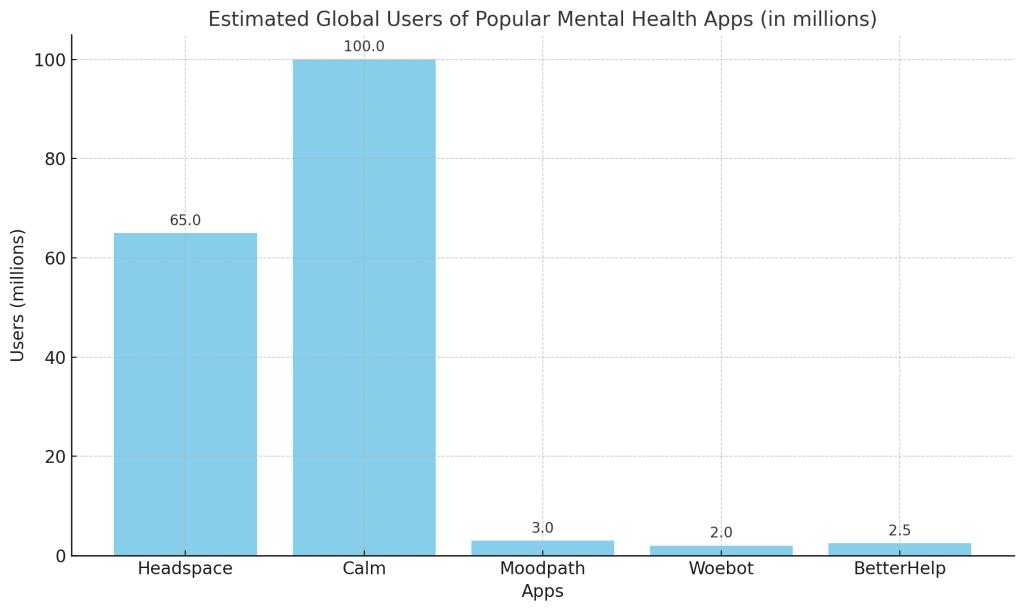
These numbers show how people around the world are embracing tech for their mental health. These apps are not only easy to use but also promote healthy habits one small step at a time.
4. The Science Behind the Tech
Behind every buzz or alert from a wearable is science. These devices track data like your heart rate, oxygen levels, or sleep quality – all of which relate closely to how you feel emotionally.
For instance, a spike in heart rate can signal stress. Poor sleep? You’re likely to feel low or anxious. These tools help spot early warning signs, encouraging users to take action before things get worse.
It’s not just about data, though. Guided breathing and mindfulness exercises have been shown to activate calming parts of the brain. These features are based on well-researched techniques like Cognitive Behavioural Therapy (CBT) and biofeedback.
Tech is not a cure, but it can guide us toward healthier habits and support us between therapy or check-ins.
5. Digital Boundaries: When Tech Becomes Too Much
While tech supports wellbeing, too much screen time can backfire. Constant notifications, comparison on social media, and ‘self-help overload’ may actually increase anxiety.
It’s important to use wellness tech mindfully. Choose tools that add calm, not clutter. Avoid using too many apps at once, and set screen time limits where needed.
Make space for digital detox moments – such as keeping phones out of the bedroom or switching off notifications during breaks. A balance between tech and real-life experiences helps keep wellbeing at the centre.
Mental health tech works best when it’s a gentle companion, not a demanding one.
6. Future of Mental Health Tech
The future of wellbeing tech is exciting. AI-powered chatbots, like Woebot or Wysa, are becoming more advanced and supportive. Smart rings and patches are being developed to measure mood, breathing, and stress without you even noticing.
Machine learning is starting to predict mood shifts by analysing daily patterns. This opens the door for early intervention and better personal care plans.
Soon, we may see virtual therapists that adapt in real time or augmented reality tools for relaxation.
What matters most is that tech remains human-centred. The goal is not to replace care, but to make it more accessible and personalised.
Conclusion
Wearables and wellness apps are transforming how we care for our minds. With real-time data, guided support, and accessible tools, mindful tech empowers people to take charge of their emotional wellbeing.
These small steps – a breathing break, a reminder to rest, a moment of calm – all add up to a healthier life. Tech isn’t the full answer, but it’s a valuable partner. Start with one tool that fits your lifestyle and use it with care. Your mental health deserves it.

Think You’re Paying Too Much Tax? Here’s What Most People Miss

Understanding the Real Value of Truck Finance Melbourne for Long-Term Success

Don’t Ignore These Warning Signs — What a Plumber Liverpool Wants You to Know

Not Sure Where to Start with SIL Providers in Melbourne? Here’s How the Right Provider Makes a Difference

How Much Does It Cost to Replace a Dental Implant in Melbourne Without Losing Your Smile or Wallet?

What is Physiotherapy? A Complete Guide to Understanding Its Role in Health
-
 Healthcare9 months ago
Not Sure Where to Start with SIL Providers in Melbourne? Here’s How the Right Provider Makes a Difference
-
 Healthcare9 months ago
How Much Does It Cost to Replace a Dental Implant in Melbourne Without Losing Your Smile or Wallet?
-
 Healthcare9 months ago
What is Physiotherapy? A Complete Guide to Understanding Its Role in Health
-

 Healthcare9 months ago
What Happens After You Start SIL? A Closer Look at the Journey
-

 Healthcare9 months ago
Regular Community Participation That Builds Belonging—and a Life You Control
-

 Healthcare9 months ago
5 Signs You Need to See a Psychologist – And Why It’s Totally Okay!
-

 General9 months ago
7 Guttering Upgrades That Instantly Make Your Home More Attractive to Buyers
-

 General9 months ago
Mindful Tech: How Wearables and Wellness Apps Are Transforming Mental Health