Travel
The Japan Rail Pass After the Price Rise: Price the Trip Before You Buy the Pass

The platform at Tokyo Station hums in the way only a big railway station can, a low layer of announcements and wheeled suitcases and the soft chime before each departure. Halfway along it, a woman from Brisbane stands with a folded sheet of paper in one hand and a takeaway coffee going cold in the other. On the paper, in her own handwriting, is the trip: Tokyo, then Kyoto, then Osaka, then home. Beside each line she has written a number with a question mark after it.
She is doing the sum that every first-time visitor to Japan seems to do somewhere between booking the flights and boarding the first train. The pass, or the tickets? Her friends told her the Japan Rail Pass was the obvious thing to buy. The internet told her it was dead. The truth, as she is about to find out, sits on that sheet of paper, and it depends almost entirely on the lines she has written down.
The Japan Rail Pass is neither a bargain nor a trap by nature. It is one fixed price for JR travel over a set number of days, and whether it pays depends on how far you go inside those days. Since 1 October 2026 it also depends on where you buy it.
What the pass costs now
The official JAPAN RAIL PASS site, run for the JR Group, now lists two prices for every pass: one for buying online through the official site, and a higher one for buying through an overseas JR-designated agency. These are the prices it shows, in yen:
| Pass | Bought online (official site) | Bought through an overseas agency |
|---|---|---|
| Ordinary, 7 days | 50,000 | 53,000 |
| Ordinary, 14 days | 80,000 | 84,000 |
| Ordinary, 21 days | 100,000 | 105,000 |
| Green, 7 days | 70,000 | 74,000 |
| Green, 14 days | 110,000 | 116,000 |
| Green, 21 days | 140,000 | 147,000 |
Children aged 6 to 11 pay half.
The gap between the two columns is small next to the price of the pass itself, but it is real money. On a 7-day Ordinary pass it is 3,000 yen. On a 21-day Green pass it is 7,000 yen. For a family of four, the difference adds up quickly.
What changed on 1 October 2026
The JR Group announced the increase on 9 April, and it took effect on 1 October 2026. The Japan National Tourism Organization (JNTO) explains how it lands: passes bought through overseas agencies now carry the higher price, while booking through the official site keeps the pre-October prices for a limited time. JNTO says the length of that window will be announced.
So the rise is real, and for now it is avoidable. The online column in the table above is the old price held in place. The agency column is the new one.
That “for now” matters. The official site has not said how long the online price will hold, and a traveller who reads this article in a few months may find the two columns have closed. The only reliable price is the one on the official site on the day you buy, so check it then, not when you first start planning.
Travellers who remember the pass from years ago still talk about it the way people talk about a café that used to be cheap, and in their telling this is not the first rise. In one long discussion of the October rise, a commenter wrote that the pass “does not make sense for 95% of tourists who only visit Tokyo, Kyoto, Osaka and Hiroshima”. Another suggested the JR Group was raising the price “to effectively kill the pass, without officially killing the pass”. Those are opinions, and strong ones. What they point at is worth taking seriously, though: for a lot of itineraries the pass stopped being an automatic win some time ago.
The sum
Back on the platform, the woman from Brisbane is filling in her question marks. This is the part that decides everything, and it is simpler than the arguments online make it sound.
Step 1. List every long-distance journey. Not the city trains, not the subway to the museum. The intercity legs: the Shinkansen from one city to the next, the limited express to the hot spring town, the day trip that runs two hours each way.
Step 2. Price each one as a single ticket. Use JR’s own fare information for each leg, for the class of seat you would actually buy. Write each fare beside its journey.
Step 3. Add them up. That total is what the trip costs without a pass.
Step 4. Compare it with the right pass. Pick the duration that covers your long journeys, not your whole holiday. If the long legs all fall within 7 days, the 7-day pass is the comparison, even if you are in Japan for three weeks.
On paper, it looks like this:
| Journey | Single fare (yen) |
|---|---|
| Leg 1: ______ to ______ | ______ |
| Leg 2: ______ to ______ | ______ |
| Leg 3: ______ to ______ | ______ |
| Leg 4: ______ to ______ | ______ |
| Total of single tickets | ______ |
| Pass for the matching duration | ______ |
If the total is higher than the pass, the pass is worth looking at. If it is lower, the pass is costing you money, and the convenience of not buying tickets is the only thing it still offers. For some travellers that convenience is worth the difference. It should be a choice made knowingly, though, not a default.
The traveller on the platform is planning a Tokyo, Kyoto, Osaka loop with no long side trips, which is exactly the trip the forum comment had in mind. When she adds her line, the question marks start to come out lower than the pass.
The Nozomi catch

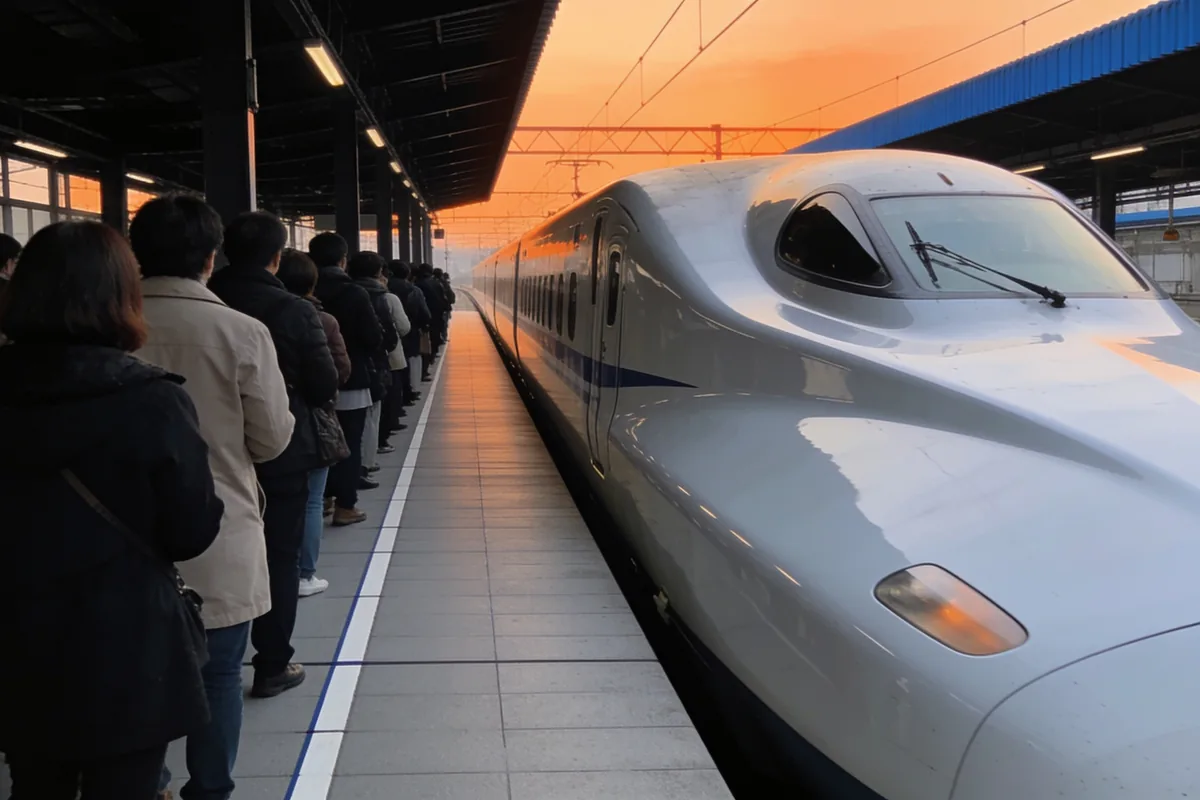
There is one more line her friends did not mention, and it sits right on the Tokyo to Osaka corridor.
The fastest services on the Tokaido, Sanyo and Kyushu Shinkansen lines are the NOZOMI and MIZUHO trains. According to the official pass site, pass holders cannot simply board them on the pass. They need an extra special ticket, which can only be issued to pass holders, on top of the pass itself.
That changes the sum in a specific way. If you would naturally ride a NOZOMI between Tokyo and Kyoto, your single-ticket comparison should include what that journey costs on that train, and your pass column should include the pass plus the special ticket. Comparing a single NOZOMI fare against a bare pass flatters the pass. Comparing the right pair of numbers is the only fair test.
The alternative is to ride the slower services the pass covers without the extra ticket and accept a longer journey. Some travellers are happy to. Others, with a short trip and a long list, are not. Either way, decide before you buy, because the choice changes which column wins.
Where the pass still earns it
The pass is not dead, whatever the videos say. Its job has narrowed.
It earns its price when the long journeys are long and many, and when they are packed into a short window. A traveller who will cover several regions in a single week, with a long Shinkansen ride most days, is the traveller the pass still suits. So is someone who would otherwise buy several long tickets inside 7 days and wants the freedom to change plans without rebooking.
The more of your journeys that are short, the fewer that are inside the pass window, and the more of them that are on NOZOMI or MIZUHO services, the weaker the case becomes. Put plainly, the pass rewards distance and density. A slow, deep trip through two cities rarely gives it either.
One traveller summed up the other side in a post about using the 7-day pass and finding it worth it “for a certain demographic”. That is fair. The demographic is people whose sum comes out in the pass’s favour. There is no shortcut to knowing whether you are in it except doing the sum.
The other options to price
If the sum goes against the pass, there are other ways to pay for the same trains, and they are worth pricing the same way.
Single tickets. The obvious one. You have already priced them in the table.
Regional JR passes. Several regions have their own JR passes covering a smaller area. If your trip stays within one region, a regional pass may fit better than the nationwide one. Price it against your legs exactly as you priced the nationwide pass.
Pay-as-you-go IC cards. For city travel, the trains and subways you take between sights, a pay-as-you-go IC card is the category to look at. Keep those short fares out of your long-distance sum and price them separately, so neither total hides the other.
Each of these is a category to check, not an answer. Coverage and prices change, so look them up on the operator’s own site when you plan, the same day you check the pass.
Add up the tickets first
On the platform, the woman from Brisbane folds her sheet of paper and puts it in her pocket. Her total of single tickets has come out under the 7-day pass, so she buys her next ticket at the machine and boards a train she chose herself. Her friends will still tell her the pass was the obvious buy. For their trip, maybe it was.
For yours, the order is simple. Write down every long journey. Price each one as a single ticket from JR’s own fares. Add them. Compare the total with the pass for the matching number of days, add the NOZOMI special ticket if you will ride those trains, and check the official site’s online price on the day you buy, because the gap with the agency price may not last.
While you are sorting the trip, the rest of the admin is worth the same care. Before you lock anything in, read through the travel insurance exclusions that catch people out, so the policy fits the trip you are actually taking.
Then buy whichever column wins.
Sources: Types and prices, JAPAN RAIL PASS official site, JR Group (https://japanrailpass.net/en/purchase/price/); Price Increases are Coming to the Nationwide Japan Rail Pass (2026), Japan National Tourism Organization (https://www.japan.travel/en/ca/news/price-increases-are-coming-to-the-nationwide-japan-rail-pass-2026/)
You must be logged in to post a comment Login