Eco Friendly
10c a Can in Every State, Just Not for the Same Bottles

You probably have a bag of empties somewhere already. It might sit by the back door, or under the laundry sink, or roll around in the boot until someone remembers it. There are cans in it. A few plastic soft drink bottles. Maybe a glass bottle or two from the weekend.
That bag is a good start. You kept those containers out of the bin, which is the hardest habit to build. Everything from here is a smaller step than that one.
Most of what is in there is worth 10c, wherever you live in Australia. Every state and territory now runs a container deposit scheme, and every one of them pays 10c a container. What changes at the border is the list of what counts. A wine bottle that earns 10c in Brisbane goes into kerbside recycling in Hobart.
So you don’t need to learn a whole system. You only need to know your own state’s list, and a few small habits that stop the machine handing things back.
Eight schemes, one refund
South Australia went first. EPA SA says its container law, the Beverage Container Act 1975, commenced in January 1977. The refund there rose from 5c to 10c in 2008.
The rest of the country followed over the years:
- Northern Territory: a scheme run under the NT EPA.
- New South Wales: Return and Earn.
- ACT: the ACT scheme, which launched on 30 June 2018.
- Queensland and Western Australia: both use the Containers for Change name, with separate pages for each state.
- Victoria: CDS Vic.
- Tasmania: Recycle Rewards, a Tasmanian Government scheme.
Tasmania was the last to start. Recycle Rewards says Tasmanians have been getting a 10c refund since 1 May 2025.
So that’s eight schemes and one refund amount. If you have moved interstate, the 10c will feel familiar. The rules sitting around it may not.
One small tip before we go on. When you look up what your state takes, search for your scheme by name. Queensland and WA share a name, but each state has its own page, and the WA one is the page that applies if you live in the west.
What most schemes take
The easy part first. Most drink containers between 150mL and 3 litres are eligible. Recycle Rewards in Tasmania and CDS Vic both draw the line in that range.
Then look for the mark. CDS Vic says to check for the 10c mark near the barcode. It is small, and the first few times you might need to turn the can around twice. After that you will spot it without trying.
Try it now with whatever is closest. Pick up one container from the bag. Find the barcode. Look beside it. That’s the whole check, and it takes a few seconds.
You don’t have to memorise the rules for every bottle shape. The mark gives you a quick first answer. Your state’s list gives you the final one, and we’ll get to the tricky ones shortly.
If you’re in New South Wales and wondering what you can return and earn, the same two checks apply. Is it a drink container in the size range? Does it carry the mark? Glass wine and spirit bottles, cordial and some larger containers are still waiting to be added in NSW, and that part is coming up below.
Why the machine says no
You feed a can in and it slides straight back out. It can feel a bit personal. Usually it comes down to something small, and most of it is easy to fix at home.
It has been crushed. CDS Vic asks you not to crush containers, because most refund points can’t accept them. Recycle Rewards in Tasmania asks for containers to be uncrushed too. I know squashing cans saves space in the bag. If you change only one thing after reading this, make it this one.
The barcode can’t be read. Recycle Rewards asks for the barcode to be intact. A torn label or a smudged barcode can be enough to send the container back to you.
It isn’t empty. Tasmania’s scheme asks for empty containers. That last mouthful of juice in the bottom is enough to matter, so tip it out before it goes in the bag. If you rinse your bottles, stand them upside down in the dish rack for a while first. By morning they’re dry and ready to go.
The lid question. In Victoria and Tasmania, leave the lids on. Both schemes say so. If you live somewhere else, check your own scheme’s page before you start unscrewing every cap.
Then there is the Yakult case. Those little bottles carry the 10c mark. Recycle Rewards still says they are not eligible in Tasmania. It’s a handy example to keep in mind. Treat the mark as a guide, and let your state’s list have the final word.
Here’s an easy way to handle the maybes. Keep a second, smaller bag next to the main one. Anything you aren’t sure about goes in there: the odd-shaped bottle, the carton, the one with half a label. Next time you have a spare minute, check that small bag against your scheme’s list. You only have to do it once for each kind of container. After that, you know, and the maybe bag gets emptier every time.
Wine bottles, milk and the state lines
This is where most of the questions come from. Do you get 10c for wine bottles? For milk bottles? For spirit bottles or cordial? It depends on your state, and in two places the answer changed on 1 July this year.

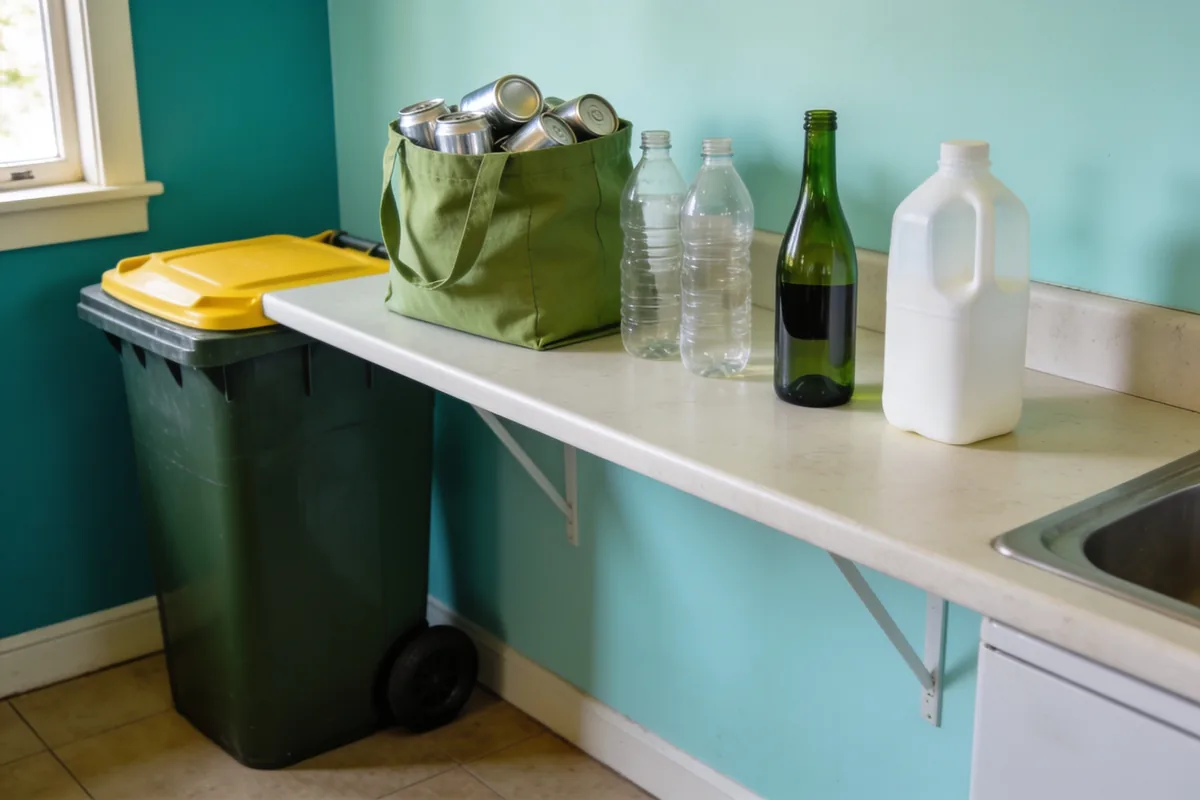
Here is where things stand, state by state.
Queensland. Containers for Change Qld says glass wine and spirit bottles from 150mL to 3 litres are eligible. If you are in Queensland, those bottles can go in the bag with everything else.
Western Australia. Containers for Change WA says that as of 1 July 2026, most drink containers between 150mL and 3 litres are accepted. That now includes wine, spirits, cordial, large juice and flavoured milk. If you have been putting those in the kerbside bin out of habit, you can start keeping them aside.
Northern Territory. The NT EPA set 1 July 2026 as the date its scheme would expand to any beverage container up to 3 litres. Its page names wine, spirits and plain milk containers among them. So in the Territory, the milk bottle goes in the bag too.
New South Wales and South Australia. These two are next. On 3 September 2025 the NSW Government announced that both states would add glass wine and spirit bottles, cordial and juice concentrate, and larger containers up to 3 litres, with the change due in 2027. Under that plan, plain milk and health tonics stay out. EPA SA says South Australia currently excludes wine, spirit and cordial glass, and that the expansion is committed. The NSW minister also asked people not to bring wine bottles to a machine yet. So for now, keep those in kerbside recycling, and watch for your scheme’s start date.
Victoria. The CDS Vic list of exclusions is a useful one to know. It leaves out plain milk (plant-based milk included), cordial, glass wine and spirit bottles, wine sachets over 250mL, some juice and flavoured milk containers of 1 litre or more, and registered health tonics. Note the plant-based part if your fridge has a carton of something other than dairy. It stays out of the bag, the same as plain cow’s milk.
Tasmania. Recycle Rewards says wine, cordial, milk and glass spirit bottles go in your kerbside recycling.
ACT. Check the ACT scheme’s own list for wine bottles and milk before you sort. It’s quick to look up, and it saves a wasted trip.
If you have friends or family over the border, this is why your answers might not match theirs. You are both right for where you live.
One small thing helps here. Once you know your state’s “not yet” items, write them on a sticky note and put it inside the cupboard where the bag lives. Keep it short, just the things your household actually buys. Everyone in the house can glance at it before they drop a bottle in, and you won’t be the only one keeping track.
Cash, credit or donation
How you take your refund is set by your scheme, so the details belong to your state. If you care whether it lands as cash, a credit or a donation, have a quick look at your scheme’s site before you set off. Then there are no surprises at the counter.
If you have been saving up for a while, one Tasmanian rule is worth knowing. Recycle Rewards asks for ID and a declaration when you bring more than 1,500 containers to a depot at once. Most of us will never get near that number. But if your garage has quietly turned into a storage unit for empties, it’s good to know before you load the car.
People also ask whether it is worth the effort. That’s yours to decide, and it doesn’t have to be about the money. Each container you return is one that has been sorted for recycling. The 10c is a small thank you for a job you were already halfway through. And once the habit is set, the trip takes very little thought. You can fold it into a shop you were doing anyway, with the bag already sitting in the boot.
Before the next bag
You don’t need a new system. You need three small habits, and you probably have one of them already.
Rinse and drain. Your scheme wants containers empty, and a quick rinse keeps the bag from getting sticky while it waits. Do it at the sink straight after you finish the drink. If you are already working towards a zero waste kitchen, this slots in next to the other little routines you have there.
Don’t crush. Let the cans stay whole. They take up a bit more room. They also come back as 10c instead of coming back out of the chute. If space is why you crush, take the bag in a little more often. A half-full bag is still worth the trip when you’re passing anyway.
Sort the not-yet ones into kerbside. If your state doesn’t take wine bottles or plain milk yet, they still have a home. Put them in your kerbside recycling bin and check your scheme’s list again when the rules change. In New South Wales and South Australia, that day is set for 2027. When it comes, you won’t need a new routine. The wine bottles just move from one bin to the bag. While you are sorting, the food scraps can go somewhere useful too, and making compost at home is simpler than it looks.
That’s it. Next time you pass the bag by the back door, you’ll know which bottles are worth 10c and which few still belong in the other bin.
Sources: Recycle Rewards (Tasmanian Government), About us and FAQs (https://recyclerewards.com.au/about-us/faqs); CDS Vic, Eligible containers (https://cdsvic.org.au/eligible-containers); NSW Government, States join forces to expand container deposit schemes to accept wine and spirits, 3 September 2025 (https://www.nsw.gov.au/ministerial-releases/states-join-forces-to-expand-container-deposit-schemes-to-accept-wine-and-spirits)
You must be logged in to post a comment Login