
Eco Friendly
10c a Can in Every State, Just Not for the Same Bottles

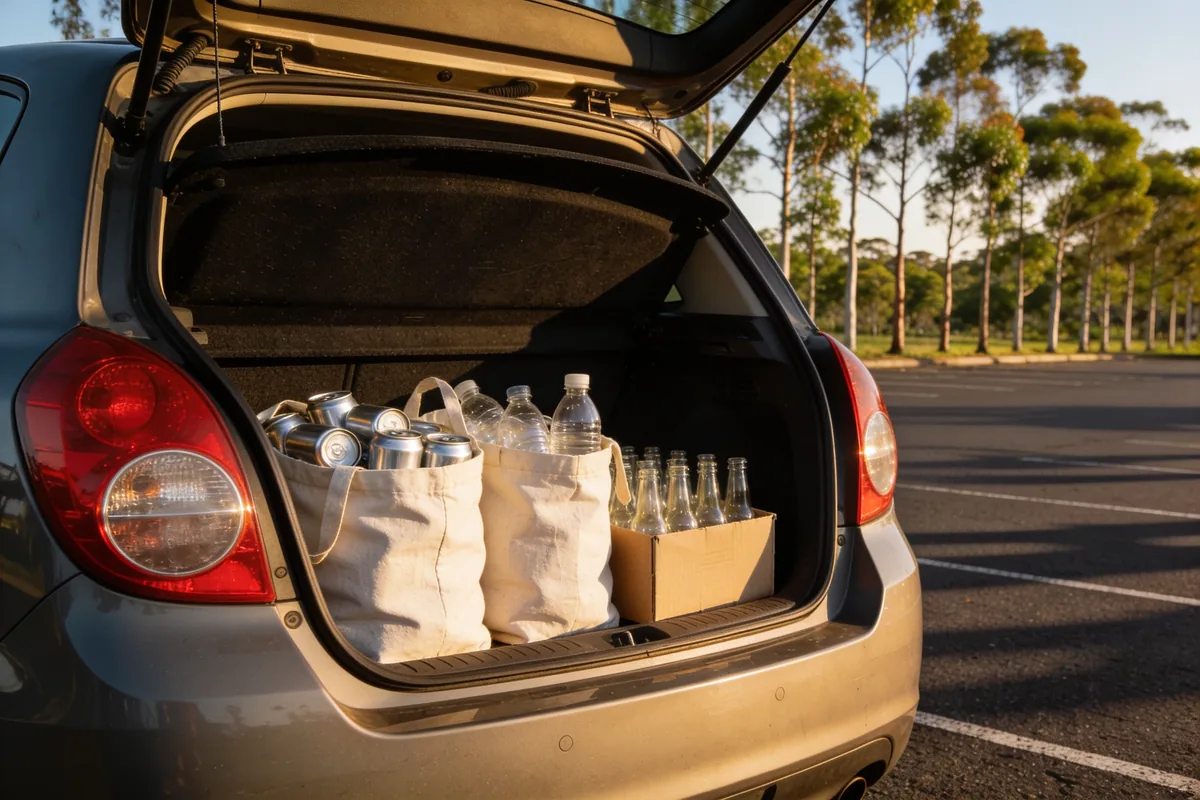
You probably have a bag of empties somewhere already. It might sit by the back door, or under the laundry sink, or roll around in the boot until someone remembers it. There are cans in it. A few plastic soft drink bottles. Maybe a glass bottle or two from the weekend.
That bag is a good start. You kept those containers out of the bin, which is the hardest habit to build. Everything from here is a smaller step than that one.
Most of what is in there is worth 10c, wherever you live in Australia. Every state and territory now runs a container deposit scheme, and every one of them pays 10c a container. What changes at the border is the list of what counts. A wine bottle that earns 10c in Brisbane goes into kerbside recycling in Hobart.
So you don’t need to learn a whole system. You only need to know your own state’s list, and a few small habits that stop the machine handing things back.
Eight schemes, one refund
South Australia went first. EPA SA says its container law, the Beverage Container Act 1975, commenced in January 1977. The refund there rose from 5c to 10c in 2008.
The rest of the country followed over the years:
- Northern Territory: a scheme run under the NT EPA.
- New South Wales: Return and Earn.
- ACT: the ACT scheme, which launched on 30 June 2018.
- Queensland and Western Australia: both use the Containers for Change name, with separate pages for each state.
- Victoria: CDS Vic.
- Tasmania: Recycle Rewards, a Tasmanian Government scheme.
Tasmania was the last to start. Recycle Rewards says Tasmanians have been getting a 10c refund since 1 May 2025.
So that’s eight schemes and one refund amount. If you have moved interstate, the 10c will feel familiar. The rules sitting around it may not.
One small tip before we go on. When you look up what your state takes, search for your scheme by name. Queensland and WA share a name, but each state has its own page, and the WA one is the page that applies if you live in the west.
What most schemes take
The easy part first. Most drink containers between 150mL and 3 litres are eligible. Recycle Rewards in Tasmania and CDS Vic both draw the line in that range.
Then look for the mark. CDS Vic says to check for the 10c mark near the barcode. It is small, and the first few times you might need to turn the can around twice. After that you will spot it without trying.
Try it now with whatever is closest. Pick up one container from the bag. Find the barcode. Look beside it. That’s the whole check, and it takes a few seconds.
You don’t have to memorise the rules for every bottle shape. The mark gives you a quick first answer. Your state’s list gives you the final one, and we’ll get to the tricky ones shortly.
If you’re in New South Wales and wondering what you can return and earn, the same two checks apply. Is it a drink container in the size range? Does it carry the mark? Glass wine and spirit bottles, cordial and some larger containers are still waiting to be added in NSW, and that part is coming up below.
Why the machine says no
You feed a can in and it slides straight back out. It can feel a bit personal. Usually it comes down to something small, and most of it is easy to fix at home.
It has been crushed. CDS Vic asks you not to crush containers, because most refund points can’t accept them. Recycle Rewards in Tasmania asks for containers to be uncrushed too. I know squashing cans saves space in the bag. If you change only one thing after reading this, make it this one.
The barcode can’t be read. Recycle Rewards asks for the barcode to be intact. A torn label or a smudged barcode can be enough to send the container back to you.
It isn’t empty. Tasmania’s scheme asks for empty containers. That last mouthful of juice in the bottom is enough to matter, so tip it out before it goes in the bag. If you rinse your bottles, stand them upside down in the dish rack for a while first. By morning they’re dry and ready to go.
The lid question. In Victoria and Tasmania, leave the lids on. Both schemes say so. If you live somewhere else, check your own scheme’s page before you start unscrewing every cap.
Then there is the Yakult case. Those little bottles carry the 10c mark. Recycle Rewards still says they are not eligible in Tasmania. It’s a handy example to keep in mind. Treat the mark as a guide, and let your state’s list have the final word.
Here’s an easy way to handle the maybes. Keep a second, smaller bag next to the main one. Anything you aren’t sure about goes in there: the odd-shaped bottle, the carton, the one with half a label. Next time you have a spare minute, check that small bag against your scheme’s list. You only have to do it once for each kind of container. After that, you know, and the maybe bag gets emptier every time.
Wine bottles, milk and the state lines
This is where most of the questions come from. Do you get 10c for wine bottles? For milk bottles? For spirit bottles or cordial? It depends on your state, and in two places the answer changed on 1 July this year.
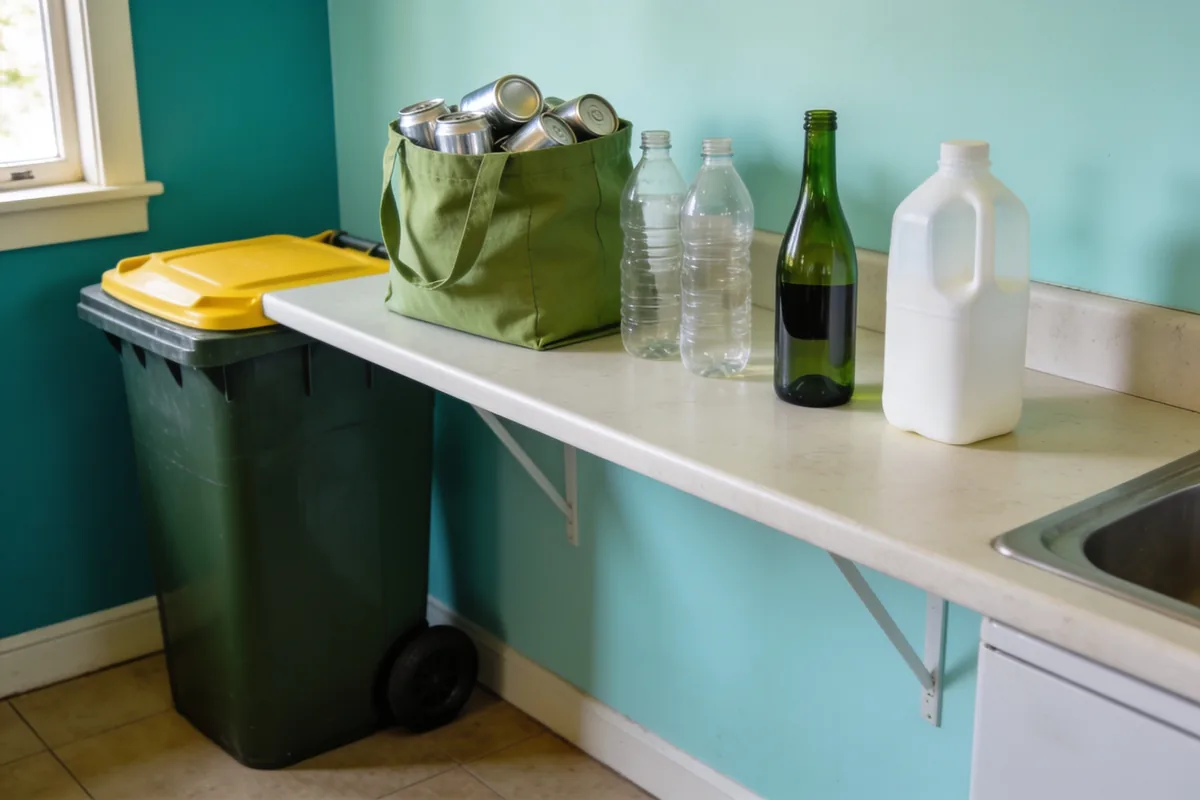
Here is where things stand, state by state.
Queensland. Containers for Change Qld says glass wine and spirit bottles from 150mL to 3 litres are eligible. If you are in Queensland, those bottles can go in the bag with everything else.
Western Australia. Containers for Change WA says that as of 1 July 2026, most drink containers between 150mL and 3 litres are accepted. That now includes wine, spirits, cordial, large juice and flavoured milk. If you have been putting those in the kerbside bin out of habit, you can start keeping them aside.
Northern Territory. The NT EPA set 1 July 2026 as the date its scheme would expand to any beverage container up to 3 litres. Its page names wine, spirits and plain milk containers among them. So in the Territory, the milk bottle goes in the bag too.
New South Wales and South Australia. These two are next. On 3 September 2025 the NSW Government announced that both states would add glass wine and spirit bottles, cordial and juice concentrate, and larger containers up to 3 litres, with the change due in 2027. Under that plan, plain milk and health tonics stay out. EPA SA says South Australia currently excludes wine, spirit and cordial glass, and that the expansion is committed. The NSW minister also asked people not to bring wine bottles to a machine yet. So for now, keep those in kerbside recycling, and watch for your scheme’s start date.
Victoria. The CDS Vic list of exclusions is a useful one to know. It leaves out plain milk (plant-based milk included), cordial, glass wine and spirit bottles, wine sachets over 250mL, some juice and flavoured milk containers of 1 litre or more, and registered health tonics. Note the plant-based part if your fridge has a carton of something other than dairy. It stays out of the bag, the same as plain cow’s milk.
Tasmania. Recycle Rewards says wine, cordial, milk and glass spirit bottles go in your kerbside recycling.
ACT. Check the ACT scheme’s own list for wine bottles and milk before you sort. It’s quick to look up, and it saves a wasted trip.
If you have friends or family over the border, this is why your answers might not match theirs. You are both right for where you live.
One small thing helps here. Once you know your state’s “not yet” items, write them on a sticky note and put it inside the cupboard where the bag lives. Keep it short, just the things your household actually buys. Everyone in the house can glance at it before they drop a bottle in, and you won’t be the only one keeping track.
Cash, credit or donation
How you take your refund is set by your scheme, so the details belong to your state. If you care whether it lands as cash, a credit or a donation, have a quick look at your scheme’s site before you set off. Then there are no surprises at the counter.
If you have been saving up for a while, one Tasmanian rule is worth knowing. Recycle Rewards asks for ID and a declaration when you bring more than 1,500 containers to a depot at once. Most of us will never get near that number. But if your garage has quietly turned into a storage unit for empties, it’s good to know before you load the car.
People also ask whether it is worth the effort. That’s yours to decide, and it doesn’t have to be about the money. Each container you return is one that has been sorted for recycling. The 10c is a small thank you for a job you were already halfway through. And once the habit is set, the trip takes very little thought. You can fold it into a shop you were doing anyway, with the bag already sitting in the boot.
Before the next bag
You don’t need a new system. You need three small habits, and you probably have one of them already.
Rinse and drain. Your scheme wants containers empty, and a quick rinse keeps the bag from getting sticky while it waits. Do it at the sink straight after you finish the drink. If you are already working towards a zero waste kitchen, this slots in next to the other little routines you have there.
Don’t crush. Let the cans stay whole. They take up a bit more room. They also come back as 10c instead of coming back out of the chute. If space is why you crush, take the bag in a little more often. A half-full bag is still worth the trip when you’re passing anyway.
Sort the not-yet ones into kerbside. If your state doesn’t take wine bottles or plain milk yet, they still have a home. Put them in your kerbside recycling bin and check your scheme’s list again when the rules change. In New South Wales and South Australia, that day is set for 2027. When it comes, you won’t need a new routine. The wine bottles just move from one bin to the bag. While you are sorting, the food scraps can go somewhere useful too, and making compost at home is simpler than it looks.
That’s it. Next time you pass the bag by the back door, you’ll know which bottles are worth 10c and which few still belong in the other bin.
Sources: Recycle Rewards (Tasmanian Government), About us and FAQs (https://recyclerewards.com.au/about-us/faqs); CDS Vic, Eligible containers (https://cdsvic.org.au/eligible-containers); NSW Government, States join forces to expand container deposit schemes to accept wine and spirits, 3 September 2025 (https://www.nsw.gov.au/ministerial-releases/states-join-forces-to-expand-container-deposit-schemes-to-accept-wine-and-spirits)
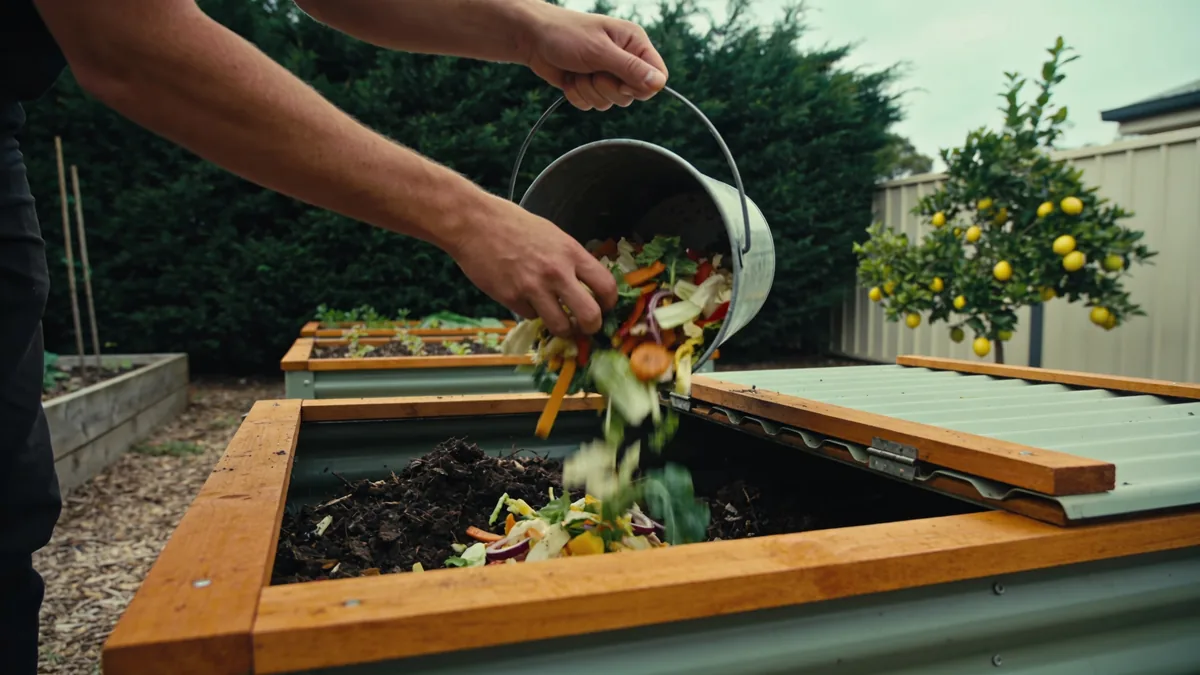
Everything a compost pile needs is already leaving your house. The vegetable ends, the coffee grounds, the grass clippings, the cardboard box the groceries came in. Composting is not a second job you are adding to your life; it is a faster version of what happens to those things anyway, with the result going back into the garden instead of the truck.
Here is how to start one wherever you live, keep it alive without fuss, and know when it is done.
Choose the method that fits your space
- The open pile. The simplest and the largest, best suited to a backyard with room to spare. It needs the least equipment and the most patience.
- The enclosed bin. A lidded bin keeps the pile tidy and holds warmth and moisture, which speeds things up. It suits a small yard and a neighbour close by.
- The tumbler. A rotating drum makes turning easy, which suits anyone who does not want to fork a pile. Smaller batches, quicker results, higher price.
- The worm farm. Worms process kitchen scraps fast and produce liquid fertiliser as a bonus. It suits a courtyard or a balcony, and it does not want garden waste or heat.
Match the method to the space rather than the ambition. A worm farm on a balcony will still be running in a year; a pile that was planned for a yard you do not have will not.
Greens and browns, in the right mix
Every guide comes down to the same two words. Greens are the wet, nitrogen-rich things: kitchen scraps, tea leaves, coffee grounds, fresh grass clippings, green leaves. Browns are the dry, carbon-rich things: fallen leaves, cardboard, shredded paper, straw, sawdust, dead plants. The practical rule is roughly equal volumes, with more browns if the pile starts to smell and more greens if it sits there doing nothing.
The kitchen supplies most of the greens, and a kitchen that wastes less produces a leaner mix to work with. The habits that cut kitchen waste and the habits that feed a compost pile are the same ones, so it pays to run them together. Keep a small lidded container on the bench for the day’s scraps, and empty it before it earns a smell.
Build it, then mostly leave it alone
Start with a layer of coarse browns at the bottom for drainage and air. Alternate greens and browns as they come, chop the bigger pieces so they break down faster, and keep the moisture at the level of a wrung-out sponge: damp to the touch, never dripping. That is the entire technique.
After that, the pile asks for very little. Turn it every week or two to add air, which is what the bacteria and worms consume. In hot weather, check the moisture. In cold weather, do less and expect less. A pile that is warm in the middle and shrinking is working, even when nothing visible is happening.
When it is ready
Depending on the method and the season, compost takes anywhere from about two months to a year. It is ready when it looks like dark, crumbly soil, smells earthy rather than sour, and no longer resembles the things that went in. If some pieces are still recognisable, screen them out and return them to the pile for another round. Use the finished compost on garden beds, around shrubs, or mixed into potting soil.
The mistakes everyone makes once
Too wet is the most common, and it announces itself with a smell. Add browns and turn it. No air is next: a compacted pile stalls, so loosen it and stop standing on the bin. Then there is the wrong guest list: meat, fish, dairy, oils and pet waste all attract pests or smell far more than they are worth. And the last one is impatience. A pile is a small ecosystem, and ecosystems do not read deadlines.
No garden, no problem
A worm farm handles the scraps from a small household in a corner of a balcony, and a bokashi bin ferments everything the worms will not take, including small amounts of meat and dairy, before it goes into the soil or the bin. Both keep food waste out of landfill, and both fit under a sink. The size of the space changes the method, never the option.
Let the pile do the work
Composting rewards patience more than cleverness: feed it, keep it damp, give it air, and wait longer than feels satisfying. The pile does the rest, and the bin you did not fill is the proof. Start with a container on the bench this week, and worry about the rest of it once the first one is full.
Sources: household composting guidance is published by Australian state environment agencies, including Queensland’s Department of Environment (qld.gov.au) and Sustainability Victoria (sustainability.vic.gov.au).
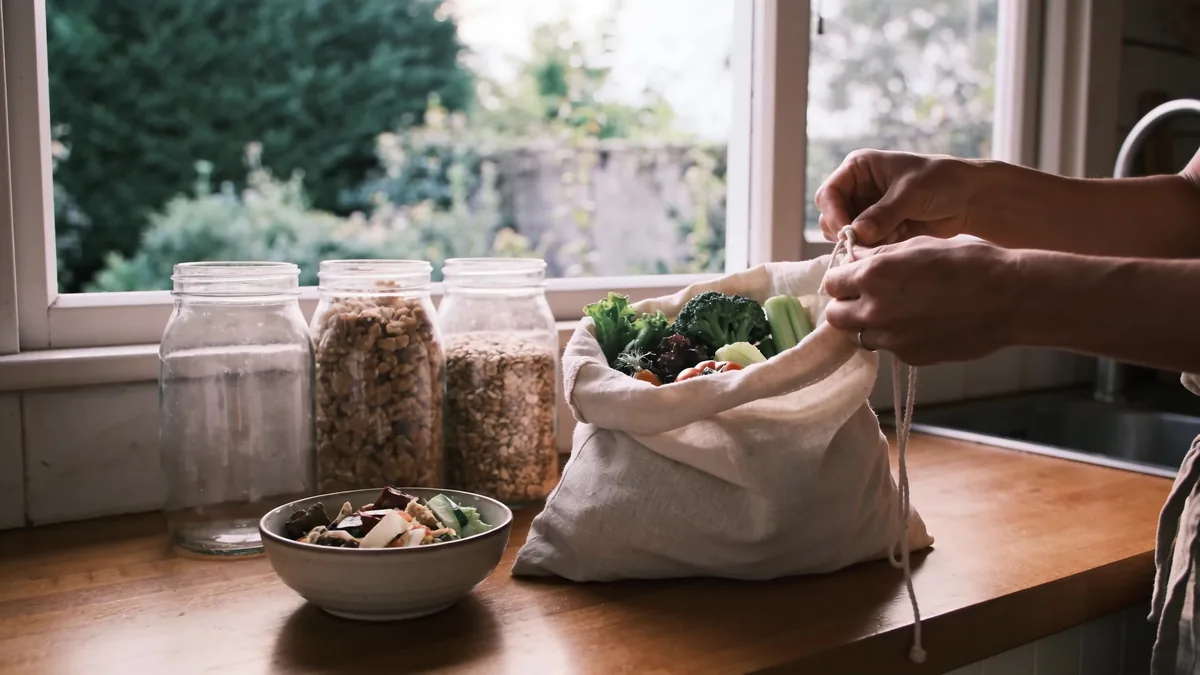
A zero waste kitchen is not a kitchen with a special gadget in it. It is a kitchen where the food you bought gets eaten, in roughly that order. The fridge is cleared before the shop, not after; the leftovers are tomorrow’s lunch; the vegetable ends become stock rather than compost. None of it is difficult, and all of it starts with what you already have.
Plan the week around what is already there
Start the plan in the fridge, not at the shop. Take stock of what needs using in the next few days, and build two or three meals around it. Then shop for the gaps and for the staples, with the meals already chosen. A list tied to actual meals beats a list tied to good intentions, and the difference shows up as money saved and bins that stay empty.
Keep it to what the week can realistically hold. A plan with seven new recipes is a plan that ends in takeaway by Wednesday. Two familiar meals, one new one, and one night that cleans up the leftovers is the shape that survives a real week.
Use the whole ingredient
Most of what gets binned is edible with a different plan. Broccoli stalks are the sweetest part once peeled and sliced. Carrot tops make a sharp herb sauce, and beetroot greens cook like silverbeet. Stale bread becomes croutons, then breadcrumbs, then a crunchy topping for something else. Wilting herbs and tired vegetables go into a pot with water and the day’s scraps and come out as stock.
None of this needs a recipe. It needs the two habits underneath: cook what needs using first, and keep a container in the freezer for the bits that become stock. The stock container is the single change that rescues the most food with the least effort.
Store it so it lasts
Storage is where good intentions go to die, so give the food a fighting chance. Greens keep longer wrapped in a damp cloth in the crisper. Herbs keep like flowers in a glass of water. Bananas keep away from everything, because they speed up whatever they sit beside. Berries stay dry until the moment they are eaten. And the freezer is not a graveyard: label what goes in, with the date, and eat in the order it went in.
The swaps worth making
- Cloths and a spray bottle instead of paper towel for benches and spills, washed and reused until they wear out.
- Containers and beeswax wraps instead of cling film, which rarely survives one use in practice.
- Silicone baking mats instead of baking paper on the trays you use weekly.
- Reusable produce bags and loose vegetables instead of the pre-wrapped trays, which often hide the oldest stock.
- A keep cup and a water bottle that live by the door, so the single use version never gets bought.
Each swap earns its place by being used, not by being bought. Pick the one nearest to a habit you already have, and let it prove itself for a month before adding the next.
Compost what is left
Some scraps cannot be rescued: citrus peel, onion skins, coffee grounds, the ends of everything. That is a compost problem, not a bin problem. A small countertop container with a lid handles the day to day, and the results feed the garden or the balcony pots. How to make compost at home covers the method, but the short version is that the bin can become the garden with almost no extra effort.
When the week gets away from you
It will, some weeks. A busy stretch, a fussy eater, a fridge that is too small for a proper shop. The trick is not to demand perfection, because nobody keeps a standard they cannot reach. Rank what matters: eating the fresh food first outranks matching containers; a rough plan outranks a perfect one; a stocked freezer outranks an empty one. Lowering the bar beats abandoning the habit.
If the household is the obstacle, make the wins visible. A fridge that gets cleared before the shop feels immediately calmer, and the numbers on the weekly bill land better than any argument about the planet.
Weekly Food Waste Reduction Tracker
Use this only if tracking helps you. Weigh or estimate what goes to waste at the end of each week, note what it was, and pick one change for the week ahead. The blank template is below, and the pen is yours.
| Week | Food waste (g) | Notes |
|---|---|---|
| Week 1 | ||
| Week 2 | ||
| Week 3 | ||
| Week 4 |
The bin is the scoreboard
No app, no audit and no new equipment will tell you how you are going as clearly as the kitchen bin. Watch it for a fortnight, and it names the change worth making next: fewer leafy greens, smaller shops, better storage, one more leftover night. Start with the one thing this week’s bin is telling you, and leave the rest for later. Zero waste, in practice, is a direction rather than a standard, walked one grocery run at a time.
Sources: household food waste guidance is published by Sustainability Victoria (sustainability.vic.gov.au); national food waste policy and reporting sit with the Australian Government’s environment department (dcceew.gov.au).


 Healthcare1 year ago
SIL Providers: What to Compare Before You Commit
- Healthcare1 year ago
What Is Physiotherapy?
- Healthcare1 year ago
What a Dental Implant Replacement Costs in Melbourne
- Healthcare1 year ago
What Changes When You Start SIL
- Food1 year ago
Budget Bites: Delicious Meals You Can Cook for Under $10
- Tech1 year ago
Mental Health Apps and Wearables: What to Trust
- Home & Garden1 year ago
Gutter Upgrades Worth Doing Before You Sell
- Healthcare1 year ago
How to Put NDIS Community Participation Funding to Work








You must be logged in to post a comment Login