Healthcare
Behaviour Support Plans, Explained Without the Jargon


Behaviour support is a funded NDIS support for participants whose behaviour is causing harm or distress, to themselves or to others, and which is understood to be communicating an unmet need rather than occurring without cause. The central document in that support is the behaviour support plan.
Plans of this kind are frequently described in language that obscures rather than explains, and they carry obligations that participants, families and providers are all expected to observe. This article sets out what the document contains, who is permitted to write it, how restrictive practices are regulated, and how a participant or family may request one.
1. What a plan contains
A behaviour support plan is not a list of rules for the participant. It is a working document that records an assessment and sets out a coordinated response. A properly constructed plan contains the following elements.
- A description of the behaviour of concern, in observable terms, together with the circumstances in which it is most likely to occur.
- An assessment of what the behaviour communicates, including any unmet need, skill deficit, pain, or environmental factor identified.
- The proactive strategies that reduce the likelihood of the behaviour, which are the substance of the plan and the part most often neglected in practice.
- The response strategies to be used when the behaviour occurs, written so that different people respond in the same way.
- The people responsible for each element, including family, support workers and clinicians.
- The skills to be taught, so that the plan reduces the behaviour over time rather than managing it indefinitely.
- The review date, and any restrictive practice that is included, together with its authorisation and reporting requirements.
A plan that contains only the fourth element is a containment document. One that leads with the third is doing the work that behaviour support is funded to do.
2. Who is permitted to write one
Behaviour support is a regulated activity. A behaviour support practitioner must be registered with the NDIS Quality and Safeguards Commission to deliver behaviour support to NDIS participants, and the practitioner’s registration reflects the level of complexity the Commission has assessed them as competent to work with.
This is why a plan may not be written by a general support worker, however well the worker knows the participant, and why a practitioner’s scope of registration matters when a plan involves restrictive practices. Where a provider engages a practitioner outside the appropriate level, the plan will not carry the standing it needs at review or at authorisation.
3. Restrictive practices, and why they are treated differently
A restrictive practice is any intervention that restricts the rights or freedom of movement of a person with disability, and it includes chemical, mechanical, physical, environmental and seclusion practices. These interventions are subject to specific legal requirements rather than being a matter of clinical preference.
Where a regulated restrictive practice is used, three conditions apply together. The practice must be authorised under the relevant state or territory legislation, which means the rules are not uniform across Australia. It must be included in a behaviour support plan written by a registered practitioner. And its use must be recorded by the provider and reported to the Commission.
The practical implication for a family is direct. A restrictive practice that is not authorised, or that is used outside the terms of a plan, is not a management technique. It is an incident, and it should be raised with the provider and with the Commission.
4. Interim plans and comprehensive plans
Not every plan is the full document. Where a restrictive practice must be introduced before a complete assessment can be completed, an interim plan may be lodged with the Commission while the full plan is developed. An interim plan is a temporary instrument with a shorter review period, and it should not become the permanent arrangement by inattention.
5. How behaviour support is funded
Behaviour support is generally funded through capacity building supports in a participant’s plan, with the practitioner’s hours set out and claimed against the funding available. The price limits that apply to those hours are published in the NDIS pricing arrangements and are updated periodically, so the figure a provider quotes should be checkable against a current published document rather than accepted as given.
Where a plan requires clinical input that sits outside behaviour support, that work is funded through a different pathway. Psychological support for a participant, including the question of who pays for it and how sessions are arranged, is dealt with separately.
6. How to ask for one
- Raise it with the support coordinator or the plan manager, and ask that it be included in the plan or raised at the next review.
- Describe what is happening in concrete terms: what the behaviour looks like, when it occurs, what has already been tried, and what it is costing the participant in daily life.
- Ask specifically for a registered practitioner, and ask which level of registration the practitioner holds.
- Ask for the plan to identify the proactive strategies, not only the responses.
- If the plan exists and is not being followed by the people delivering support, raise that with the provider in writing. A plan that is not implemented is a compliance matter, and the pathway for raising it is the same as any other concern about a registered provider.
7. Where the plan sits among the other supports
A behaviour support plan does not replace the arrangements that surround it. Where the participant’s living situation is changing, the provider arrangement may need to change with it, and the mechanics of changing providers are a separate process from the plan itself. What matters is that the plan is reviewed when the circumstances it was written for change, rather than being left in place until the next scheduled date.
What a working plan changes
Start with the person who coordinates the plan, put the request in writing, and ask for a registered practitioner by name and level. Ask what the plan will change in the first three months. A plan that produces new strategies, new skills and a shorter list of incidents is working. A plan that produces a folder is not.
Sources: the NDIS Quality and Safeguards Commission (ndiscommission.gov.au) publishes the behaviour support practitioner registration requirements, the rules on regulated restrictive practices, and the reporting obligations of providers; the NDIS pricing arrangements are published at ndis.gov.au. Restrictive practice authorisation is governed by state and territory legislation and differs between jurisdictions.

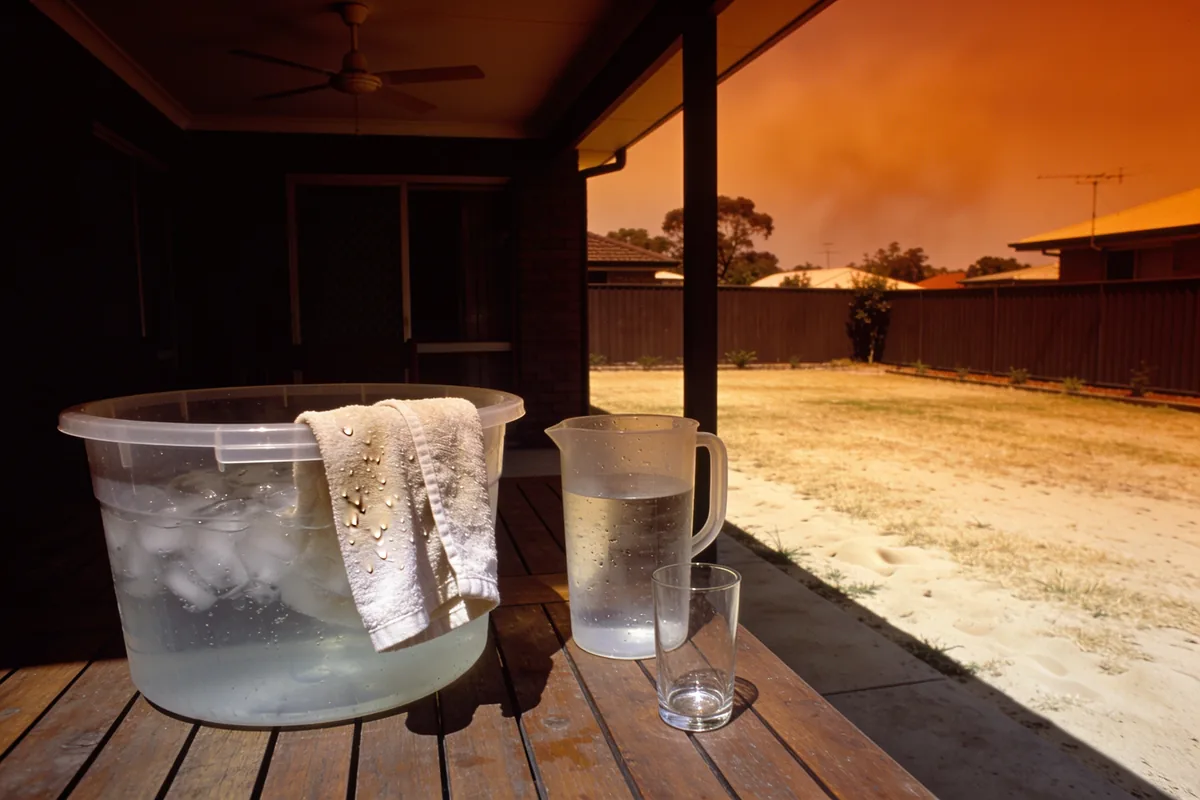
Someone you love is lying on the couch after an afternoon out in the heat. They look flushed, they say they feel awful, and you’re torn between letting them sleep it off and picking up the phone. It’s a horrible spot to be in, and if you’re there right now, it’s okay to feel unsure. Here’s the reassuring part: there is a clear line between feeling terrible in the heat and needing an ambulance, and healthdirect, the government-funded health information service, draws it plainly on its heatstroke page (last reviewed in May 2026). The short helper below walks you through that line using the signs in front of you. It isn’t a diagnosis, and if you’re ever in doubt, call 000.
Heat exhaustion or heatstroke?
Answer four questions about the person who is unwell. You will get a plain next step based on healthdirect guidance. If in doubt at any point, call 000.
Choose one answer to each question. The next step needs JavaScript to appear. If in doubt, call 000.
Answer the questions, then choose Show what to do.
Three stages, from uncomfortable to emergency
It can help to think of heat illness as a ladder rather than a single thing. Healthdirect describes three rungs.
Heat stress comes first. You’re thirsty, tired and sweaty. It’s uncomfortable, and it’s the mildest of the three.
Heat exhaustion is the next step up. Healthdirect describes someone who feels very weak and dizzy, may have a headache or nausea, and has clammy skin. It feels dreadful and it needs proper care, and the care is rest, fluids and cooling.
Heatstroke is the top rung, and it’s a different situation altogether. This is when the body can’t cool itself any more. The temperature rises to a dangerous level, the person may stop sweating, and they can become confused or lose consciousness. Heatstroke is a medical emergency, and it’s a 000 call.
NSW Health draws the same line in its own guidance on heat-related illness. Heatstroke needs emergency care straight away. Heat exhaustion needs first aid, and then medical advice if the person isn’t improving. Two services, one message, which is a comfort in itself: you’re not choosing between conflicting opinions.
If you’re looking at someone and wondering which rung they’re on, you’re asking exactly the right question, and the sections below are there to help you answer it.
The signs of heatstroke
Healthdirect describes heatstroke as a body temperature of 40 degrees C or higher, together with changes in the way the brain and nerves are working. You won’t always have a thermometer to hand, so the other signs matter just as much:
- red, hot or dry skin
- reduced sweating, or no sweating at all
- nausea, vomiting or diarrhoea
- poor coordination
- strange or aggressive behaviour
- loss of consciousness
Healthdirect also lists warning signs to take seriously: being unable to carry on with usual activities, weakness, dizziness, confusion or seizures.
It’s easy to talk yourself out of that last group. Someone who is muddled, cranky or not quite making sense after a hot day might simply seem tired. But a change in how a person is thinking or behaving is one of the things that separates heatstroke from heat exhaustion, so it deserves your attention.
If one manageable step helps here, it’s this: when someone has been in the heat and seems “not themselves”, treat that as a sign, not a mood.
What to do for heat exhaustion
If the person is weak, dizzy and clammy but still alert and making sense, healthdirect’s advice is gentle and practical:
- Move them somewhere cool.
- Give them cool water, an electrolyte drink or an oral rehydration solution to sip.
- Avoid caffeine and alcohol.
- Take off any heavy clothing.
- Cool them down with a cool shower or cold packs.
- Use a fan or air conditioning.
- Stay with them.
That last one matters more than it might seem. Heat exhaustion that isn’t settling needs a second look, and the person who feels unwell may not be the best judge of how they’re going.
Healthdirect is clear about when it’s time to call 000 instead: if the person feels faint, is confused, can’t drink, has a seizure, or has a temperature of 40 degrees C. If any of those happen, you’re no longer managing heat exhaustion at home.
The small step for this section is simply to stay close. Sit with them while they cool down, and keep an eye on whether they’re getting better or not.
What to do for heatstroke while the ambulance comes
If you think it might be heatstroke, call 000 first. Then you can start helping while you wait. If the person isn’t breathing, begin CPR.
Healthdirect’s steps for cooling someone with heatstroke are:
- move them into the shade
- loosen their clothing
- cool them from the neck down in cold water for 15 minutes, or wet them with a shower or a hose
- put ice packs on the groin, armpits, cheeks, palms and soles of the feet
- keep them damp with a moist cloth or a spray of water
- fan them continuously
- give cool drinks only if they’re fully conscious and able to swallow
There’s one thing healthdirect asks you not to do, and it might surprise you. Don’t give paracetamol, aspirin or ibuprofen. It’s a natural instinct to reach for something that brings a fever down, but healthdirect explains that these medicines won’t lower the body temperature in heatstroke.
It’s frightening to wait for an ambulance with someone this unwell. Keeping your hands busy with the cooling steps is the most useful thing you can do, and it’s okay if your hands are shaking while you do it.
Two hot afternoons, as examples
Sometimes it’s easier to see the line when it’s drawn through a real-feeling moment. These two afternoons are illustrations, not real cases, and they’re here to show how healthdirect’s signs fit together.
The first afternoon. Your teenager comes in from helping at a weekend sports carnival. They’re sweaty and clammy, they say they feel dizzy and a bit sick, and they flop onto the couch. When you ask what day it is and what they had for lunch, they answer straight away, a little grumpily. You move them to the coolest room, put a fan on them, hand them cool water to sip and help them out of their heavy shirt. Over the next while they sit up, drink more and start to look like themselves again. That’s the picture of heat exhaustion improving with rest and cooling, and staying with them until they’re properly better is the right next step.
The second afternoon. An older relative has spent the day in a hot house. When you arrive, their skin is red and hot to touch, and you notice they don’t seem to be sweating even though the room is stifling. They’re muddled, repeating themselves, and snap at you in a way that isn’t like them. Here you don’t wait to see whether rest helps. Confusion, strange behaviour and skin that’s hot with little or no sweating are heatstroke signs, so you call 000, then start cooling them while the ambulance comes.
The difference between the two isn’t how dreadful the person looks. It’s whether their thinking and behaviour have changed, and whether they’re getting better with care.
Who is most at risk
Anyone can become unwell in the heat, but healthdirect names the people most at risk:
- young children
- people over 65
- people who are pregnant or breastfeeding
- people who work outdoors
- people experiencing homelessness
- people with a chronic illness
- people taking medicines that affect how the body responds to heat
You might recognise yourself, or someone close to you, on that list. That isn’t cause for alarm. It’s a reason to plan a little earlier and to check in a little more often when the weather turns.
If someone in your own home is on the list, it can help to talk about the hot days before they arrive: where the coolest room is, who will check on whom, and what you’ll do if someone starts to feel unwell. A plan made calmly in spring is far easier to follow than one made up on a 40-degree afternoon.
Here’s one step that makes a real difference to someone else: during a heatwave, check on an older neighbour. A knock on the door or a quick call is often all it takes.
A few questions people ask
Can heat exhaustion turn into heatstroke? Healthdirect describes heat illness in stages, and its advice is to call 000 if someone with heat exhaustion feels faint, becomes confused, can’t drink, has a seizure or reaches 40 degrees C. So keep watching, even once you’ve started cooling them.
Why does it matter whether their skin is clammy or dry? Clammy skin is one of the signs healthdirect lists for heat exhaustion. Red, hot or dry skin, and sweating that has eased off or stopped, are on its list for heatstroke.
Before the first heatwave
It’s much easier to get ready for hot weather on a mild spring day than in the middle of a 40-degree week. Healthdirect’s prevention advice is straightforward:
- wear a hat and light, loose clothing
- drink water before you feel thirsty
- on hot days, set the air conditioning below 26 degrees
- if you don’t have air conditioning at home, spend time in cool public spaces
- avoid being out in the hottest hours of the day
- never leave a child in a parked car
Heatwave warnings come from the Bureau of Meteorology and from state health departments, so it’s worth knowing where to look for them before summer arrives. On a hot day there may be more than one warning to read, too. The fire danger rating is another one worth reading on a hot day.
If a beach day is part of your plan for beating the heat, it helps to know how to spot a rip current before anyone goes in. And while you’re putting the summer kit together, it’s a good moment to check whether your sunscreen has expired, so it’s ready for the first hot weekend.
One small step to finish: before the first heatwave, decide where you would go to cool off if the power went out or the air conditioning couldn’t keep up. Having that answer ready can take some of the worry out of a hot week.
Cool first, then decide
When someone is unwell in the heat, you don’t have to work everything out at once. Start cooling them. Move them somewhere shaded, loosen their clothes, and get water on their skin. While you’re doing that, look for the signs that change everything: confusion, strange behaviour, a seizure, loss of consciousness, skin that’s red, hot and dry, or sweating that has stopped. Any of those means calling 000.
If the person is alert, drinking and improving with rest somewhere cool, it’s likely heat exhaustion, and healthdirect’s steps above will help them recover. Stay with them, and call 000 if they feel faint, can’t drink or become confused.
You’re allowed to call for help even if you’re not sure. That’s what the number is for.
Sources: Heatstroke, healthdirect (https://www.healthdirect.gov.au/heatstroke); Heat-related illness: signs, symptoms and first aid, NSW Health (https://www.health.nsw.gov.au/environment/beattheheat/Pages/heat-related-illness.aspx)

Some of the people who believe they cannot give blood in Australia were told so under rules that no longer apply. Lifeblood has changed its rules on tattoos, on time spent in the United Kingdom and, in two stages, on sexual activity, the most recent change taking effect on 20 April 2026. Each change opened blood donation, or plasma donation, to a group that had previously been deferred. Lifeblood keeps a page addressed specifically to returning and previously deferred donors, written for exactly the people who stopped checking after they were first turned away. This article sets the changes out side by side, together with the travel rule that sits beside them, then the rules that still apply, then the route Lifeblood itself points to when blood is not yet possible: plasma.
The changes, side by side
The changes differ in scope and in date. Set out by rule, with the old position, the new position and who is affected, they read as follows, with the current travel rule in the last row. All figures are as Lifeblood publishes them.
| Rule | Before | Now | Who it affects |
|---|---|---|---|
| Sexual activity, plasma | Sexual activity rules applied | Removed from July 2025 | All plasma donors |
| Sexual activity, blood | Men asked whether they had recently had sex with a man | From Monday 20 April 2026, all donors are asked the same sexual activity questions regardless of gender | Gay and bisexual men and transgender people in long-term monogamous relationships, if they meet all other criteria |
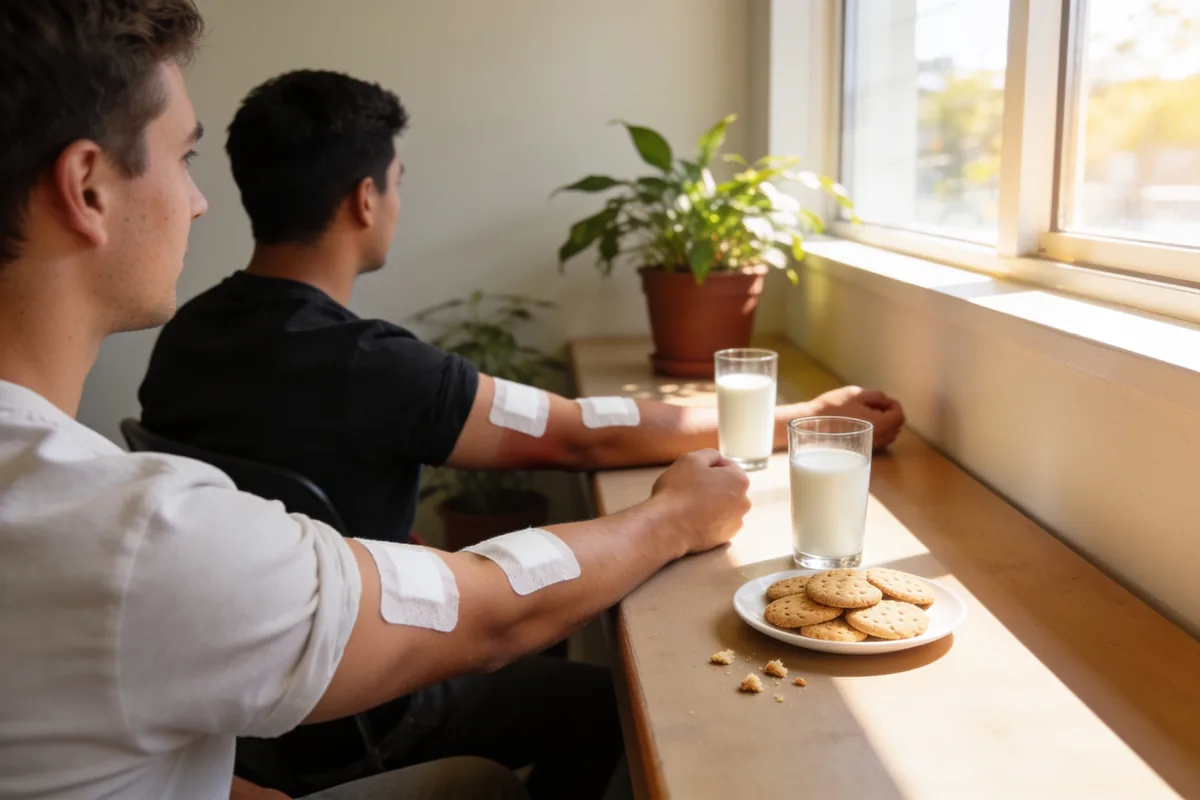
| Tattoos | Four months after any tattoo | Blood 7 days after a tattoo from a licensed Australian parlour or cosmetic clinic; four months for unlicensed or overseas tattoos; plasma straight away | Anyone with a recent tattoo |
| UK residence, 1980 to 1996 | Deferred | Can now give blood | People who lived in the UK for over 6 months between 1980 and 1996 |
| Travel | Current rule, set out below | New donors are asked about travel in the last four months; after travel to a malaria risk area, plasma only for 120 days, then either | Recent travellers |
Three features of the table deserve comment.
The first is sequence. The sexual activity changes arrived in two steps, plasma first and blood second. Lifeblood’s announcement of the April 2026 change, published on 3 February 2026, reports what the first step produced: an extra 6,437 plasma donations and 2,709 new donors after the July 2025 change. The figures are Lifeblood’s own and describe one change over one period, so they are best read as evidence that the earlier deferral was keeping willing donors out, not as a forecast for the blood change.
The second is that the tattoo rule now separates the licensed from the unlicensed. Since 26 June 2023, a tattoo from a licensed Australian parlour or cosmetic clinic means a wait of 7 days before giving blood, where the wait had been four months. The four-month wait still applies to unlicensed or overseas tattoos. For plasma there is no wait at all. A reader who assumes that “a tattoo means four months” is therefore applying the old rule in most Australian cases, and the rule that applies depends on where the work was done.
The third is the UK rule, the change most likely to reach people who stopped checking long ago. Lifeblood’s page states that people who lived in the UK for more than 6 months between 1980 and 1996 can now give blood. The page read for this article does not give the date the change took effect, and this article does not state one. For a reader in that group who was turned away years ago, the date matters less than the present position: the deferral no longer applies.
The travel row is different in kind. It records a current rule rather than a relaxation, and it is the one most easily overstated. New donors are asked about travel in the last four months, because of malaria risk. After travel to a malaria risk area, a donor can give plasma only for 120 days, and after that either blood or plasma. A recent trip, then, does not usually rule a person out entirely; it changes, for a defined period, what they can give. Anyone planning travel to a malaria risk area will also have other paperwork to manage, and the thinker guide to travel insurance exclusions covers the side of that admin most likely to catch travellers out.
What still applies
Against the changes, a set of baseline rules remains, and it is worth stating them precisely, because the edges are where people rule themselves out in error.
| Requirement | Lifeblood’s rule |
|---|---|
| Minimum age | 18 |
| First-time donors | Up to the 76th birthday |
| Donors aged 81 and over | Must have donated in Australia in the last 5 years |
| General | 18 to 75, healthy, over 50 kg |
Beyond these, the decision is made through Lifeblood’s own process: an online eligibility quiz before booking, and a questionnaire on the day of donation, with staff available to answer questions about individual circumstances.
There is a boundary this article cannot cross, and it should be stated plainly. Medical histories are individual. In one of the larger online discussions of blood supply this year, a commenter described remaining unable to donate because of a stroke 21 years earlier, and said that while the reasoning made sense in general, it was hard to accept in their own case. That account is one person’s, and the rule behind it is not examined here. It illustrates the limit of any general summary: the changes listed above concern specific rules, not individual medical histories, and only Lifeblood can say how a particular history is treated.
Blood, plasma, platelets

Donation is not a single option. Lifeblood collects whole blood, plasma and platelets, and the three differ in how often a person can give.
| Donation type | How often (Lifeblood) |
|---|---|
| Blood | Every 12 weeks |
| Plasma | Every 2 weeks |
| Platelets | Every 2 weeks |
The difference in frequency is large: a regular plasma donor can give several times in the interval a blood donor waits between donations. That is one reason plasma appears so often in the changes above.
It is also the route that remains open in several of the situations in the first table. The pattern is consistent:
- After a tattoo, Lifeblood’s announcement says plasma can be given straight away, while blood waits 7 days or four months.
- After travel to a malaria risk area, plasma can be given during the 120 days in which blood cannot.
- Under the sexual activity rules, plasma opened in July 2025, nine months before blood.
One donor’s account from the same discussion makes the sequence concrete. They had been donating plasma for some time, they wrote, and had to wait for the change allowing gay people to give blood; they had now booked in to donate. Read alongside Lifeblood’s figures for the plasma change, the account suggests what the two-stage design produced in practice: some donors entered through plasma and moved to blood once the second change took effect.
For a person who is not yet eligible to give blood, the practical conclusion is that plasma is worth asking about rather than assuming it is also closed.
Why it matters
Lifeblood publishes the figures that explain why the eligibility rules attract attention.
- Red cells last 42 days. A donation cannot be held for long, so supply depends on a steady flow of donations rather than a large reserve.
- Australia needs over 1.7 million donations a year, which Lifeblood expresses as three every minute.
Read together, the two numbers describe a system with little slack. Each change in the first table enlarges the pool of people who can contribute to that flow, and each is of use only if the people it affects find out about it.
How to check without booking
A person unsure of their position does not need to book an appointment to find out. Lifeblood offers three points of contact, in order:
- The online eligibility quiz, which can be completed before any booking.
- The questionnaire on the day, which covers the questions the quiz does not.
- Lifeblood staff, who can say whether a particular circumstance affects eligibility. As one donor put it in an online discussion, if you are unsure whether you qualify, they will tell you.
The quiz is the appropriate first step for anyone who was deferred under a rule in the first table. It reflects the current rules, which a memory of being turned away does not.
Check again before you rule yourself out
The rules have changed several times, and each change was specific. A tattoo from a licensed Australian parlour now means 7 days before giving blood. Time in the UK between 1980 and 1996 no longer defers. Since 20 April 2026, the sexual activity questions are the same for every donor. And where blood is not yet possible, after a tattoo or a trip to a malaria risk area, plasma often is.
What has not changed is that eligibility is decided individually, through Lifeblood’s quiz and questionnaire. A person who was told “no” a few years ago may have been told so under a different set of rules. The quiz takes the question out of memory and puts it against the rules that apply today.
This article is general information and not medical advice. Lifeblood determines eligibility for every donor.
Sources: Sexual activity rules for blood donation to change from April, Lifeblood (https://www.lifeblood.com.au/news-and-stories/media-centre/media-releases/sexual-activity-rules-blood-donation-change-april); Returning and previously deferred donors, Lifeblood (https://www.lifeblood.com.au/support/returning-and-previously-deferred-donors); Tatts no longer a barrier to blood donation under new rule change, Lifeblood (https://www.lifeblood.com.au/news-and-stories/media-centre/media-releases/tatts-no-longer-barrier-blood-donation-under-new-rule-change)


Two names come up when something in your body stops working the way it should. Physiotherapist. Exercise physiologist. They sound like the same job with different letterheads, and half the confusion in the waiting room comes from exactly that.
Here is the short version. A physiotherapist treats an injury. An exercise physiologist treats a condition with exercise. There is overlap in the middle, and both can help you. The trick is knowing which door to knock on first.
What a physiotherapist does
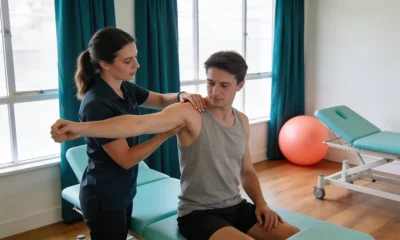
A physiotherapist works on movement and injury. They assess what hurts, why it started, and what the joint or muscle is doing wrong. Treatment mixes hands-on work with exercises you take home, and it is usually aimed at a specific episode: the knee from netball, the shoulder from the gym, the back that went over on a weekend.
Physiotherapists are registered with the national practitioner regulator, which is the credential to check. They also work in hospitals, after surgery and on the wards, so their patients range from athletes to people getting back on their feet after a long stay.
What an exercise physiologist does
An exercise physiologist uses exercise as the treatment itself. Their training is in exercise science and clinical exercise, and they are accredited through Exercise and Sports Science Australia. Their patients usually have a longer story: a heart condition, diabetes, arthritis, chronic pain, a lung condition, or a mental health diagnosis where movement is part of the plan.
Sessions are active. Expect movement from the first visit, a program built around what your body can do now, and a plan measured over months rather than a course of six. For many people with a long-term condition, that steady build is the whole treatment.
The two, side by side
- The problem. A new injury or a flare-up points to the physiotherapist. An ongoing condition that exercise could improve points to the exercise physiologist.
- The treatment. Hands-on therapy and targeted rehabilitation on one side; prescribed exercise and education on the other.
- The setting. A treatment room, often with equipment for one joint at a time, compared with a gym floor or a home program built around your equipment.
- The timeline. A course around an episode, finishing when the episode is done, compared with a program that may run for months.
Where the two overlap
Plenty of problems sit in the middle. A bad back that has lasted a year is not really an “episode” any more. Recovering from surgery needs both a rehabilitation plan and a longer exercise build. Both professions prescribe exercise, and both work in clinics alongside each other, which is why the handover between them is often the most useful part of the whole process.
If you are unsure where you fit, say so when you book. It is a normal question, and a good clinic will move you to the right professional rather than keep the appointment for the wrong one.
How the sessions get paid for
Several pathways cover part of the cost, and which one applies to you depends on your situation rather than your diagnosis alone. A GP care plan can refer you for subsidised sessions with either profession, and your GP can confirm how many you are eligible for. Private health insurance can cover part of the fee through extras. NDIS funding can include both where the plan assesses them as needed. DVA, workers compensation and motor accident schemes are the other common routes.
One small ask before you book: check what the fee is and what the rebate covers. The gap is the part you pay, and knowing it in advance turns a surprise invoice into a plan.
How to choose, without overthinking it
Describe your problem in one sentence and follow that sentence. “My knee gives way when I run” belongs with a physiotherapist. “My diabetes is under control but the doctor wants me exercising more” belongs with an exercise physiologist. If the sentence is genuinely in the middle, start with your GP and let the care plan point.
And if the first appointment turns out to be the wrong one, both professions refer across without drama. Getting seen is the point. If movement is new territory for you, what physiotherapy actually covers is a gentle place to start. If the difficulty is with the tasks of daily life rather than movement or training, there is a third door worth knowing about: where occupational therapy fits in.
Which door to knock on first
Start with the problem, not the title. An injury wants a physiotherapist. A long-term condition wants an exercise physiologist. Anything in between wants a conversation, and both professions have that conversation every day. One appointment, the right one, and the rest gets smaller from there.
Sources: the Australian Health Practitioner Regulation Agency (ahpra.gov.au) holds the national physiotherapy register; Exercise and Sports Science Australia (essa.org.au) accredits exercise physiologists; Services Australia (servicesaustralia.gov.au) sets out the Medicare arrangements for allied health under a GP care plan.


 Healthcare1 year ago
SIL Providers: What to Compare Before You Commit
- Healthcare1 year ago
What Is Physiotherapy?
- Healthcare1 year ago
What a Dental Implant Replacement Costs in Melbourne
- Food1 year ago
Budget Bites: Delicious Meals You Can Cook for Under $10
- Tech1 year ago
Mental Health Apps and Wearables: What to Trust
- Healthcare1 year ago
What Changes When You Start SIL
- Home & Garden1 year ago
Gutter Upgrades Worth Doing Before You Sell
- Healthcare1 year ago
How to Put NDIS Community Participation Funding to Work