
Healthcare
Wisdom Teeth Extractions: Risks and Complications

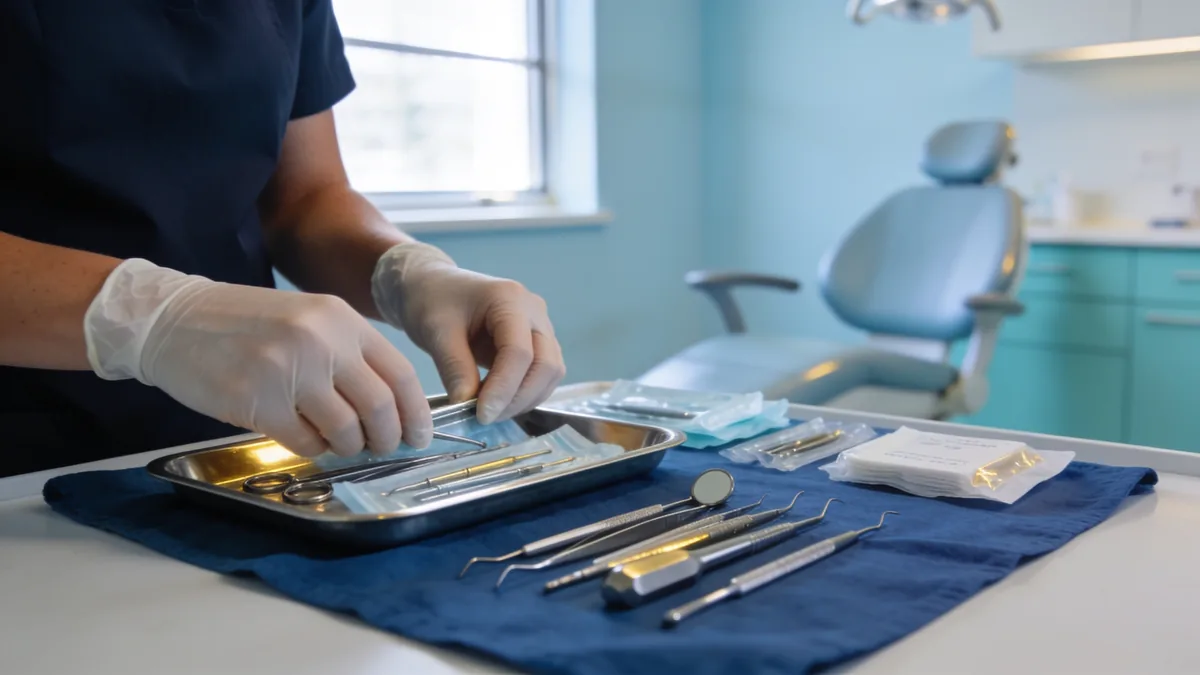
Wisdom teeth are the last molars in, and the back of the mouth is a crowded place for them to arrive. Some people never develop a full set. Others have four that settle in quietly and never cause trouble. When they do cause trouble, the fix is well understood, and the outcome has a lot to do with the week after the surgery rather than the surgery itself.
If you have been told yours need to come out, the useful thing to know is what the surgery involves, what can go wrong, and which of those problems you can influence. That is the whole of this piece.
When a wisdom tooth has to come out
The trigger is usually one of a few things: a tooth coming through sideways or at an angle, pressure on the teeth in front of it, decay or gum infection in a spot that is hard to keep clean at the very back of the mouth. A dentist confirms the picture with an x-ray, including how close the roots sit to the nerves in the lower jaw. Not every wisdom tooth needs removing. One that is healthy, fully through and reachable with a toothbrush can stay under review.
The risks, stated plainly
Every operation has a list, and this one is short and well known to the people who do it. None of these is common, and the standard precautions exist for a reason.
- Infection at the site. Swelling, increasing pain and a fever in the days after surgery can point to an infection that needs treating rather than waiting out.
- Dry socket. The clot that protects the socket comes loose, and a dull, deep ache sets in a few days later. It is painful and it is easy for a dentist to treat once you describe it.
- Bleeding that keeps oozing. Some spotting is normal. Steady bleeding that does not settle with pressure is not, and it is worth a call the same day.
- Nerve injury. For lower wisdom teeth, the roots can sit near a nerve that supplies sensation to the lip and chin. The x-ray is taken to measure that risk, and the numbness it causes is usually temporary, though it can last.
- Damage to the neighbouring tooth. A tooth crowded against its neighbour can be bumped on the way out, which is one more reason removal is planned from a scan rather than improvised.
- Stiffness, trismus and bruising. Unpleasant, temporary, and mostly a matter of following the aftercare rather than doing anything clever.
The first week, realistically
Swelling usually peaks in the first two days and then settles. Soft food, cold packs in short bursts, and resting the jaw all help. Smoking and straws undo good healing by disturbing the clot, which is why every clinic bans both for a period after surgery. Pain that is easing day by day is the normal path. Pain that gets worse after day three or four deserves a phone call.
What you can influence
Most of the risk list responds to things decided before and after the appointment. Tell the dentist about every medication you take, particularly anything that thins the blood, along with any health conditions that affect healing. Follow the aftercare instructions even when you feel fine, because the instructions exist for the days you feel worst. Ask, before the day, what the plan is if the tooth turns out to be more complicated than the x-ray suggested.
What happens to the gap afterwards is a separate question from the surgery. Not every removed tooth needs replacing, and when one does, what a replacement involves and what changes the price is worth understanding before you are sitting in a chair being quoted.
When to call the clinic
Call the same day for bleeding that will not settle, swelling that spreads down the neck or under the jaw, a fever, or pain that is getting worse after the first few days rather than better. Call also if numbness in the lip or chin has not faded when the rest of the swelling has. None of these means the surgery failed. They mean something needs looking at sooner rather than later.
The aftercare is the treatment
The removal itself takes an afternoon. The week that follows decides how the whole episode is remembered. Follow the dull instructions: rest when it says rest, skip the straws, keep the site clean, take the medication as directed, and ring the clinic the moment something on the watch list appears. Healing likes boring behaviour, and this is one week where boring pays well.
Sources: healthdirect (healthdirect.gov.au) publishes consumer guidance on wisdom teeth and their removal; the Australian Dental Association provides patient information on dental procedures; your own dentist’s aftercare instructions take precedence over any general advice, including this article.

Two names come up when something in your body stops working the way it should. Physiotherapist. Exercise physiologist. They sound like the same job with different letterheads, and half the confusion in the waiting room comes from exactly that.
Here is the short version. A physiotherapist treats an injury. An exercise physiologist treats a condition with exercise. There is overlap in the middle, and both can help you. The trick is knowing which door to knock on first.
What a physiotherapist does
A physiotherapist works on movement and injury. They assess what hurts, why it started, and what the joint or muscle is doing wrong. Treatment mixes hands-on work with exercises you take home, and it is usually aimed at a specific episode: the knee from netball, the shoulder from the gym, the back that went over on a weekend.
Physiotherapists are registered with the national practitioner regulator, which is the credential to check. They also work in hospitals, after surgery and on the wards, so their patients range from athletes to people getting back on their feet after a long stay.
What an exercise physiologist does
An exercise physiologist uses exercise as the treatment itself. Their training is in exercise science and clinical exercise, and they are accredited through Exercise and Sports Science Australia. Their patients usually have a longer story: a heart condition, diabetes, arthritis, chronic pain, a lung condition, or a mental health diagnosis where movement is part of the plan.
Sessions are active. Expect movement from the first visit, a program built around what your body can do now, and a plan measured over months rather than a course of six. For many people with a long-term condition, that steady build is the whole treatment.
The two, side by side
- The problem. A new injury or a flare-up points to the physiotherapist. An ongoing condition that exercise could improve points to the exercise physiologist.
- The treatment. Hands-on therapy and targeted rehabilitation on one side; prescribed exercise and education on the other.
- The setting. A treatment room, often with equipment for one joint at a time, compared with a gym floor or a home program built around your equipment.
- The timeline. A course around an episode, finishing when the episode is done, compared with a program that may run for months.
Where the two overlap
Plenty of problems sit in the middle. A bad back that has lasted a year is not really an “episode” any more. Recovering from surgery needs both a rehabilitation plan and a longer exercise build. Both professions prescribe exercise, and both work in clinics alongside each other, which is why the handover between them is often the most useful part of the whole process.
If you are unsure where you fit, say so when you book. It is a normal question, and a good clinic will move you to the right professional rather than keep the appointment for the wrong one.
How the sessions get paid for
Several pathways cover part of the cost, and which one applies to you depends on your situation rather than your diagnosis alone. A GP care plan can refer you for subsidised sessions with either profession, and your GP can confirm how many you are eligible for. Private health insurance can cover part of the fee through extras. NDIS funding can include both where the plan assesses them as needed. DVA, workers compensation and motor accident schemes are the other common routes.
One small ask before you book: check what the fee is and what the rebate covers. The gap is the part you pay, and knowing it in advance turns a surprise invoice into a plan.
How to choose, without overthinking it
Describe your problem in one sentence and follow that sentence. “My knee gives way when I run” belongs with a physiotherapist. “My diabetes is under control but the doctor wants me exercising more” belongs with an exercise physiologist. If the sentence is genuinely in the middle, start with your GP and let the care plan point.
And if the first appointment turns out to be the wrong one, both professions refer across without drama. Getting seen is the point. If movement is new territory for you, what physiotherapy actually covers is a gentle place to start. If the difficulty is with the tasks of daily life rather than movement or training, there is a third door worth knowing about: where occupational therapy fits in.
Which door to knock on first
Start with the problem, not the title. An injury wants a physiotherapist. A long-term condition wants an exercise physiologist. Anything in between wants a conversation, and both professions have that conversation every day. One appointment, the right one, and the rest gets smaller from there.
Sources: the Australian Health Practitioner Regulation Agency (ahpra.gov.au) holds the national physiotherapy register; Exercise and Sports Science Australia (essa.org.au) accredits exercise physiologists; Services Australia (servicesaustralia.gov.au) sets out the Medicare arrangements for allied health under a GP care plan.

Your digestion is one of the few systems in the body you can influence three times a day, at the table. That is the good news, and it is also the reason so much advice about it is oversold. The ten habits below are the ones with the most support behind them and the least drama attached.
None of them is exotic. Most are things you already do, done a little more deliberately, and none requires an app, a cleanse or a supplement subscription. The order matters less than the direction.
Eat more plants, and add them slowly
Fibre is the single most useful lever you have. It feeds the bacteria in your gut, keeps things moving, and comes from vegetables, fruit, legumes, wholegrains, nuts and seeds. Variety matters as much as quantity, because different plants feed different bugs. Aim to widen the range rather than to double the amount.
Add it gradually. Going from a low fibre diet to a very high one over a weekend reliably produces the bloating people then blame on the food. Extra fibre also wants extra water beside it, which is habit two: plain water across the day, more in hot weather and around exercise.
Fermented foods and the supplement aisle
Fermented foods, including yoghurt, kefir, kimchi and sauerkraut, are worth a regular place in the rotation. The evidence for their effect on general digestive comfort is promising rather than miraculous, and the food version comes with protein, calcium and flavour attached.
Probiotic supplements are a larger industry with a smaller evidence base, and their quality varies more than their labels suggest. Prebiotics, the fibres that feed beneficial bacteria, are better found in food first: onions, garlic, leeks, oats, bananas and legumes all count. If you want to try a supplement, particularly alongside a health condition or medication, that is a conversation with a GP or pharmacist rather than a decision to make from a shelf.
Cook more, and eat more of it from a plate
Ultra-processed food is where many digestive complaints begin, and the evidence on why is still developing. The practical version is simple: food cooked from recognisable ingredients tends to sit better, cost less and carry more fibre. If cooking is where this falls down, know that the bill is not the barrier: five meals that come in under ten dollars for four people is the proof, and the same ingredients are the ones your gut is asking for.
How you eat is part of the picture
Eating quickly, at a desk, with a screen in front of you is a recipe for swallowing air and ignoring the signal that says stop. Slow down for the first five minutes of a meal. Put the fork down between bites occasionally. Chew properly. These are small changes with an outsized effect on comfort, and they cost nothing to try.
Meal timing matters too, mostly in its regularity. Long chaotic gaps followed by a heavy evening meal is a pattern many people feel within a week of changing it. Three reasonably spaced meals, with dinner earlier than feels ideal, is an old answer that still works.
Stress, movement and the gut-brain link
The gut and the brain are in constant conversation, which is why nerves show up in the stomach before an exam or a difficult meeting. Long-running stress keeps that conversation loud. The habits that help are the unglamorous ones: sleep, movement, time outside, people you like, and a way to put the day down. If anxiety and digestion seem to move together, that is worth raising with a doctor rather than managing alone.
Movement helps in its own right, because a walk moves the whole system along. A gentle stroll after dinner does more for most digestive complaints than any probiotic drink, and the habit is easier to keep than the alternative.
Keep the check-ups, and know the red flags
A GP is the right first stop for anything persistent: bloating or pain that keeps returning, a change in bowel habits that lasts more than a few weeks, or food intolerances that seem to multiply. Some symptoms should skip the wait entirely and be checked quickly, including blood in the stool, unexplained weight loss, difficulty swallowing, or waking at night with pain.
For day-to-day digestive comfort, the appointments that matter are the boring recurring ones, and the ten habits above are what happens in between them. None of this needs to be dramatic to work, which is the theme of the whole list.
Change one meal, not the menu
Ten habits look like a lot written down, and they collapse into one decision, repeated: eat a little more like a person who cooks, moves, waters themselves and slows down for meals. Start with the meal you have the most control over, usually breakfast, and let the rest follow at the pace it wants to. Your gut will not notice a dramatic overhaul nearly as much as it notices a habit you keep.
Sources: the Gastroenterological Society of Australia (gesa.org.au) and healthdirect (healthdirect.gov.au) publish consumer information on gut health and digestive conditions; fibre and food group recommendations are set out in the Australian Dietary Guidelines (eatforhealth.gov.au).


Something is off, and it is hard to say exactly what. The house looked right on the tour. The paperwork was signed without drama. Months later, the rosters are still full of names you do not know, and the routines described on paper are not quite what the week delivers.
That gap between the tour and an ordinary Tuesday is what this article is about. What to compare before you choose a SIL provider, what the red flags look like once you are inside, and what to do when the answer is to move.
What SIL asks you to sign up for
Supported independent living is the most personal support the NDIS funds. It is not a cleaner or a driver; it is someone else’s staff inside your home, and often around the clock. The support is built around the one person, but they are not the only one living with the result.
That is why the choice of provider matters more here than almost anywhere else, and why moving is a bigger decision than changing a lawn care service. None of that makes the decision risky. It makes it worth doing properly.
What to compare before you commit
Most providers describe their services in similar words. The differences that show up months later are more specific.
- Consistency of workers. Ask how many support workers you are likely to see in a normal month, whether you meet them before they start, and what happens when someone takes leave.
- The night plan. Ask plainly: is there overnight support, is the worker awake or on a sleepover, and what happens when a participant needs help at three in the morning.
- How the roster is built. Your routines should shape the roster, not the other way around. Ask who decides, and what you can move when something does not fit.
- The house itself. Who else lives there, how house decisions are made, and how disagreements between housemates are handled before they become your problem.
- Incidents and complaints. Ask what gets reported to you, how quickly, and in what form. A provider that treats this question as routine is answering it well.
- What the price covers. SIL is quoted per person, and quotes exclude different things. Ask what sits outside yours: transport, activities, cleaning products, and the hours a roster change would add.
The red flags that appear after the tour
These rarely show up in a first meeting. They show up in month three, and they are worth taking seriously when they do.
- Revolving staff with no explanation. Some turnover is normal. A different face almost every fortnight, with no one acknowledging it, tells you something about the workplace.
- Shifts filled by people you have never met. Repeatedly, and without warning. Agency workers and new hires happen; a pattern is a sign the provider cannot keep staff.
- Vague answers about nights. If the question about overnight support produces a story rather than a schedule, get it in writing before you rely on it.
- The house running on staff convenience. Routines that move whenever it suits the roster, meals and activities chosen for the group rather than the person. Small at first, and wearing over a year.
- Plans that exist in practice but not in writing. If the routines that make life work live only in people’s heads, they disappear the week those people leave.
- Incidents you hear about secondhand. From a housemate, or from anyone other than the provider. The reporting process is the service, and this is what it sounds like when it is missing.
Try the conversation first
Most of what goes wrong is fixable, and most of it gets fixed by saying it early. Put the issue in writing and put the wish next to it: the roster changed three times in a fortnight and you want the same two workers on weekday mornings. Keep a short dated note of what you asked for, and give the provider a reasonable window to respond.
If that goes nowhere, the next steps are already appointed. Your support coordinator or plan manager can raise it from your side. For a registered provider, the NDIS Quality and Safeguards Commission takes concerns directly. And if someone is behaving in a way that makes you or a housemate feel unsafe, that is not a service complaint to work through at your own pace; say so immediately.
When moving is the right answer
Your funding belongs to you and follows your plan, not the provider delivering it. Changing providers at any time is allowed, and no one needs permission to start looking. The practical order is to sort the new arrangement before ending the old one, keep a week or two of overlap if you can, and ask for a handover of notes and routines. The full switching sequence, step by step, is worth reading before you give notice, so the paperwork does not create the gap you were trying to avoid.
If the move itself is still ahead of you rather than behind you, what the first months are like is the other half of this picture, and it is worth reading before the next house tour rather than after.
Do not wait for the plan review
People sometimes stay with an arrangement they are unhappy with because the plan review is coming and they are worried about how a change will look. The funding decision looks at your needs and your goals, not at how long you have stayed in one place. What helps at review time is documentation of what the support is achieving, and that is exactly what a misfit arrangement stops producing.
So the reassessment is not a deadline to endure; it is a checkpoint you can use. Note what you want the next plan to fund, in your own words, while the details are fresh.
Keep the decision yours
If something on this page has been sitting in your mind as a small, not-quite-sayable worry, give it one page tonight: three things that are not working, and one thing you would want instead. Send it to the provider, or to your coordinator, depending on how big the gap is. Naming it is the step that turns a vague unease into a decision you control, and nothing about your funding depends on staying quiet.
Sources: the NDIS (ndis.gov.au) publishes guidance on supported independent living, service agreements and provider choice; the NDIS Quality and Safeguards Commission (ndiscommission.gov.au) handles concerns about registered providers.


 Healthcare1 year ago
SIL Providers: What to Compare Before You Commit
- Healthcare1 year ago
What Is Physiotherapy?
- Healthcare1 year ago
What a Dental Implant Replacement Costs in Melbourne
- Food1 year ago
Budget Bites: Delicious Meals You Can Cook for Under $10
- Healthcare1 year ago
What Changes When You Start SIL
- Tech1 year ago
Mental Health Apps and Wearables: What to Trust
- Home & Garden1 year ago
Gutter Upgrades Worth Doing Before You Sell
- Healthcare1 year ago
How to Put NDIS Community Participation Funding to Work