
Sports
Your Boat Licence Travels for Three Months in Most States, and Each State Decides When You Need One

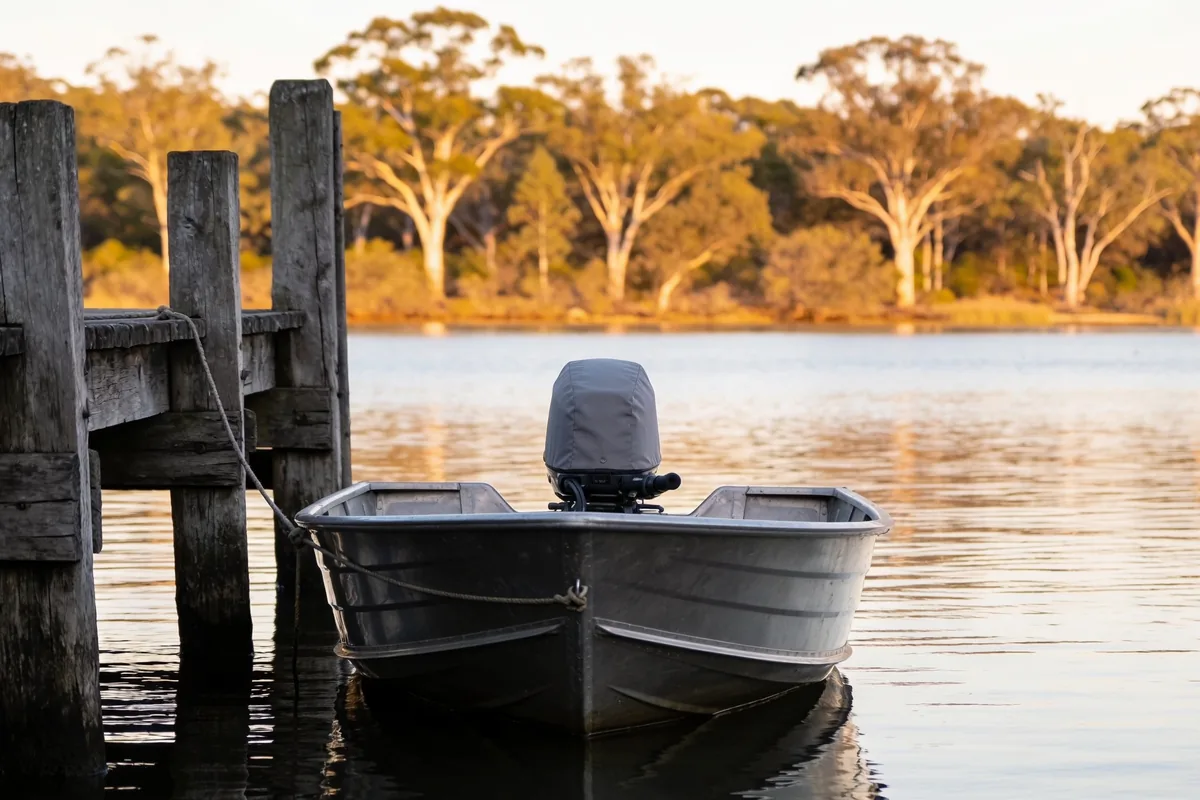
A tinny on a trailer crosses a state line on a Friday afternoon, and three questions travel with it that tend to be run together. Does the driver’s licence count in the state ahead? If it does, for how long? And does the water out there ask for a licence at all, given the size of the motor on the back? Each has its own answer, and the usual online replies settle one while leaving the others to chance.
The verdict here is that a current boat licence from another state is honoured in most states for a limited time: about three months in New South Wales, Victoria, Tasmania and Western Australia, and 90 days in South Australia. Queensland’s page states no visitor time limit. Whether any licence is needed is the water’s rule, not the driver’s address. Everything below rests on the official pages of all eight jurisdictions as they stood on 19 November 2026, plus a 2021 Transport for NSW leaflet and the 2023 Victorian handbook.
The water sets the rules, not your address
“Boating is regulated by state governments, so different laws apply in different states.” That line comes from a 2021 Transport for NSW leaflet on interstate rules between New South Wales and Queensland, and it states the problem plainly. A boat licence is the issuing state’s paper. The state a visitor is standing in decides what it will honour, for how long, and which boats and speeds it asks a licence for in the first place.
The same leaflet says both states accept equivalent interstate licences, which is the answer most people want. What short answers leave out is the time limit and the trigger. One training-provider page describes recognition as usual but not automatic and gives no period, while the official pages for five jurisdictions each state one.
Borders on water add a wrinkle. The Victorian boating handbook says that on the Murray River, which borders Victoria and New South Wales, “the laws of NSW apply”. A boat launched from a Victorian ramp is not necessarily under Victorian rules once it is on the river. Other powered devices follow the same pattern, as e-scooter rules by state shows.
When a licence is needed: eight different triggers
The trigger is a different kind of measure in almost every jurisdiction. New South Wales counts speed. Queensland, Western Australia and Tasmania count engine power, each at its own line. South Australia and Victoria count the engine itself. The Northern Territory counts nothing, and the ACT borrows its licensing from everyone else. The table sets them side by side, as the pages stated them on 19 November 2026.
| Jurisdiction | A licence is needed when |
|---|---|
| NSW | Driving at 10 knots (18.5 km/h) or more, or any personal watercraft |
| Queensland | Engine greater than 4.5 kW, towing a person, or a personal watercraft; a licensed supervisor aboard allows unlicensed operation |
| Victoria | Operating any powered recreational vessel; no engine-size threshold named, low-powered electric kayaks and canoes (up to 1 hp or 750 watts, no more than 5 knots) exempt |
| South Australia | Any recreational vessel with an engine, of any size, running or not |
| Western Australia | A motor exceeding 6 hp (4.5 kW); only the skipper needs the ticket |
| Tasmania | Operating a vessel of 4 hp or more; hire-and-drive vessels excepted |
| Northern Territory | Never, for a recreational boat |
| ACT | On ACT lakes, a licence from another state or territory; above 10 knots, ACT approval as well |
The power lines are not the same line. Queensland’s 4.5 kW is about 6 hp, matching Western Australia, while Tasmania’s 4 hp sits below both. That is how a speed trigger and a power trigger can disagree about the same boat.
Take a hypothetical tinny with a 5 hp outboard, kept under 10 knots. On the stated triggers it needs a licence in South Australia and Tasmania, and, on the first line of the ACT page, on ACT lakes, though the page’s speed section names a licence only above 10 knots, so confirm with Access Canberra. A boat under 10 knots needs no separate ACT approval. It does not need one in New South Wales (under 10 knots), Queensland (5 hp is about 3.7 kW), Western Australia (not over 6 hp) or the Northern Territory. Victoria is the hedge: its page names no small-motor threshold, so the cautious reading is that the tinny needs a licence there too.
Now a hypothetical 15 hp outboard (about 11 kW) at 6 knots. It needs a licence in Queensland, Victoria, South Australia, Western Australia and Tasmania, and on ACT lakes, but not in New South Wales or the Northern Territory. Same boat, same speed, different answer across the border. Both are illustrations built from the pages, not advice about any particular boat.
The table excludes registration, which follows its own rules.
How long a visiting licence counts
A licence that counts is only half the answer. The other half is how long the visit may last before the home licence stops being enough.
| Jurisdiction | A visitor with a current licence from another state | Date printed on the page |
|---|---|---|
| NSW | Needs a NSW licence after 3 months | Undated |
| Queensland | May use it if 16 or older, current and within its conditions; no visitor time limit stated | 6 December 2024 |
| Victoria | Equivalent vessel for three months; Victorian rules apply | Undated; handbook 2023 |
| South Australia | Up to 90 days | 20 October 2026 |
| Western Australia | No RST needed for 3 months or less (recognition page); the who-needs-one page says less than 3 months | 12 August 2025; recognition page 5 November 2026 |
| Tasmania | A maximum of three months | Undated |
| Northern Territory | Not applicable | Undated |
| ACT | A licence from any state or territory | Undated |
Five jurisdictions state a period, and they cluster around three months. The wording differs: New South Wales says a licence is needed after three months, Western Australia’s recognition page says none is needed for three months or less while its who-needs-one page says less than three months, and Tasmania says three months is the maximum. A visitor planning close to that mark should read the state’s page, not the table.
Queensland is the exception, and it is easy to misread. Its page states no visitor time limit. That is silence, not generosity. A page that states no limit has not said there is none, and anyone planning a stay of months should ask Maritime Safety Queensland rather than assume.
The three-month figure sometimes attached to Queensland comes from an automated search summary telling movers to convert within 3 months. The Queensland page ties that deadline to people arriving from overseas and gives interstate movers none. On that point the page governs, as the official pages govern over the training-provider page, which gives no period at all.
A common view online is that an interstate licence is simply honoured with no end date. It has a fair point: for a few days or weeks on holiday, most states do honour a current licence, and “bring it” is the right answer. It sits out of step with five pages that name a period, though.
Queensland, South Australia and both Western Australian pages carry a date. The rest print none, and the Victorian handbook is a 2023 edition. Reopen the page before any long stay.
Two places with no licence scheme of their own
The Northern Territory’s page says: “In the Northern Territory (NT), you don’t need to hold a licence to operate a recreational boat.” Boats need no registration either. The page adds that boaters must know the territory’s boat laws and may be prosecuted for breaking them, so having no licence scheme is not the same as having no rules.
For a Territory resident heading south, there is no current recreational licence to recognise, so only a certificate on Western Australia’s list would count. That list carries Northern Territory entries in both columns: five certificates and licences are recognised, such as the Certificate of Completion Recreational Vessel Operator, and the unrecognised column notes that no licence or vessel registration is required in the Territory. The visited state’s trigger then applies as it would to anyone without a licence, including the supervisor arrangements some states describe. Queensland allows unlicensed operation with a licensed supervisor aboard who can take immediate control, and the Victorian handbook describes direct supervision by a licensed, endorsed person over 18.
The ACT issues no licence either. Its page says that to operate a boat on ACT lakes, “you need a boat licence and a registered boat, unless that boat is exempt from registration”, and the licence has to come from another state or territory. Under 10 knots, no separate ACT approval is needed. Over 10 knots, the boat needs a licence from any state or territory and ACT Government approval. Lake Burley Griffin is regulated by the National Capital Authority, not the ACT. The page’s list of agencies includes the Northern Territory, which issues no recreational licence, so a Territory resident should ask Access Canberra.
Jet skis and hire boats
A personal watercraft, or jet ski, is where single-trigger rules stop applying. New South Wales asks for a licence for any personal watercraft, whatever its speed. Queensland asks for a recreational marine licence and a separate PWC licence. Victoria asks for a PWC endorsement. Western Australia’s page applies its 6 hp line and gives no separate PWC rule, so a rider there should confirm with the department. New South Wales transfers an interstate PWC licence only from Queensland, Victoria or Tasmania, and says a general licence cannot be converted directly to a PWC licence.
Hire boats carry their own rules. Victoria asks for a licence on hire-and-drive vessels capable of more than 10 knots. Tasmania says hire-and-drive vessels not exceeding 8 knots can be operated without a licence with adequate training. Western Australia strongly recommends a Recreational Skipper’s Ticket for drivers of hire-and-drive vessels over 4.5 kW, which is a recommendation on its page and not a stated rule. Queensland says certain rules apply and points to Maritime Safety Queensland. The other pages say nothing on hire, so one state’s rule should not be carried to another. Ask the hire firm what it requires before paying.
Teenagers and a lapsed licence
Age limits vary as much as triggers. New South Wales issues a general licence from age 12, restricted under 16. Victoria’s restricted licence runs from 12 to under 16, with a full licence from 16. South Australia lets a 12-year-old operate under direct supervision at no more than 10 knots, with a special permit for 12 to 16. Queensland sets 16. Western Australia’s minimum is 14, with daylight only and under 8 knots below 16. Tasmania has a provisional licence from 12 to 17. A teenager’s interstate licence is therefore only as portable as the destination’s age rules.
A lapsed licence is a separate trap. For use, Queensland says an expired interstate licence has to be renewed with the issuing state, or the full Queensland requirements met. For transfer, New South Wales and Queensland accept an interstate licence current or expired less than 5 years, and Tasmania can recognise one not expired for more than six years. Those are paperwork rules for moving, not permission to drive. A lapsed licence is not a licence on the water.
Moving, not visiting
On most pages, visiting ends and moving begins at the same figure. New South Wales, Victoria and Tasmania each say three months, South Australia says 90 days, and Western Australia says a stay longer than 3 months needs a Recreational Skipper’s Ticket, through skills recognition with an authorised assessor. Victoria adds that a resident for more than three months must convert, with the knowledge test waived on evidence of the equivalent licence.
Queensland again reads differently. Interstate movers convert in person with the original licence, and the page states no conversion deadline for them. New South Wales transfers an interstate general licence without the knowledge test on the same current-or-under-5-years basis, and New Zealand boatmaster certificates can transfer there too. Other overseas licences cannot. Crossing a border changes road rules as well, as double demerits by state shows.
What the tables leave out
Registration, safety equipment, lifejackets, alcohol limits, local speed zones and fishing licences all follow the water too, and none is covered here. The state or territory marine authority is the place to confirm them. Once the paperwork is read, the next skill is reading the water itself, and how to spot a rip current covers that part.
Read the rules of the water
Bring the licence, because for a visit most states honour a current one. Read the water’s trigger before launching, because the same boat can need a licence in one state and none in the next. Check the time limit before a long stay: about three months in most places, 90 days in South Australia, and in Queensland a page that stays silent, which is a reason to ask Maritime Safety Queensland. Visiting licences are recognised, with time limits, and the rules that matter are the ones on the water you are on.
Sources: Boat and personal watercraft licences, Queensland Government (https://www.qld.gov.au/transport/boating/recreational); Get boat or PWC licence, NSW Government (https://www.nsw.gov.au/driving-boating-and-transport/maritime-licences/boat-and-pwc-licences/get-boat-or-pwc-licence); Moving your boat or PWC licence to NSW, NSW Government (https://www.nsw.gov.au/driving-boating-and-transport/maritime-licences/boat-and-pwc-licences/moving-to-nsw); Licensing and registration, Safe Transport Victoria (https://safetransport.vic.gov.au/on-the-water/marine-licence-and-vessel-registration/licensing-and-registration/); Victorian Recreational Boating Safety Handbook 2023, Safe Transport Victoria (https://safetransport.vic.gov.au/wp-content/uploads/2023/10/ST204_2023_update_ST-Vic__Boating-Safety-Handbook_Full-Doc_V1INT.pdf); Boat licences, SA.GOV.AU (https://www.sa.gov.au/topics/boating-and-marine/boat-operators-licences-and-permits/boat-licence); About Recreational Skipper’s Ticket, Western Australian Department of Transport (https://transport.wa.gov.au/imarine/who-has-to-have-a-rst.asp); RST skills recognition and equivalents, Western Australian Department of Transport (https://transport.wa.gov.au/imarine/rst-skills-recognition-and-equivalents.asp); Motor boat licence, Marine and Safety Tasmania (https://mast.tas.gov.au/licensing/licence-registration/); New to recreational boating, Northern Territory Government (https://nt.gov.au/marine/for-all-harbour-and-boat-users/owning-a-boat/new-to-recreational-boating); Boating on ACT lakes and Googong Reservoir, Access Canberra (https://www.accesscanberra.act.gov.au/driving-transport-and-parking/licences/boating-on-act-lakes-and-googong-reservoir); Get to know your interstate boating rules, New South Wales and Queensland, Transport for NSW (https://www.nsw.gov.au/sites/default/files/2021-03/get-to-know-your-interstate-boating-rules-nsw-qld.pdf)




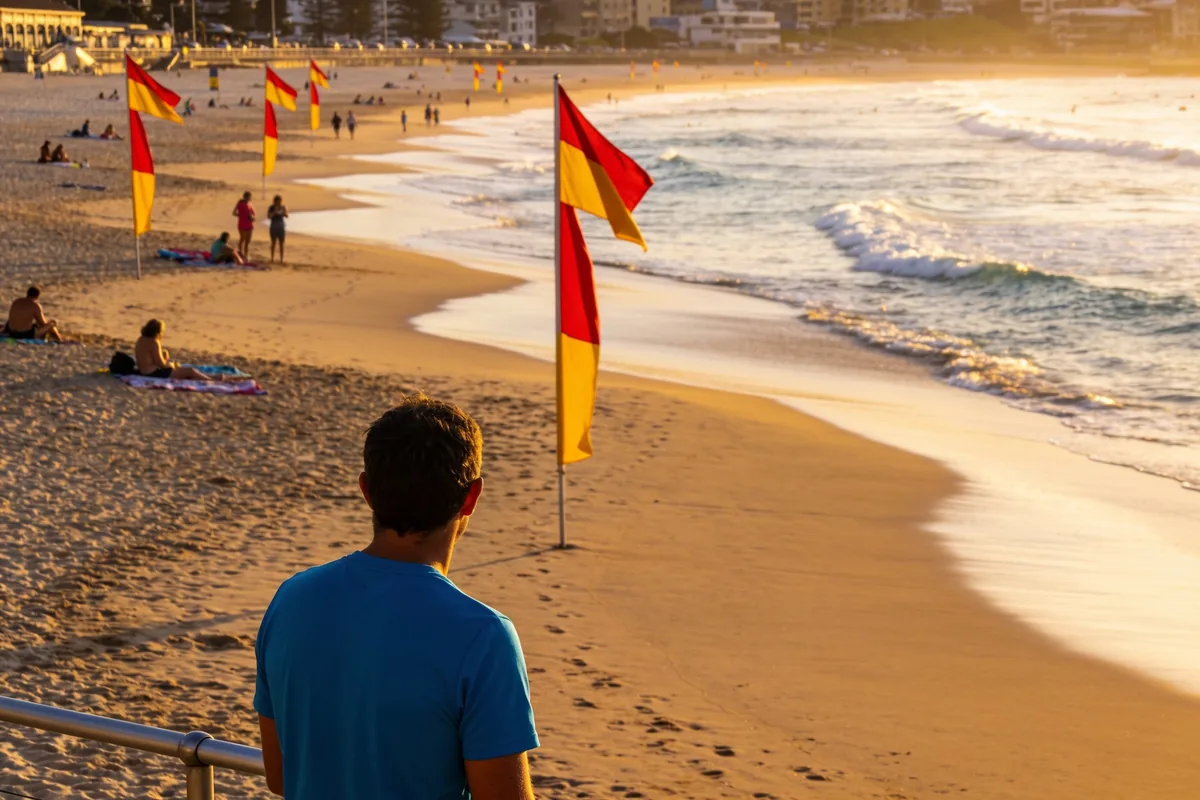
If you’ve ever stood at the edge of a busy beach with the kids already sprinting towards the water and felt your stomach tighten, you’re not being overprotective. That small knot of worry is about the most sensible thing you can bring to the sand. The good news is that it has a very practical answer, and it doesn’t take long. Before anyone gets wet, you stop, you look at the water for a couple of minutes, and you choose where to swim.
That’s the whole habit. The rest of this article is about what you’re looking for while you do it, and the one sign almost everyone misreads.
Why rips are worth two minutes of your time
It’s okay to feel a bit anxious about rips, because the numbers back you up. According to Surf Life Saving Australia’s Beachsafe, rip currents are responsible for at least 21 drowning deaths in Australia each year on average, and they’re the number one hazard on Australian beaches.
That isn’t meant to frighten you off the beach. It’s meant to tell you where to put your attention. Most of what keeps a family safe at the beach is ordinary: swimming in the right spot, keeping an eye on each other, and knowing what to do if the water does something unexpected. Rips are the hazard that most rewards a little knowledge, and the knowledge is easy to carry.
If you’re packing the beach bag tonight, it’s worth pairing this with the rest of the kit, including a quick check of whether your sunscreen has expired. Small checks, done before you leave, are what make a beach day feel easy.
What a rip looks like
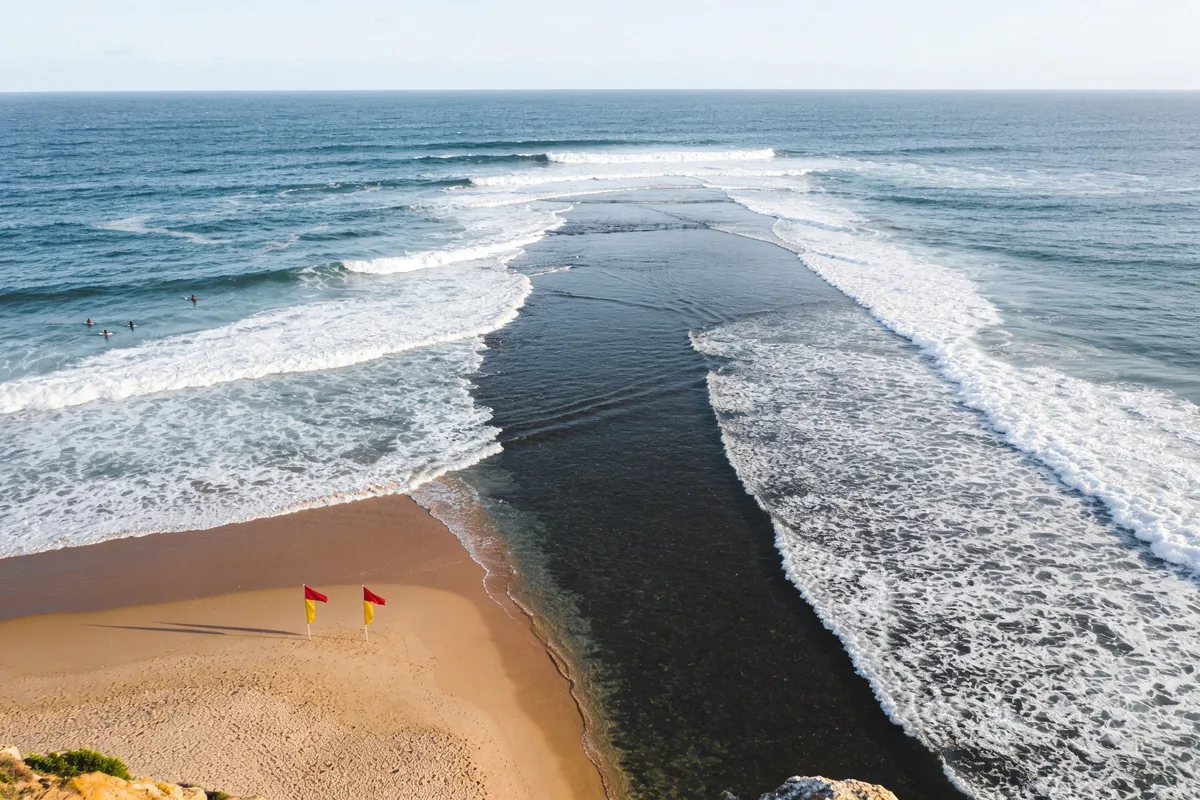
Beachsafe lists the signs that a rip may be present. You might see one of them, or several together:
- deeper and/or darker water
- fewer breaking waves
- sandy-coloured water extending beyond the surf zone
- debris or seaweed
- significant water movement
The second one is the sign worth sitting with for a moment, because it’s the one that catches people out.
When you look along a beach, the patches with white, rolling waves can seem rough and a little intimidating. Between them, there’s sometimes a stretch where the waves don’t seem to break at all. The water there looks flatter, often darker, and much more inviting, especially if you’ve got little ones who don’t love being knocked over. It feels like the calm, safe spot.
Very often, that calm gap is the rip. Fewer breaking waves and darker water are two of the signs on Beachsafe’s list, and here they are, side by side, looking like an invitation. So the place that looks gentlest from the sand can be the place most likely to carry a swimmer away from it.
Beachsafe has a lovely simple tip for spotting this. Find the places where waves are breaking consistently, then look to each side for spots where they’re not. You’re looking for the gaps in the pattern. Once you’ve seen one, you’ll find yourself noticing them on every beach you visit.
Here’s how those two minutes might go, as an illustration. You arrive, drop the bags, and before the towels are even out you stand at the top of the sand with the kids beside you. You follow the white water along the beach from left to right. To the left, the waves are breaking in neat, steady lines. Then, just in front of the tower, there’s a stretch where they aren’t, and the water there is a shade darker and looks smoother. A little further out, you notice a smudge of sandy-coloured water past where the waves are breaking. That’s two or three signs from the list in one spot, and it’s exactly the place the kids would have run to first. So you walk the other way, towards the flags, and you point the gap out to them as you go, so they start to learn the pattern without anyone being frightened.
Why they can be hard to see
Please don’t be hard on yourself if you look at the water and can’t tell. Rips aren’t always obvious, even to people who’ve grown up on the coast.
Part of the reason is that, as Beachsafe explains, rips change shape and location quickly. The rip you spotted at ten o’clock might have shifted by lunchtime, and a beach that looked settled yesterday can look different today. That’s why the looking is something you do each time you go in, not once at the start of the holidays.
Another reason is that some rips are much narrower than people expect. There’s a well-known dye test, shared widely online, in which coloured dye is released into the surf and shows a thin channel of water pulling straight out past the waves. Plenty of people who watched it said the same thing: they’d never imagined a rip could be that narrow. A narrow rip is easy to miss if you’re glancing at the beach as a whole, which is another good reason to look slowly, section by section.
Between the flags
If all of this feels like a lot to hold in your head, here’s the reassuring part. You don’t have to read the water perfectly on your own.
Beachsafe’s advice is to swim at a patrolled beach, between the red and yellow flags. The flags mean a patrol is on that stretch of sand, and the lifesavers and lifeguards there are watching the same water you are, with a lot more practice at reading it. They’re also right there if something goes wrong.
So the flags are your plan, and your own looking is the back-up. One small thing to check: patrol hours vary from beach to beach, so it’s worth confirming the patrol is on before you swim, rather than assuming it is because you can see flags or a tower.
If there are no flags, that’s your cue to be extra careful, and to think about whether this is the right spot to swim today.
If you’re caught in a rip
Nobody wants to think about this part, but knowing it ahead of time is what turns panic into a plan. Beachsafe sets out the options. In order:
- Stay calm and conserve your energy. This one matters most.
- Raise an arm and call out for help. It signals to lifesavers and anyone nearby that you need assistance.
- Float with the current. It may return you to a sandbank.
- Swim parallel to the beach, or towards the breaking waves. Not straight back against the pull.
If you remember only one thing, make it this. When you’re caught in a rip, your job is to stay afloat. You’re not trying to win a race against the water, and you don’t have to get back to the sand straight away.
People who’ve been caught often describe the same thing: trying to swim straight back to the beach, against the current, until they were completely exhausted, sometimes only a short distance from shore. One person described fighting a rip just metres from the sand and lying on the beach afterwards, more tired than they’d ever been. Another, reflecting on the dye test, put it simply: don’t panic, ride it, swim at a slight angle. That lines up with what Beachsafe advises. Calm, floating, signalling and swimming across rather than against are what get people home.
If you’ve got children, it can help to talk about this calmly before you get to the beach, almost like a fire drill. “If the water pulls you out, you float, you wave, and you call out.” A short, steady line is easier to remember than a long explanation, and you’ll feel better knowing they’ve heard it from you.
If someone else is caught
This is the hardest situation to imagine, and your instinct may be to run straight in. Please get help rather than going in yourself.
Shout and wave for the lifesavers or lifeguards, who are trained and equipped for exactly this. If the beach isn’t patrolled, call emergency services straight away. The number to ring is Triple Zero (000). Keep your eyes on the person in the water so you can point rescuers to them. It can feel like doing too little. It isn’t: getting the right help there fast is the most useful thing you can do from the sand.
A few questions people ask
Is a rip the same as a riptide? Many people say “riptide” when they mean a rip, and in everyday conversation that’s what they’re talking about. The thing to look for, and the advice for getting out, are the same as everything in this article.
What if I look and can’t see any signs? That happens, and it doesn’t mean you’ve done it wrong. Rips aren’t always obvious, so the flags are still the plan. Swim between them on a patrolled beach, and let the lifesavers do the expert reading.
Will the rip be in the same place next time? Not necessarily. Beachsafe explains that rips change shape and location quickly, so the gap you spotted last weekend might not be there this weekend, and a new one could be somewhere else. Each swim gets its own look.
Stop, look, then swim
Beachsafe’s message for rips is three words long: Stop, Look, Plan. It’s a good one to keep, because it asks so little of you.
Stop at the edge of the sand before anyone runs in. Look at the water for a couple of minutes, finding where the waves break and where they don’t, and paying special attention to that tempting calm gap. Then plan: head for the red and yellow flags, check the patrol is on, and make sure everyone in your group knows what to do if the water pulls them out.
That’s it. Two minutes, every time you go in. The worry that made you pause at the top of the beach is exactly what makes that pause happen, so you can let it do its job, and then go and enjoy the water.
Sources: Rip Currents, Beachsafe, Surf Life Saving Australia (https://beachsafe.org.au/surf-safety/ripcurrents)


 Healthcare1 year ago
SIL Providers: What to Compare Before You Commit
- Healthcare1 year ago
What Is Physiotherapy?
- Healthcare1 year ago
What a Dental Implant Replacement Costs in Melbourne
- Food1 year ago
Budget Bites: Delicious Meals You Can Cook for Under $10
- Tech1 year ago
Mental Health Apps and Wearables: What to Trust
- Healthcare1 year ago
What Changes When You Start SIL
- Home & Garden1 year ago
Gutter Upgrades Worth Doing Before You Sell
- Healthcare1 year ago
How to Put NDIS Community Participation Funding to Work













You must be logged in to post a comment Login