
Travel
The Clauses That Decide Your Travel Insurance Claim


A travel policy is its exclusions. The cover is the advertising, the price is the comparison, and the exclusions are the contract. When a claim is refused, the refusal almost never arrives as a surprise to the insurer; it arrives as a surprise to the traveller, who is meeting the deciding clause for the first time after the event it governs.
That disputes are routine rather than rare is measurable. Travel insurance sits among the top five general insurance products in complaints to the Australian Financial Complaints Authority, at about 2,477 complaints in the authority’s most recent year-at-a-glance figures. The volume matters for one reason: it means the outcomes have been tested, published and, in some cases, corrected. The clauses that decide claims are knowable, and this article walks them in the order that disputes tend to reach them.
The reframe is worth one step further, because it changes what a purchase looks like. Comparing two policies on price and headline limits compares their advertising against each other; comparing them on exclusions compares their contracts. A traveller who does the second comparison sometimes buys the policy that looked worse on the sales page, for the entirely rational reason that it covers the thing they fear: a medical event far from home, a wedding that cannot go ahead, a bag that never arrives.
How a claim is decided
The procedural point is the most useful one in this subject, and it is the one travellers hear least. Under the contract and the framework of the Insurance Contracts Act 1984, an insurer that refuses a claim on the basis of an exclusion carries the onus of establishing that the exclusion applies. It must identify the clause, show that the circumstances fall within it, and address the Act where the Act bears on the reading. A refusal without a clause is not a decision; it is an assertion, and it can be pressed.
Which is why the most common sentence in refused-claim stories, some version of “I never saw that in the policy”, is both true and beside the point. The traveller never saw the clause because nobody reads a product disclosure statement front to back on the way to the airport. The insurer, by contrast, reads its clauses professionally. The asymmetry is the whole game, and the remedy is not to read the entire document. It is to know which families of clauses decide claims, and to check yours against them before the money is spent.
For the traveller, one practical habit follows from the onus rule: ask for a refusal in writing, clause and all, and keep the correspondence. A decision reduced to a clause can be tested against the clause. One left as a conversation on a phone line cannot be tested against anything.
The same discipline shows up wherever a document governs a purchase, and the site has covered it on other paper: logbook servicing and the fine print of a warranty is the same exercise in a different industry, where the conditions that void the cover sit in sentences nobody reads until they matter. Travel insurance is that lesson with a passport.
The clauses that decide most claims
Five families of clause carry the bulk of disputes, and each has a characteristic shape that can be checked against a policy in minutes. The examples below are drawn from the published determinations of the complaints authority, described without the parties, because the pattern is what matters rather than the case.
Medical cover and pre-existing conditions come first, because they carry the largest sums and the strictest tests. A condition that showed signs or symptoms before cover began, or during the policy’s waiting period, is generally treated as pre-existing, and the definitions of “signs” and “symptoms” are deliberately wider than a diagnosis. One recurring dispute concerns age: several policies limit medical cover for travellers past a certain age unless a higher tier is purchased, and a claim from a traveller over 80 without the required upgrade meets its clause rather than its merits.
One habit helps with all five families: the policy schedule, not the product disclosure statement prose, is where the limits live. The schedule is the short table that lists each section, its limit and its excess, and it can be read in minutes. The prose explains; the schedule decides. A traveller who reads only one of the two should read the table.
Cancellation is the second family, and its trap is the closed list. Many policies cover cancellation for a list of specified events rather than for any good reason, and a reason that is not on the list is not covered, however sound it was. The determinations include a traveller detained by authorities over a souvenir knife who argued that detention should count as an event; the policy’s list did not include detention, and the claim met the list rather than the argument. The lesson generalises: with cancellation cover, read the list, and if your reason is not on it, do not assume a good story will carry the day.
Delay thresholds form the third family, and they are the least dramatic and the most frequently missed. Where a policy covers travel delay or missed connections, the cover usually begins only after the delay passes a stated threshold, and the threshold is expressed in hours rather than days. A delay shorter than the policy’s number produces no claim, however disruptive the night that followed it. The number is worth finding in advance, because it also tells the traveller what receipts to keep: below the threshold, the expense is simply theirs.
War, unrest and official advice make up the fourth family, and it has grown teeth. Policies commonly exclude loss connected with war, invasion, civil unrest and similar events, and some extend the exclusion to destinations the government advises against travelling to. This clause turns a destination question into a pre-purchase question: the time to check how a policy treats a region is while the booking is being paid for, not while the news from that region is worsening.
Activities and theft complete the set. Adventure activities are excluded unless the policy extends cover to them, and the list of what counts as adventure is broader than most travellers expect, extending to things as unremarkable as riding a scooter in some policies. Theft cover, meanwhile, comes with reporting conditions: a police report within a stated window, receipts for the items, and sometimes proof of how they were secured. A theft claim that misses the reporting condition is refused on the condition rather than the theft.
What almost everyone gets wrong
Two confusions account for a large share of disappointed travellers, and both come from treating a policy as a single promise rather than a shelf of separate ones.
The first is the difference between emergency medical cover and travel costs. These are different clauses with different limits, and a policy can be generous on one and narrow on the other. Emergency medical cover addresses treatment and evacuation under the policy’s terms. The costs of a disrupted trip, the extra nights and changed flights, sit under different sections, often with their own caps and their own conditions. A claim that reads “but I was covered for medical” is answered by a schedule that never promised the other thing.
The second is “I am covered anywhere”. A policy is written against a trip, not against a person. The destination, the dates, the activities and the length of the journey are all variables the cover is priced around, and each of them appears inside conditions in the document. Extend a trip, change a destination, add a leg on the ground, and the conditions that were satisfied at purchase may not be satisfied at the claim. What the policy excludes, in this as in everything, is the part where the facts changed and nobody told the insurer.
The Australian facts worth knowing
Three facts particular to Australian travellers are worth carrying into the purchase, because each one changes how much a policy is protecting in practice.
The first is timing. The government’s travel advice service recommends buying insurance when the trip is booked rather than when it is about to begin, and the reason is mechanical: cancellation cover cannot protect a booking made before the policy existed. A policy purchased the week before departure has quietly excluded the risk that most often materialises before departure.
The second is that the Australian Government does not pay a traveller’s medical bills or evacuation costs overseas. Consular assistance helps with processes; it is not insurance. The third is the nature of reciprocal health agreements: Australia holds arrangements with some countries that cover some treatments, often under conditions and generally not the costs of returning home. A reciprocal agreement is a helpful fact and a poor substitute for a policy, and the difference between the two is worth understanding before it is needed.
When a claim goes wrong
The recourse is real, and it is free. A traveller whose claim is refused can complain to the insurer first, and if the outcome remains unsatisfactory, take the matter to the Australian Financial Complaints Authority, which handles disputes about general insurance at no cost to the complainant. The authority’s jurisdiction, procedures and timeframes are published, and its decisions are made against the same clauses this article has walked, which is why its determinations read like a syllabus in policy interpretation.
The authority also corrects insurers when policy interpretation itself has gone wrong, and the clearest example is systemic. In one decision, it was found that a condition requiring both trips to be purchased on a linked credit card had been applied by an insurer to refuse claims, and the ruling overturned 24 previous denials built on the same reading. One decision, in other words, did not merely settle a dispute; it corrected a pattern. That is worth knowing before accepting a refusal as final.
The order of complaint is short enough to state in full. Raise the dispute with the insurer’s internal process first and keep the reference number. If the answer stands and the dispute remains, the authority takes it from there, at no cost to the complainant, and decides it against the policy and the law rather than against the marketing. Nothing in that path requires a lawyer, and nothing in it requires fluency in the document. It requires the correspondence and a plain account of what happened.
The clause to read first
The practical close is a short set of questions, and none of them requires reading the whole document. Ask the policy, not the sales page, about each of these before the money moves.
- Pre-existing conditions: what counts, when the clock starts, and whether any upgrade is required for age or health.
- Cancellation events: find the list, and check that your reasons for travel would appear on it.
- The delay threshold: the number, in hours, at which delay cover begins, and what it covers once it does.
- Activities: whether the things you plan to do are covered by name, or excluded by omission.
- Reporting conditions: the windows and evidence required for a theft or loss claim, noted before the trip rather than after one.
One habit ties the list together, and it follows the pattern set by the site’s own booking advice in wedding car hire and the decisions before the big day: settle the conditions that decide the money before paying the deposit, not after the event has tested them. Travel insurance simply raises the stakes on the same discipline.
The clause to read first, if only one is read, is the exclusions section, because it decides everything the rest advertises. The second is the list of cancellation events. Between them, they hold the answers to most of the disputes that reach the ombudsman, and meeting them at the kitchen table costs an evening. Meeting them at the claims stage costs the trip.
Sources: Australian Financial Complaints Authority – year-at-a-glance complaint figures and published determinations on travel insurance; Smartraveller – travel insurance advice (Department of Foreign Affairs and Trade); Insurance Contracts Act 1984 (Cth), cited as the framework applied to claims.

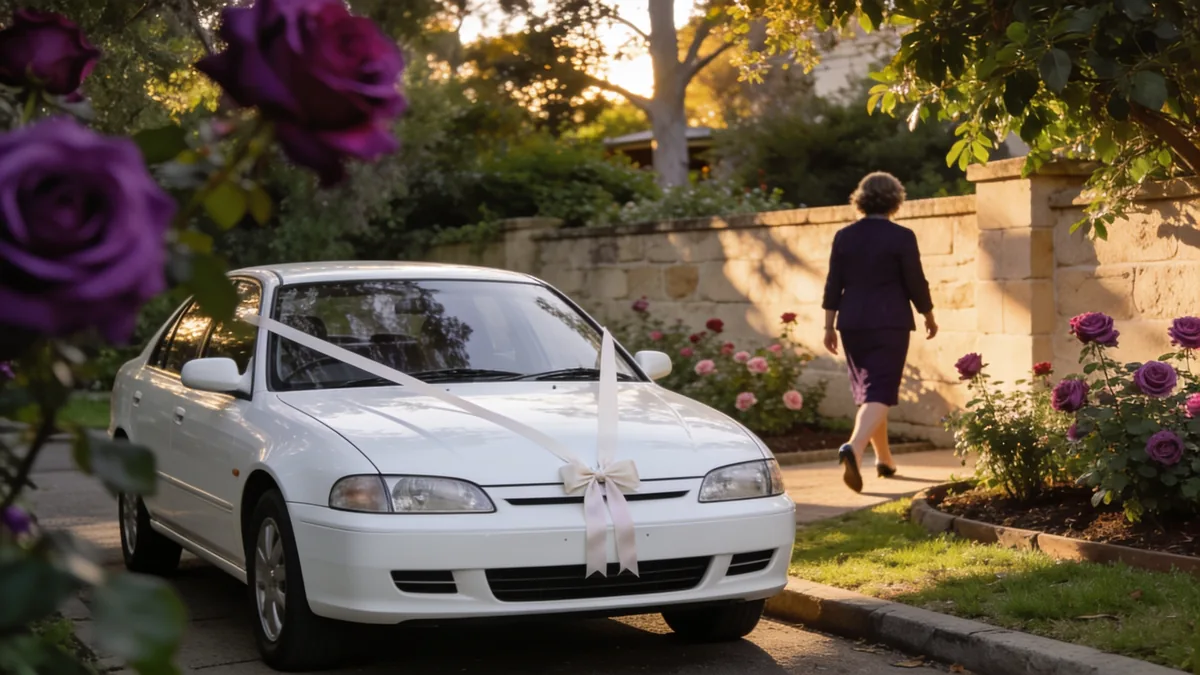
You have the date, the venue and the people you love. The car is a smaller booking than any of those, and it can be settled in an afternoon. Before a deposit changes hands, these are the things worth deciding.
What you are booking
A wedding car booking is not just a car. It is a car, a driver and a window of time on a day when the schedule is tight. The car gets all the attention, and the other two decide whether the morning runs smoothly.
Read the inclusions with that in mind. Ribbons and decor, photo stops, the hour the hire starts and ends, and how far the car will travel are all line items, and they differ between operators. So does the second trip: plenty of couples use one car for one leg and something else for the rest, and that plan only works when someone has written down who travels where, and when.
The two-seat problem
Most of the cars people picture for a grand entrance seat two: a driver and one passenger. That is fine. It just changes the logistics, because if you are both travelling, you are not travelling together, at least not in that car. Decide who rides when, and who travels with whom, before the day rather than in the driveway.
Practise getting in and out once, in the dress or the suit. Low seats and long trains are a combination that photographs badly when it surprises people. One dry run at the fitting settles it, and it makes a lovely photo of its own.
The getting-ready hour
Most cars arrive before the ceremony, sometimes well before, because the photographs start when the dress is on. That hour is where timelines go wrong. Hair runs over, and the car sits outside while the morning catches up. Give the operator the time you will really be ready rather than the time you hope to be, and let the photos have their place in the plan rather than being discovered on the day.
Choose the car for the photos you want
The car appears in two kinds of photo: the arrival, and the portrait session around the corner. Colour, the shape of the doors and the backdrop of the venue do more for those photos than any badge on the bonnet. On a busy Saturday in spring, traffic anywhere in the city takes longer than anyone plans for, so build a buffer into every leg, and let the photographer have their ten minutes with the car before it is waved away.
How far ahead to book
Popular cars and popular dates go first, and the two together go first of all. A weekday wedding in winter has room to move. One specific car on a Saturday in spring is a booking to make early rather than eventually. Decide how attached you are to the exact model, and if the answer is very, start looking sooner than feels necessary. The calendar does not mind either way, but the good cars fill.
What moves the price
The car itself is one variable. The others are the length of the hire, the distance travelled, the day of the week, and what is included in the figure. That is why two quotes can look far apart while describing different things. Compare them on the same schedule, with the same inclusions, and the real difference usually shrinks to something you can judge. Then choose on the condition of the car, the terms and the driver, because those are the parts a lower price rarely improves.
What to ask before you pay the deposit
- Is the exact car guaranteed? Some operators write “this car or similar”. That is a reasonable sentence and a real difference on the day, so know which one applies before you pay.
- What is included? Hours, distance, ribbons, photo stops and the second trip. Get the inclusions in writing rather than in a phone call everyone remembers differently.
- What happens if the car cannot attend? Breakdowns happen. A careful operator has a backup plan and describes it plainly when asked.
- What are the cancellation and weather terms? Postponements, rain and date changes each have conditions. Read them while the date is still far away.
- What deposit is held, and when does it come back? Know whether it is a booking deposit or a security bond, and what could see it kept.
- Who drives? For this kind of hire, the answer should be the operator’s professional driver, with the insurance and experience that come with the role.
The day itself
Give the driver the schedule, and give the same schedule to whoever is keeping the day on track. Drivers do this every weekend. They are calm, and they are used to wedding time. A driver who knows the plan does not need managing, and one who has to chase the plan cannot do their best work. If there is a stop you are hoping for that is not on the sheet, say so before the day rather than from the back seat.
The person behind the wheel is working a job like any other that day, and the habits that make a driving job good are the same in every kind of car. What separates a smooth trip from a rushed one is worth a read if you want to know exactly what you are paying for.
The car is one booking, not the whole day
Decide the few things that matter to you, put the rest in the operator’s hands, and keep the morning’s list short. The best wedding car moment is the one you did not have to manage.
Sources: consumer affairs agencies in each state and territory publish guidance on vehicle hire agreements, deposits and cancellations; the operator’s written terms are the document that governs the booking.


 Healthcare1 year ago
SIL Providers: What to Compare Before You Commit
- Healthcare1 year ago
What Is Physiotherapy?
- Healthcare1 year ago
What a Dental Implant Replacement Costs in Melbourne
- Healthcare1 year ago
What Changes When You Start SIL
- Food1 year ago
Budget Bites: Delicious Meals You Can Cook for Under $10
- Tech1 year ago
Mental Health Apps and Wearables: What to Trust
- Home & Garden1 year ago
Gutter Upgrades Worth Doing Before You Sell
- Healthcare1 year ago
How to Put NDIS Community Participation Funding to Work