Sports
Spotting a Rip From the Sand: The Calm Gap That Pulls Swimmers Out

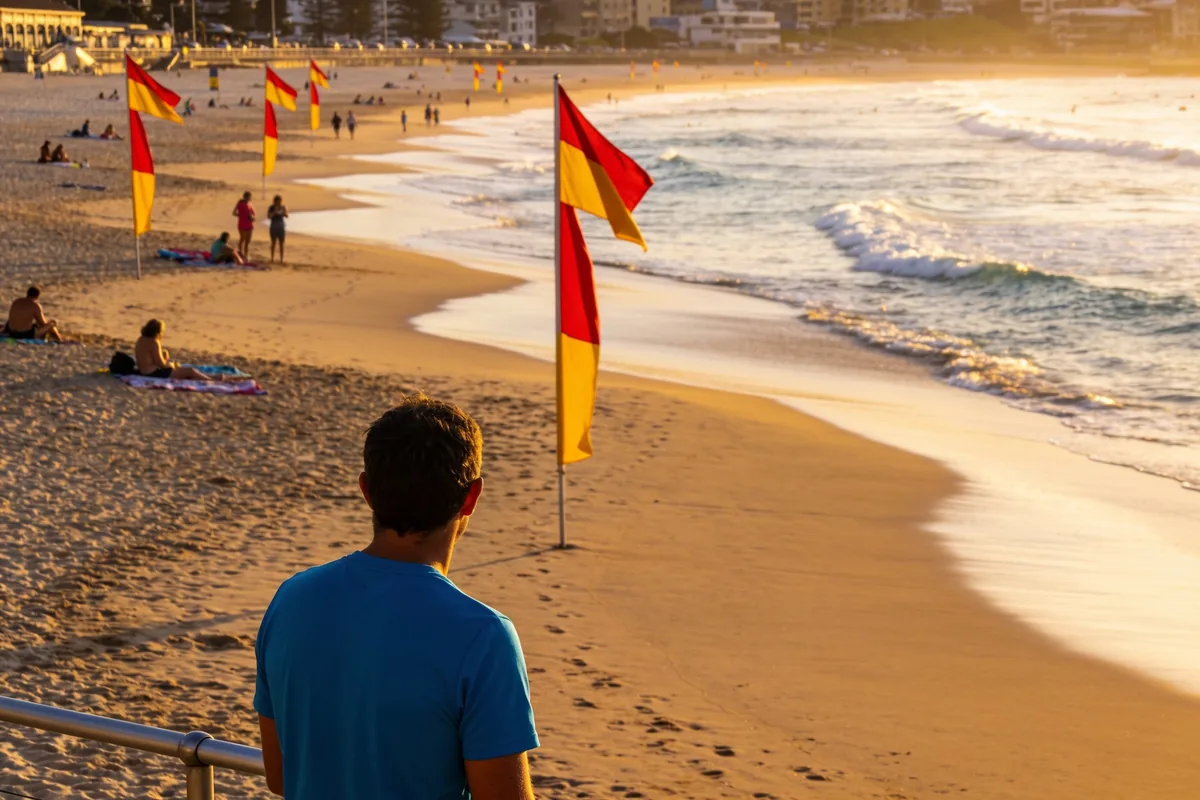
If you’ve ever stood at the edge of a busy beach with the kids already sprinting towards the water and felt your stomach tighten, you’re not being overprotective. That small knot of worry is about the most sensible thing you can bring to the sand. The good news is that it has a very practical answer, and it doesn’t take long. Before anyone gets wet, you stop, you look at the water for a couple of minutes, and you choose where to swim.
That’s the whole habit. The rest of this article is about what you’re looking for while you do it, and the one sign almost everyone misreads.
Why rips are worth two minutes of your time
It’s okay to feel a bit anxious about rips, because the numbers back you up. According to Surf Life Saving Australia’s Beachsafe, rip currents are responsible for at least 21 drowning deaths in Australia each year on average, and they’re the number one hazard on Australian beaches.
That isn’t meant to frighten you off the beach. It’s meant to tell you where to put your attention. Most of what keeps a family safe at the beach is ordinary: swimming in the right spot, keeping an eye on each other, and knowing what to do if the water does something unexpected. Rips are the hazard that most rewards a little knowledge, and the knowledge is easy to carry.
If you’re packing the beach bag tonight, it’s worth pairing this with the rest of the kit, including a quick check of whether your sunscreen has expired. Small checks, done before you leave, are what make a beach day feel easy.
What a rip looks like
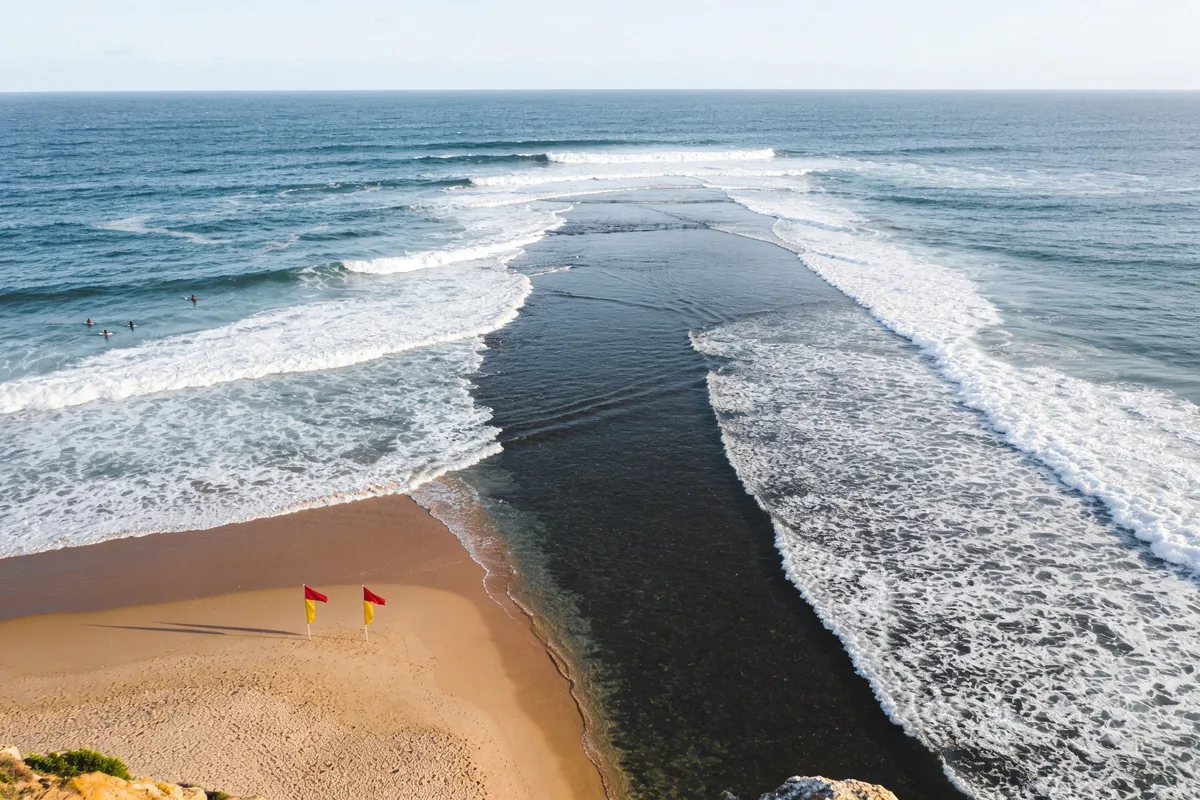
Beachsafe lists the signs that a rip may be present. You might see one of them, or several together:
- deeper and/or darker water
- fewer breaking waves
- sandy-coloured water extending beyond the surf zone
- debris or seaweed
- significant water movement
The second one is the sign worth sitting with for a moment, because it’s the one that catches people out.
When you look along a beach, the patches with white, rolling waves can seem rough and a little intimidating. Between them, there’s sometimes a stretch where the waves don’t seem to break at all. The water there looks flatter, often darker, and much more inviting, especially if you’ve got little ones who don’t love being knocked over. It feels like the calm, safe spot.
Very often, that calm gap is the rip. Fewer breaking waves and darker water are two of the signs on Beachsafe’s list, and here they are, side by side, looking like an invitation. So the place that looks gentlest from the sand can be the place most likely to carry a swimmer away from it.
Beachsafe has a lovely simple tip for spotting this. Find the places where waves are breaking consistently, then look to each side for spots where they’re not. You’re looking for the gaps in the pattern. Once you’ve seen one, you’ll find yourself noticing them on every beach you visit.
Here’s how those two minutes might go, as an illustration. You arrive, drop the bags, and before the towels are even out you stand at the top of the sand with the kids beside you. You follow the white water along the beach from left to right. To the left, the waves are breaking in neat, steady lines. Then, just in front of the tower, there’s a stretch where they aren’t, and the water there is a shade darker and looks smoother. A little further out, you notice a smudge of sandy-coloured water past where the waves are breaking. That’s two or three signs from the list in one spot, and it’s exactly the place the kids would have run to first. So you walk the other way, towards the flags, and you point the gap out to them as you go, so they start to learn the pattern without anyone being frightened.
Why they can be hard to see
Please don’t be hard on yourself if you look at the water and can’t tell. Rips aren’t always obvious, even to people who’ve grown up on the coast.
Part of the reason is that, as Beachsafe explains, rips change shape and location quickly. The rip you spotted at ten o’clock might have shifted by lunchtime, and a beach that looked settled yesterday can look different today. That’s why the looking is something you do each time you go in, not once at the start of the holidays.
Another reason is that some rips are much narrower than people expect. There’s a well-known dye test, shared widely online, in which coloured dye is released into the surf and shows a thin channel of water pulling straight out past the waves. Plenty of people who watched it said the same thing: they’d never imagined a rip could be that narrow. A narrow rip is easy to miss if you’re glancing at the beach as a whole, which is another good reason to look slowly, section by section.
Between the flags
If all of this feels like a lot to hold in your head, here’s the reassuring part. You don’t have to read the water perfectly on your own.
Beachsafe’s advice is to swim at a patrolled beach, between the red and yellow flags. The flags mean a patrol is on that stretch of sand, and the lifesavers and lifeguards there are watching the same water you are, with a lot more practice at reading it. They’re also right there if something goes wrong.
So the flags are your plan, and your own looking is the back-up. One small thing to check: patrol hours vary from beach to beach, so it’s worth confirming the patrol is on before you swim, rather than assuming it is because you can see flags or a tower.
If there are no flags, that’s your cue to be extra careful, and to think about whether this is the right spot to swim today.
If you’re caught in a rip
Nobody wants to think about this part, but knowing it ahead of time is what turns panic into a plan. Beachsafe sets out the options. In order:
- Stay calm and conserve your energy. This one matters most.
- Raise an arm and call out for help. It signals to lifesavers and anyone nearby that you need assistance.
- Float with the current. It may return you to a sandbank.
- Swim parallel to the beach, or towards the breaking waves. Not straight back against the pull.
If you remember only one thing, make it this. When you’re caught in a rip, your job is to stay afloat. You’re not trying to win a race against the water, and you don’t have to get back to the sand straight away.
People who’ve been caught often describe the same thing: trying to swim straight back to the beach, against the current, until they were completely exhausted, sometimes only a short distance from shore. One person described fighting a rip just metres from the sand and lying on the beach afterwards, more tired than they’d ever been. Another, reflecting on the dye test, put it simply: don’t panic, ride it, swim at a slight angle. That lines up with what Beachsafe advises. Calm, floating, signalling and swimming across rather than against are what get people home.
If you’ve got children, it can help to talk about this calmly before you get to the beach, almost like a fire drill. “If the water pulls you out, you float, you wave, and you call out.” A short, steady line is easier to remember than a long explanation, and you’ll feel better knowing they’ve heard it from you.
If someone else is caught
This is the hardest situation to imagine, and your instinct may be to run straight in. Please get help rather than going in yourself.
Shout and wave for the lifesavers or lifeguards, who are trained and equipped for exactly this. If the beach isn’t patrolled, call emergency services straight away. The number to ring is Triple Zero (000). Keep your eyes on the person in the water so you can point rescuers to them. It can feel like doing too little. It isn’t: getting the right help there fast is the most useful thing you can do from the sand.
A few questions people ask
Is a rip the same as a riptide? Many people say “riptide” when they mean a rip, and in everyday conversation that’s what they’re talking about. The thing to look for, and the advice for getting out, are the same as everything in this article.
What if I look and can’t see any signs? That happens, and it doesn’t mean you’ve done it wrong. Rips aren’t always obvious, so the flags are still the plan. Swim between them on a patrolled beach, and let the lifesavers do the expert reading.
Will the rip be in the same place next time? Not necessarily. Beachsafe explains that rips change shape and location quickly, so the gap you spotted last weekend might not be there this weekend, and a new one could be somewhere else. Each swim gets its own look.
Stop, look, then swim
Beachsafe’s message for rips is three words long: Stop, Look, Plan. It’s a good one to keep, because it asks so little of you.
Stop at the edge of the sand before anyone runs in. Look at the water for a couple of minutes, finding where the waves break and where they don’t, and paying special attention to that tempting calm gap. Then plan: head for the red and yellow flags, check the patrol is on, and make sure everyone in your group knows what to do if the water pulls them out.
That’s it. Two minutes, every time you go in. The worry that made you pause at the top of the beach is exactly what makes that pause happen, so you can let it do its job, and then go and enjoy the water.
Sources: Rip Currents, Beachsafe, Surf Life Saving Australia (https://beachsafe.org.au/surf-safety/ripcurrents)



 Healthcare1 year ago
SIL Providers: What to Compare Before You Commit
- Healthcare1 year ago
What Is Physiotherapy?
- Healthcare1 year ago
What a Dental Implant Replacement Costs in Melbourne
- Food1 year ago
Budget Bites: Delicious Meals You Can Cook for Under $10
- Healthcare1 year ago
What Changes When You Start SIL
- Tech1 year ago
Mental Health Apps and Wearables: What to Trust
- Home & Garden1 year ago
Gutter Upgrades Worth Doing Before You Sell
- Healthcare1 year ago
How to Put NDIS Community Participation Funding to Work










You must be logged in to post a comment Login