Automotive
How to Keep Your Engine Cool, and What Overheating Tells You

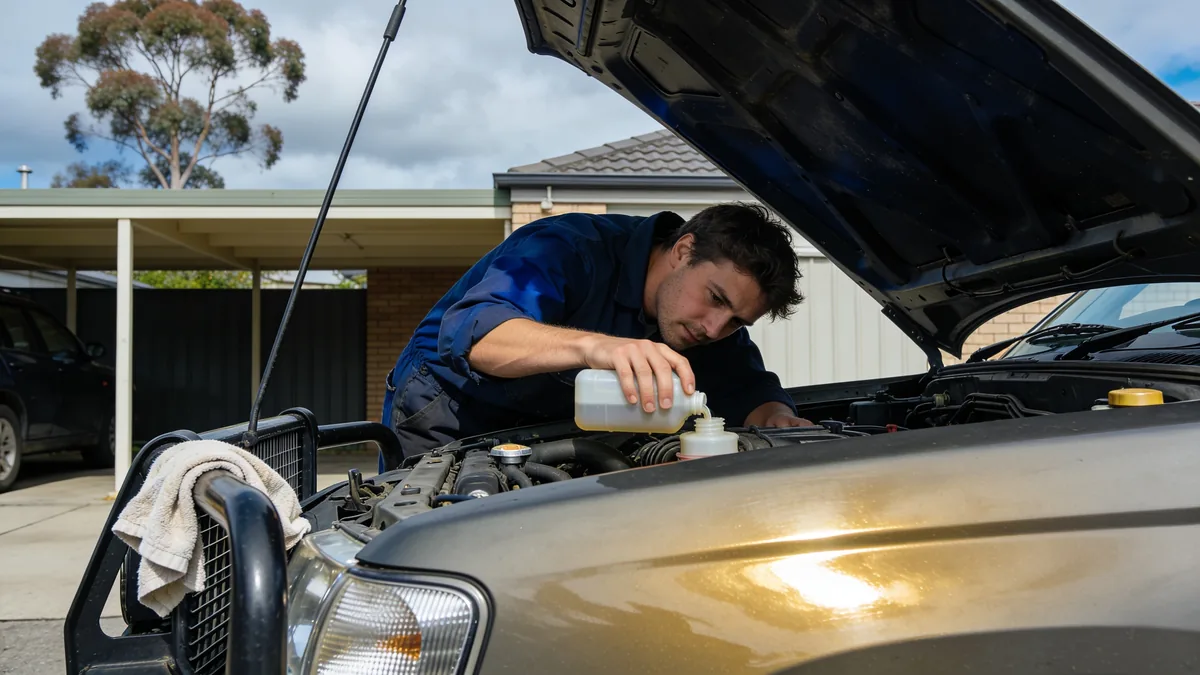
Most cars that overheat were warning their driver for weeks. The gauge creeps above its old resting place, the coolant keeps needing a top-up, the heater runs cold when you ask it for heat. None of it is urgent until the morning it is, and by then the repair has a comma in it.
Below is how the cooling system works, the habits that keep it healthy, and the five minutes that decide whether an overheating stop is an inconvenience or an engine rebuild.
Five parts, one job
The cooling system has one job: move heat out of the engine and into the air. Coolant absorbs the heat; the radiator sheds it; the thermostat opens and closes the flow to hold the temperature steady; the water pump keeps the coolant moving; hoses and the reservoir carry it and absorb its expansion. The fan pulls air through the radiator when the car is standing still, which is why trouble shows up in traffic first.
Once you know those five parts, every warning sign below makes sense. Heat is not appearing from nowhere. It is staying where it should not.
The habits that buy the years
- Check the coolant level at the reservoir while the engine is cold, on a schedule you actually keep. Once a month beats once a resolution.
- Keep the mix the handbook specifies. Coolant is not a fluid to improvise, and water alone boils earlier and freezes harder.
- Look at the hoses and clamps when the car is serviced: soft spots, cracks and crusty stains at the ends are early notice, not character.
- Replace the radiator cap on the same schedule as the coolant. It is a pressure valve, it costs very little, and a tired one lets the system boil early.
- Flush the system on the handbook’s schedule. Most handbooks place it somewhere between 40,000 and 60,000 kilometres, and yours sets the number that applies to you.
- Keep the radiator fins clear. Bugs and leaves across the front of the radiator are a blanket, and a blanket is the last thing the system needs.
The signs that do not wait
The temperature gauge climbing past its usual spot, especially in traffic or on a climb. A sweet, syrupy smell that follows you after you park. Candy-coloured drips on the driveway, which are coolant rather than rain. Steam from under the bonnet. A heater that blows cold when you turn it up, which can mean the heater core is not getting coolant. A reservoir that drops and drops, even when no puddle appears.
Any one of these is a booking. Two together is a booking today.
When it overheats: the next five minutes
Pull over safely, at the first place that is safe, and not at the next exit because it is more convenient. Air conditioning off, heater on full, fan on high: the heater is a small radiator, and it moves heat off the engine into the cabin. Uncomfortable, effective, temporary.
Once stopped, switch the engine off and let the bonnet up if you can do it safely. Do not open the radiator cap. The system is pressurised and hotter than boiling, and the scald risk is the most avoidable injury in this article. Do not pour cold water on a hot engine either. Let it cool, then check the reservoir. Top it up with coolant if you carry some and water if you do not, and treat that top-up as the thing that gets you to a workshop, not the fix.
If it overheats again on the way, stop for good and call a tow. The tow is the cheap half of the decision.
What driving on actually costs
An engine that keeps running hot warps surfaces that are supposed to be flat. The cylinder head distorts, the head gasket fails, and coolant starts mixing with things coolant should never meet. What began as a hose becomes a rebuild. The gauge is not a suggestion, and the space between noticing it and acting on it is where the money goes.
Why the book does the work
The intervals are in your handbook, and the record matters as much as the repair. A cooling system with a written history sells better, fails less, and argues its own case when something does go wrong. Why the service record is worth keeping is the same argument, one system across.
Watch the gauge, not the calendar
Heat is the failure that announces itself before it arrives. Glance at the temperature gauge the way you check the mirror: a second of attention, and the cheapest insurance on the car. The engines that last are rarely the lucky ones. They are the watched ones, and the watching takes almost nothing.
Sources: manufacturers’ service handbooks set the coolant, hose and flush intervals for each vehicle; state automotive associations publish overheating guidance for drivers; the radiator cap, thermostat and pump specifications are listed in the same handbook that sets the schedule.


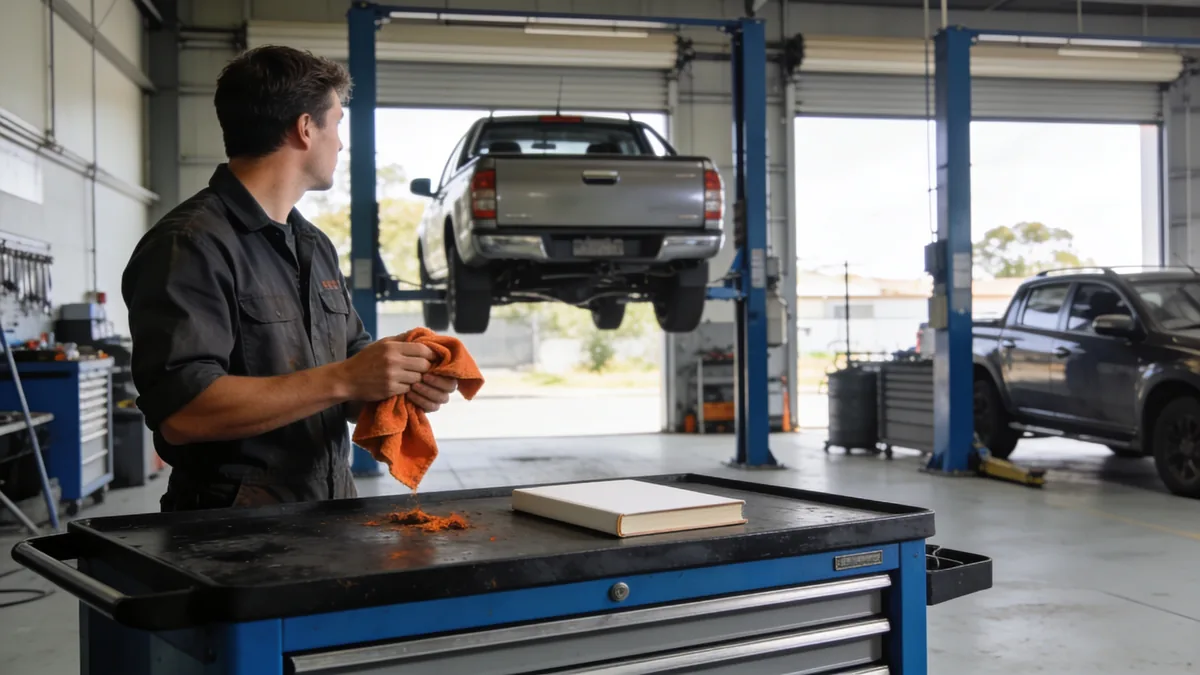
A logbook service is a service performed in accordance with the maintenance schedule the vehicle’s manufacturer publishes for that model. It is distinguished from a general service not by its quality but by its content: the schedule specifies which items are inspected and which are replaced at each interval, and the completed record becomes part of the vehicle’s history.
Two obligations are commonly confused. The first is the maintenance of the vehicle, which is the owner’s responsibility. The second is the warranty position, which is governed by both the manufacturer’s terms and the statutory guarantees that apply under the Australian Consumer Law. The relationship between those two is set out below, because the distinction determines where the work may lawfully be performed.
1. What the schedule contains
A manufacturer’s schedule is not a single oil change repeated at set distances. It is a table of items with different intervals, and the interval that applies depends on the conditions in which the vehicle is used. Most schedules publish a normal interval and a shorter interval for demanding conditions, and the second one is frequently overlooked by owners who assume their usage is ordinary.
- Engine oil and filter, at the shortest interval of any item on the schedule.
- Air, fuel and cabin filters, at intervals that shorten considerably in dusty conditions.
- Brake fluid, coolant and other fluids, which are replaced on time rather than on distance because they degrade regardless of use.
- Inspection items, including belts, hoses, suspension, steering and the underbody, which are checked and recorded rather than automatically replaced.
- Items with long intervals, such as timing components and transmission fluid, which owners frequently miss because they fall outside the period of their ownership.
2. Conditions that shorten the interval
Manufacturers generally describe the demanding category rather than the vehicle’s location, and the common conditions are consistent across brands.
- Frequent short trips in which the engine does not reach operating temperature, which is the most common unseen cause of premature wear.
- Dusty environments, including unsealed roads and construction sites.
- Sustained heavy loads or towing, which raises the thermal load on the engine, transmission and brakes.
- Long distances at sustained speed in high ambient temperatures, which places the cooling system under continuous demand and is relevant to anyone working in remote areas.
- Stop-start traffic, which is hard on brakes and fluids in a different way to long running.
A vehicle used for work is more likely than a private car to meet several of those conditions at once, and the appropriate response is the shorter interval rather than an assumption that the normal one applies. Where overheating is a recurring concern, the cooling system itself deserves attention rather than a shorter oil change, and the maintenance of that system is covered separately.
3. The warranty position, stated correctly
The claim that a vehicle must be serviced by the manufacturer’s own dealer network to preserve its warranty is not an accurate statement of the position in Australia.
Two separate protections apply. The manufacturer’s warranty is a contractual promise with conditions attached, and the standard condition is that the vehicle is serviced in accordance with the published schedule using parts and fluids that meet the manufacturer’s specification. The statutory guarantees under the Australian Consumer Law are separate again, they exist regardless of the manufacturer’s warranty, and they are not limited to a fixed period.
The practical consequence is that an independent workshop may perform the scheduled work and the warranty remains intact, provided the schedule is followed and the parts and fluids meet specification. What the manufacturer may require is compliance with the schedule. What the regulator’s published guidance indicates it may not do is make the warranty conditional on the use of its own network. A workshop that cannot produce records to the manufacturer’s specification is a different matter, and the records are therefore the part of this arrangement the owner controls.
4. What a complete record looks like
- The logbook stamped or signed at each service, with the date and the odometer reading recorded.
- An itemised invoice showing the work performed, rather than a single line described as a service.
- The specification or part numbers of the oil and fluids used, which is the evidence that the manufacturer’s requirement was met.
- Receipts retained in the vehicle rather than in a drawer at home, because a buyer and a dealer will both ask to see them.
A service history built on itemised invoices withstands scrutiny. A service history consisting of bank statements does not, and it is the most common reason a claim becomes an argument.
5. The cost of an incomplete book
The resale consequence of an incomplete history is straightforward and generally larger than the cost of the services that were skipped. A vehicle presented with a full logbook is bought on the strength of the record. A vehicle without one is priced as an unknown, regardless of its actual condition, and the discount is applied by every buyer in the market rather than by one.
For a business, the same logic applies to a fleet, and it interacts with the purchase decision itself. A vehicle bought without a view to the service arrangement it will require, and without a plan for who performs and records the work, is a vehicle that will be sold at a lower price than the business paid for the privilege of owning it.
6. Choosing the workshop
The relevant questions do not concern loyalty or proximity. They concern the record and the specification.
- Will the logbook be completed and stamped in accordance with the schedule?
- Which oil and fluids are used, and do they meet the manufacturer’s specification for this model?
- Are the parts used of a quality equivalent to the original, and will that be noted on the invoice?
- Will the workshop advise when an item on the schedule is due but not yet required, so that it is not ignored until it fails?
The paperwork that protects you
The schedule sets the standard, the workshop does the work, and the record is what proves both. An owner who keeps an itemised history, follows the interval that matches how the vehicle is used, and ensures the parts meet specification has satisfied every condition that matters, whether the work was performed by a dealer or by an independent workshop. The rest is noise.
Sources: the Australian Competition and Consumer Commission (accc.gov.au) publishes guidance on consumer guarantees and on the conditions a manufacturer may place on a motor vehicle warranty; vehicle manufacturers publish the maintenance schedule and the demanding-condition intervals for each model in the owner’s manual and the service logbook.


 Healthcare1 year ago
SIL Providers: What to Compare Before You Commit
- Healthcare1 year ago
What Is Physiotherapy?
- Healthcare1 year ago
What a Dental Implant Replacement Costs in Melbourne
- Food1 year ago
Budget Bites: Delicious Meals You Can Cook for Under $10
- Healthcare1 year ago
What Changes When You Start SIL
- Tech1 year ago
Mental Health Apps and Wearables: What to Trust
- Home & Garden1 year ago
Gutter Upgrades Worth Doing Before You Sell
- Healthcare1 year ago
How to Put NDIS Community Participation Funding to Work